The menu boards above a hawker stall can look like a wall of words: char kway teow, bak chor mee, chai tow kway. Each one is a dish with its own history, usually brought by migrants from southern China, the Malay world or southern India and then reworked over generations in Singapore's kitchens. Stalls tend to specialise, so most of these are made by a hawker who cooks little else. Here are twelve to know, and what to expect when the plate arrives.
Chicken rice
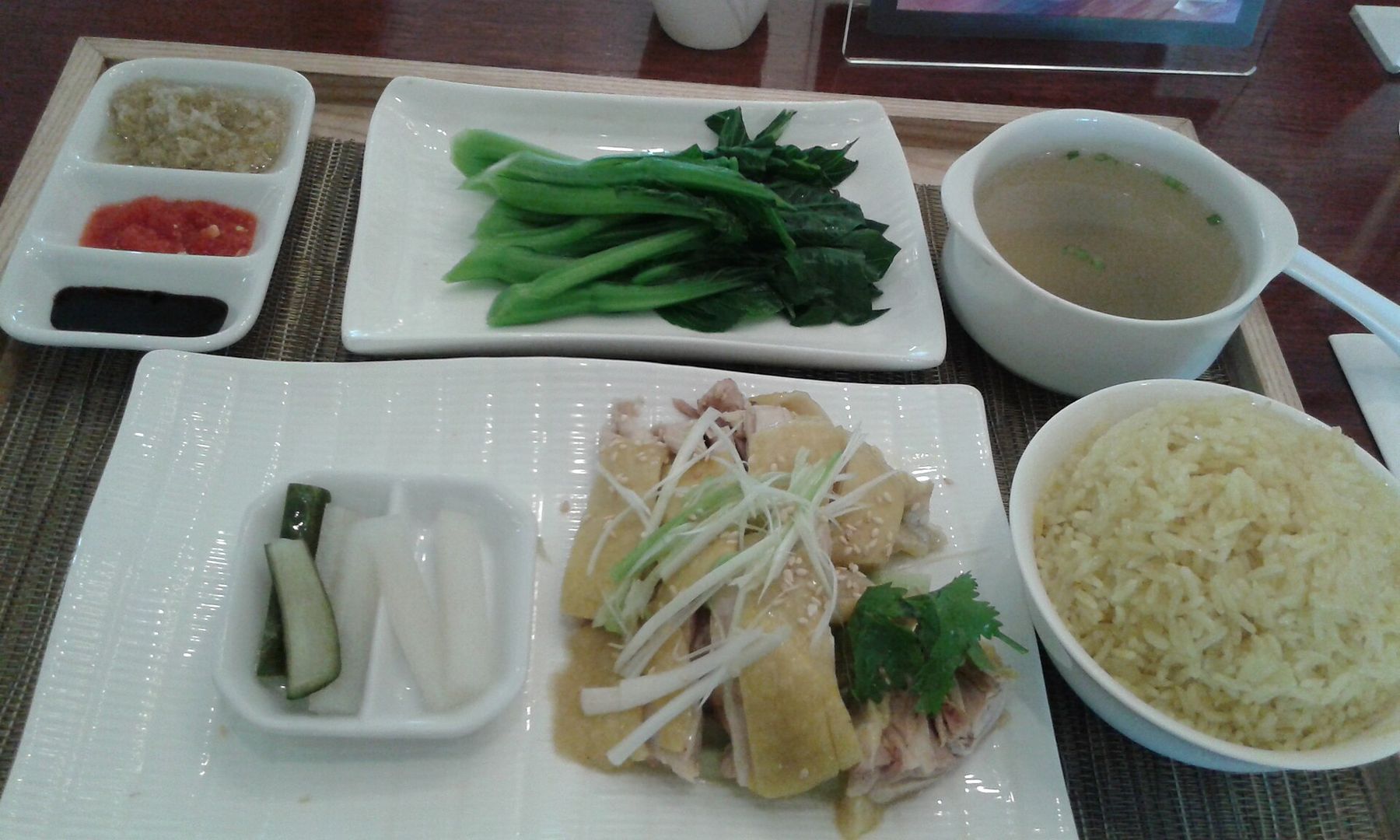
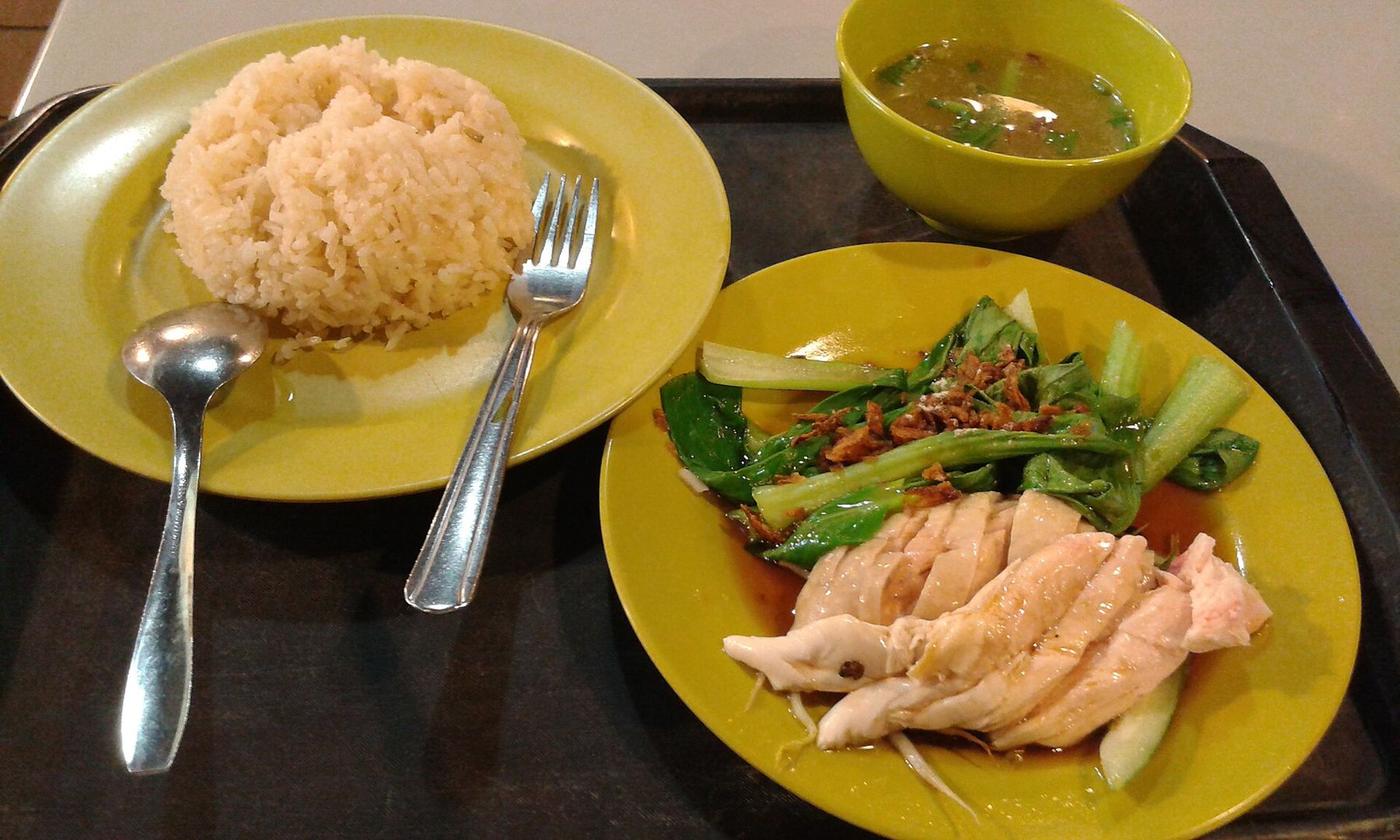
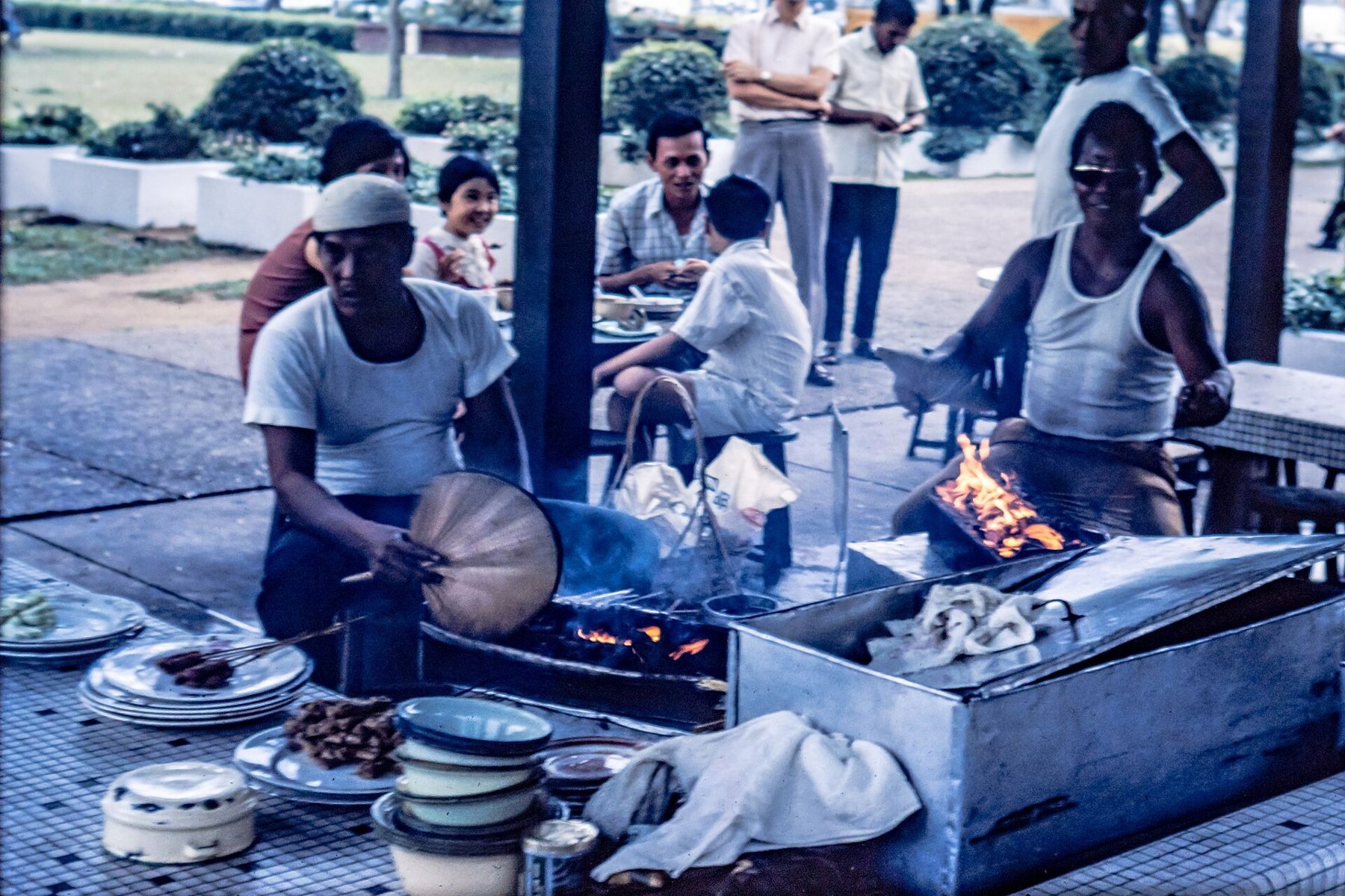
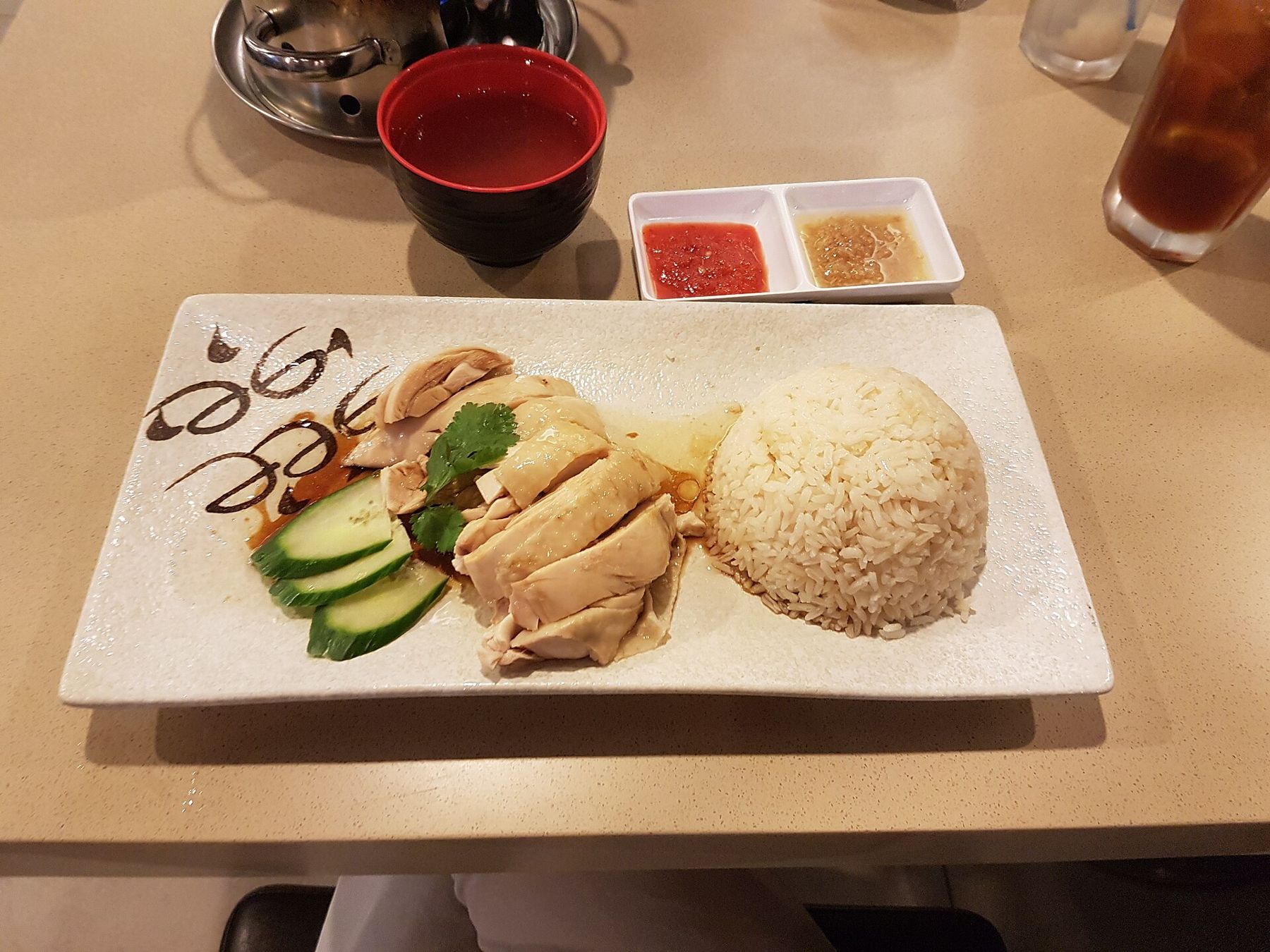
Hainanese chicken rice is the closest thing Singapore has to a national dish. It is usually traced to migrants from Hainan Island, who adapted a poached chicken dish from home. The chicken is gently poached, then plunged into cold water so the skin turns smooth and the meat stays silky; many stalls also offer a roasted version. The rice is the real test: cooked in chicken stock with ginger, garlic and pandan until each grain is glossy. It comes with three sauces, a chilli-lime-garlic sauce, pounded ginger and dark soy, plus slices of cucumber and a small bowl of broth.
Laksa
Laksa is a family of noodle soups across the region, and the Singapore version is the rich, coconut-based curry laksa often called Katong laksa after the east-side district. The broth is orange, spiced with dried shrimp and chilli, and loaded with thick rice noodles, prawns, cockles, fish cake and bean sprouts, finished with chopped laksa leaf (Vietnamese coriander) and a dab of sambal. In many bowls the noodles are cut short so the whole thing can be eaten with a spoon alone. It is heavy, fragrant and best before noon.
Char kway teow
Char kway teow is flat rice noodles, often mixed with yellow egg noodles, fried hard in a very hot wok with dark sweet soy sauce, lard, garlic, egg, bean sprouts, Chinese sausage, fish cake and cockles. The Singapore version is darker and sweeter than the one across the causeway. What you are paying for is wok hei, the smoky, slightly charred breath of a wok heated far beyond a home stove. Ask for no cockles if you prefer, and expect a queue at any stall that does it well, because each plate is fried in small batches.
Bak chor mee
Bak chor mee means minced meat noodles, a Teochew dish of springy noodles tossed in a dressing of black vinegar, chilli and lard, then topped with minced pork, sliced pork, liver, meatballs and sometimes a piece of fried fish. The vinegar is what makes it: sharp and bright against the richness of the pork. It is usually eaten dry with a small bowl of soup on the side, and most stalls let you choose the noodle, from flat mee pok to thin mee kia. Say how much chilli you want; the default can be generous.
Satay
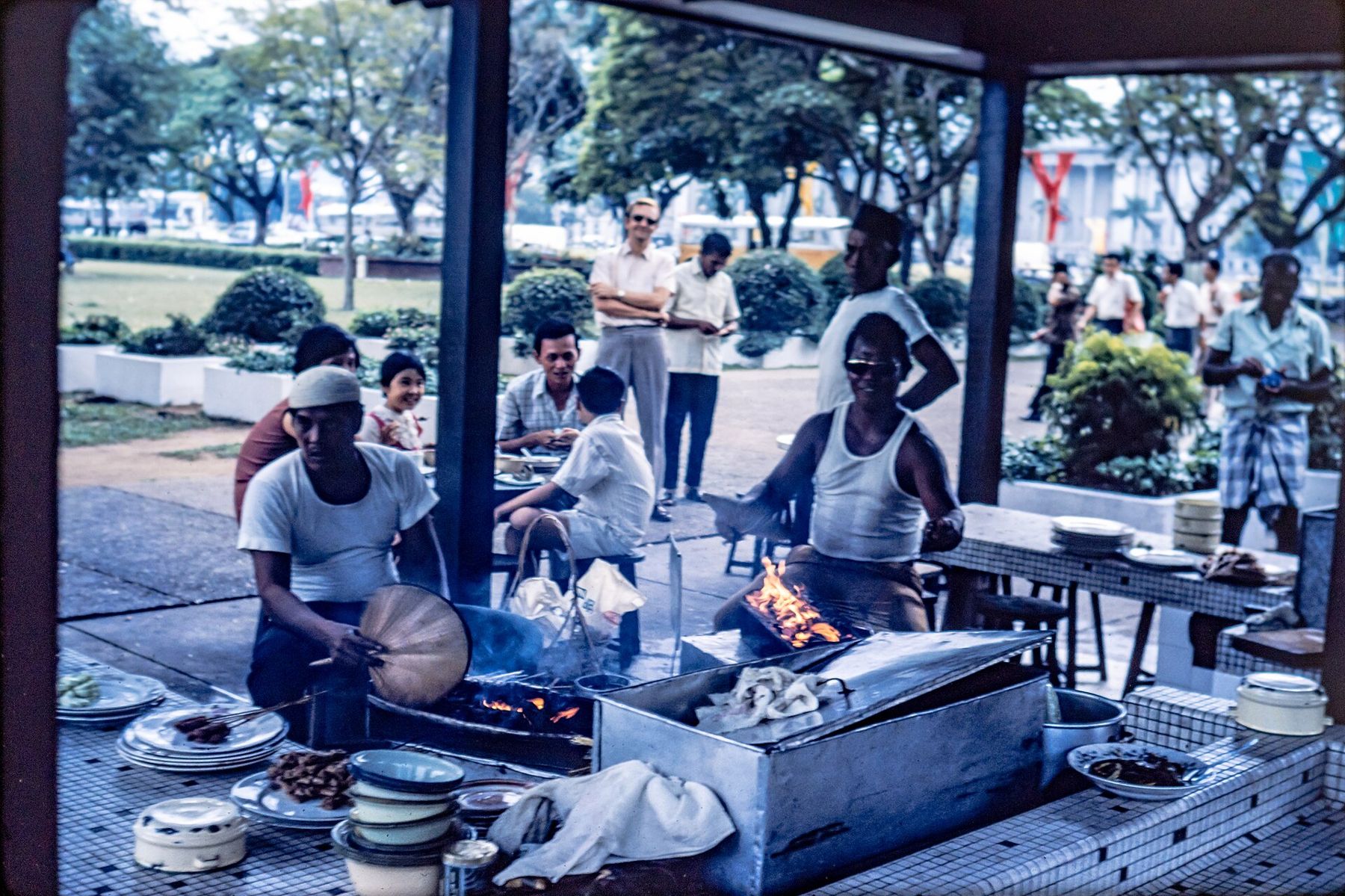
Satay is skewered meat, usually chicken, mutton or beef, marinated in turmeric and spices and grilled over charcoal, with a hawker fanning the coals to keep the flames high. It comes with a thick peanut sauce, raw onion, cucumber and ketupat, compressed rice cakes cooked in woven palm-leaf pouches. Satay belongs to the Malay and Indonesian kitchen, and Chinese hawkers also sell pork satay. It is an evening food: the smoke rising at dusk is one of the city's signals that dinner has begun. Order by the stick, usually ten at a time.
Nasi lemak
Nasi lemak is rice cooked in coconut milk with pandan leaf, which makes it rich (lemak) and faintly fragrant. The classic Malay plate adds sambal, fried anchovies (ikan bilis), roasted peanuts, cucumber and a fried or boiled egg; from there it grows, with fried chicken wings, fish, otah and more, depending on the stall. It was traditionally breakfast, sold wrapped in banana leaf and newspaper, and plenty of people still eat it that way, though it is now served at all hours. The sambal decides whether a stall is good.
Roti prata
Roti prata is a flaky flatbread from the Indian-Muslim kitchen, stretched paper-thin, folded and fried on a flat griddle until crisp outside and soft within. It is eaten by hand, torn and dipped into fish or mutton curry. Order a kosong (plain) and an egg prata to start; from there the variations run to onion, cheese, mushroom and, at the sweet end, banana. Prata stalls often keep long hours, and a late-night plate with a glass of teh tarik is a Singapore habit. Across the causeway the same bread is called roti canai.
Mee siam
Mee siam is thin rice vermicelli in a sweet, sour and gently spicy gravy built on tamarind, chilli and dried shrimp, topped with a hard-boiled egg, tau pok (fried bean curd), chives and bean sprouts, with a calamansi lime to squeeze over it. The name means "Siamese noodles", though the dish as eaten in Singapore belongs to the Malay and Peranakan kitchens. There are also dry versions, fried with the spice paste. It is light and sharp, a good counterweight to a plate of something fried.
Chilli crab
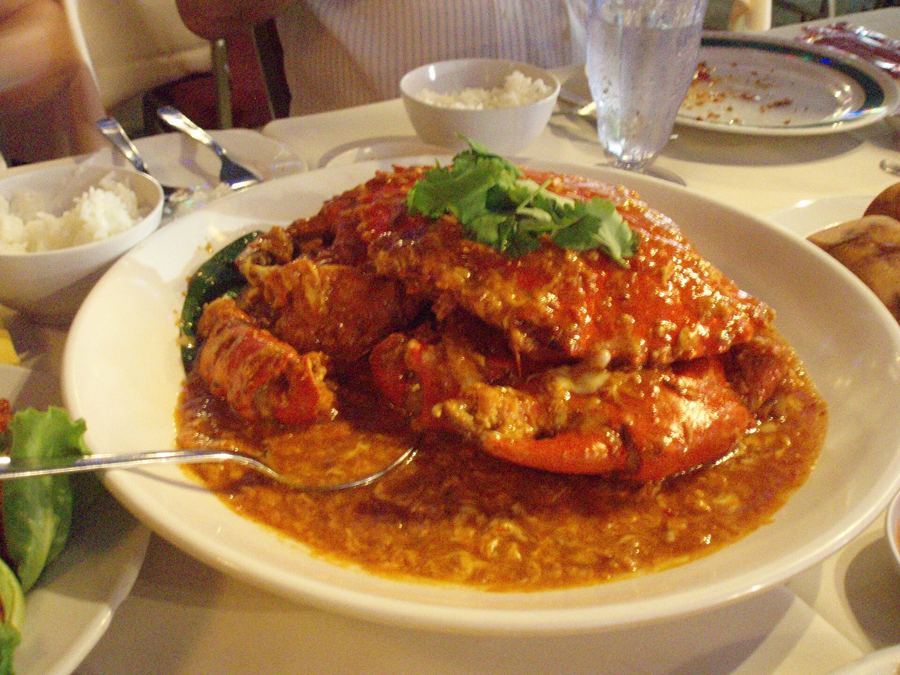
Chilli crab is a mud crab cooked in a thick, sweet and tangy sauce of tomato, chilli and egg, which sets in ribbons as it cooks. It is less a hawker dish than a seafood-restaurant feast, sold by weight and eaten with the hands, with fried or steamed buns (mantou) to mop up the sauce. Its origin is usually traced to a family cooking crabs by the sea in the 1950s. We tell that story, and the case for black pepper crab, in our feature on chilli crab and the East Coast.
Carrot cake
There is no carrot in it. Chai tow kway is a steamed cake of rice flour and white radish (the Hokkien word for radish is also used for carrot), cut into pieces and fried with egg, garlic, preserved radish and spring onion. It comes white, fried until crisp and golden, or black, fried with dark sweet soy until sticky. Most stalls offer both, and many people order a mix. It is a breakfast and supper dish, and a good test of a hawker's wok.
Kaya toast
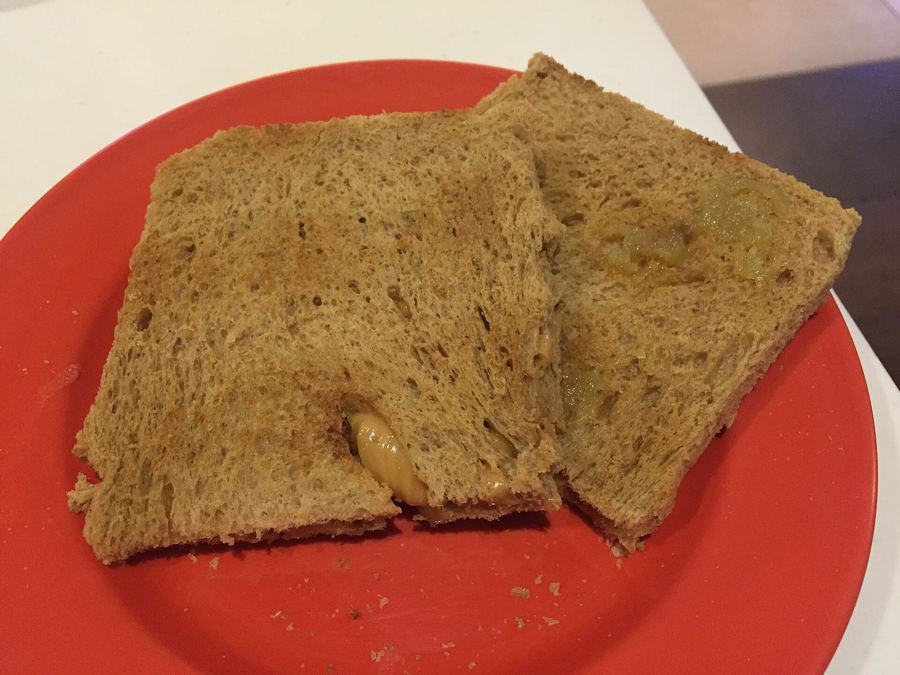
Kaya toast is the breakfast of the coffee shop: thin slices of bread toasted over charcoal or in a grill, spread with kaya, a sweet jam of coconut milk, eggs, sugar and often pandan, and filled with a cold slab of butter. It comes with two soft-boiled eggs, cracked into a saucer and seasoned with dark soy and white pepper, and a cup of kopi. Dip the toast into the eggs. It is a small, cheap ritual, and the subject of our story on kopitiam mornings.  Next stall overHow a hawker centre works, from the tissue packet to the tray return
Hokkien mee
In Singapore, hokkien mee means a tangle of yellow noodles and thick rice vermicelli fried with egg and then simmered in a rich prawn and pork stock until the noodles drink it up, with prawns, squid and slices of pork belly. It comes with sambal and a calamansi lime, and at some stalls on a square of opeh leaf, which adds a faint fragrance. It is not the same dish as the dark, soy-braised Hokkien mee of Kuala Lumpur, which shares the name and little else. Ask for it wet or dry; some stalls let you choose.