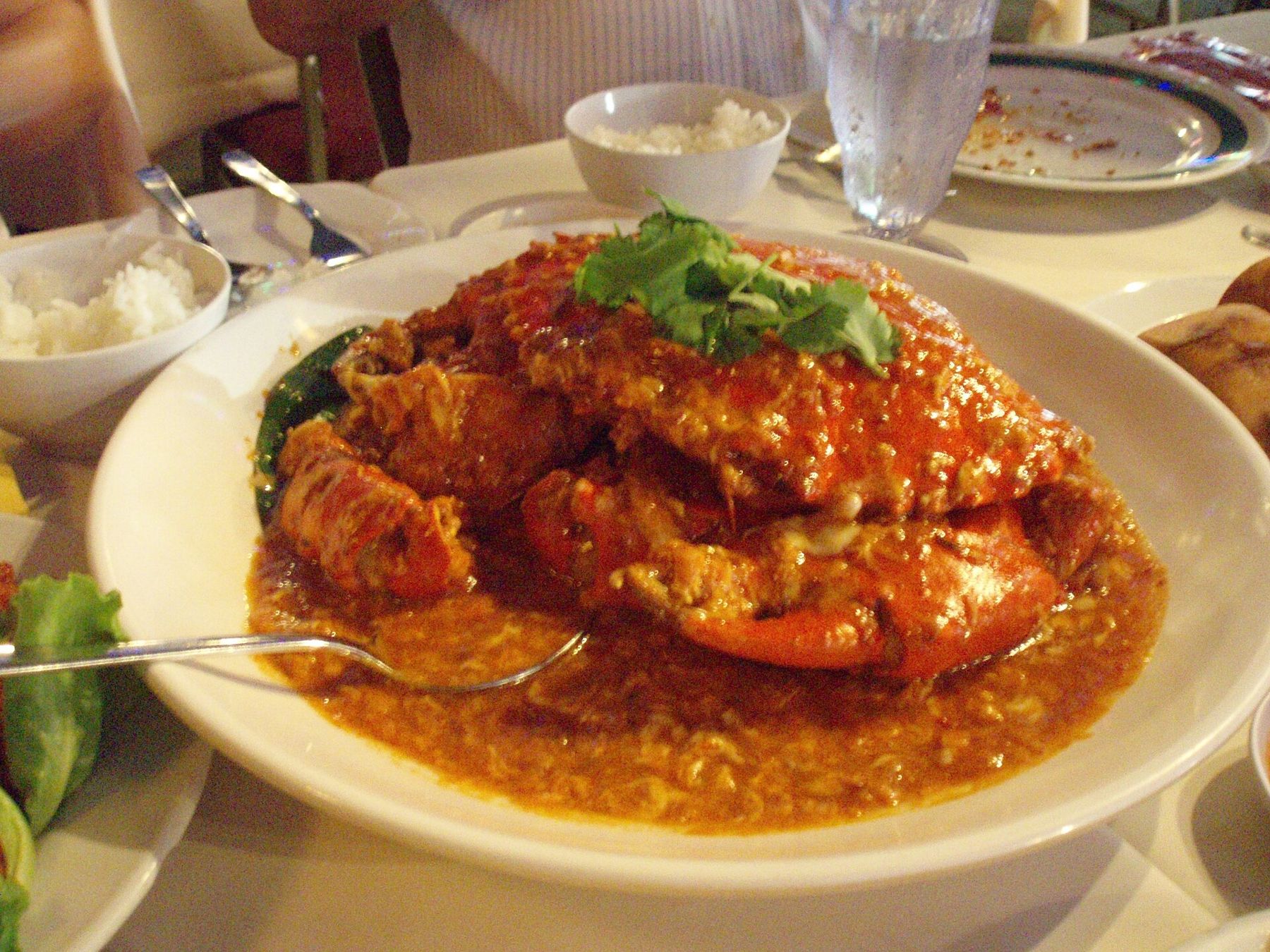
A whole crab arrives in a shallow bowl of red, glossy sauce, its claws already cracked, a few sprigs of coriander on top. Beside it, a plate of golden fried buns. There are plastic bibs, a bowl of water with a slice of lime for fingers, a pair of crackers and a pick, and the sea is somewhere out in the dark beyond the car park. Nobody at the table is going to stay clean. That is understood.
Chilli crab is the dish Singapore serves to visitors, to relatives home from abroad and to itself on birthdays. It is not hawker food in the strict sense; it is a seafood-restaurant meal, ordered by weight and shared around a round table. But it grew out of the same habits, and it belongs to the same story: food first sold cheaply by the water, later made into something a city is known for.
Where chilli crab comes from
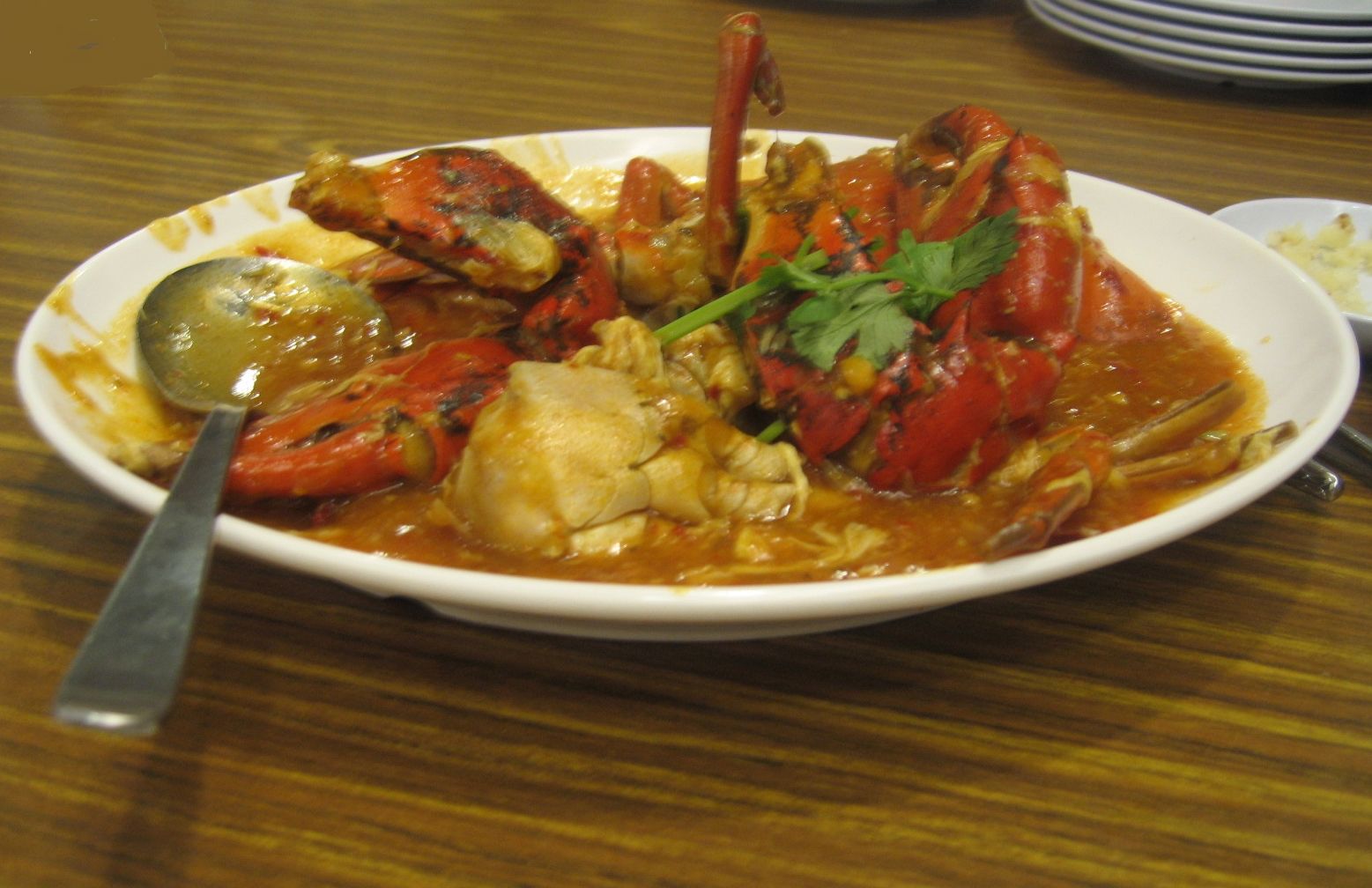
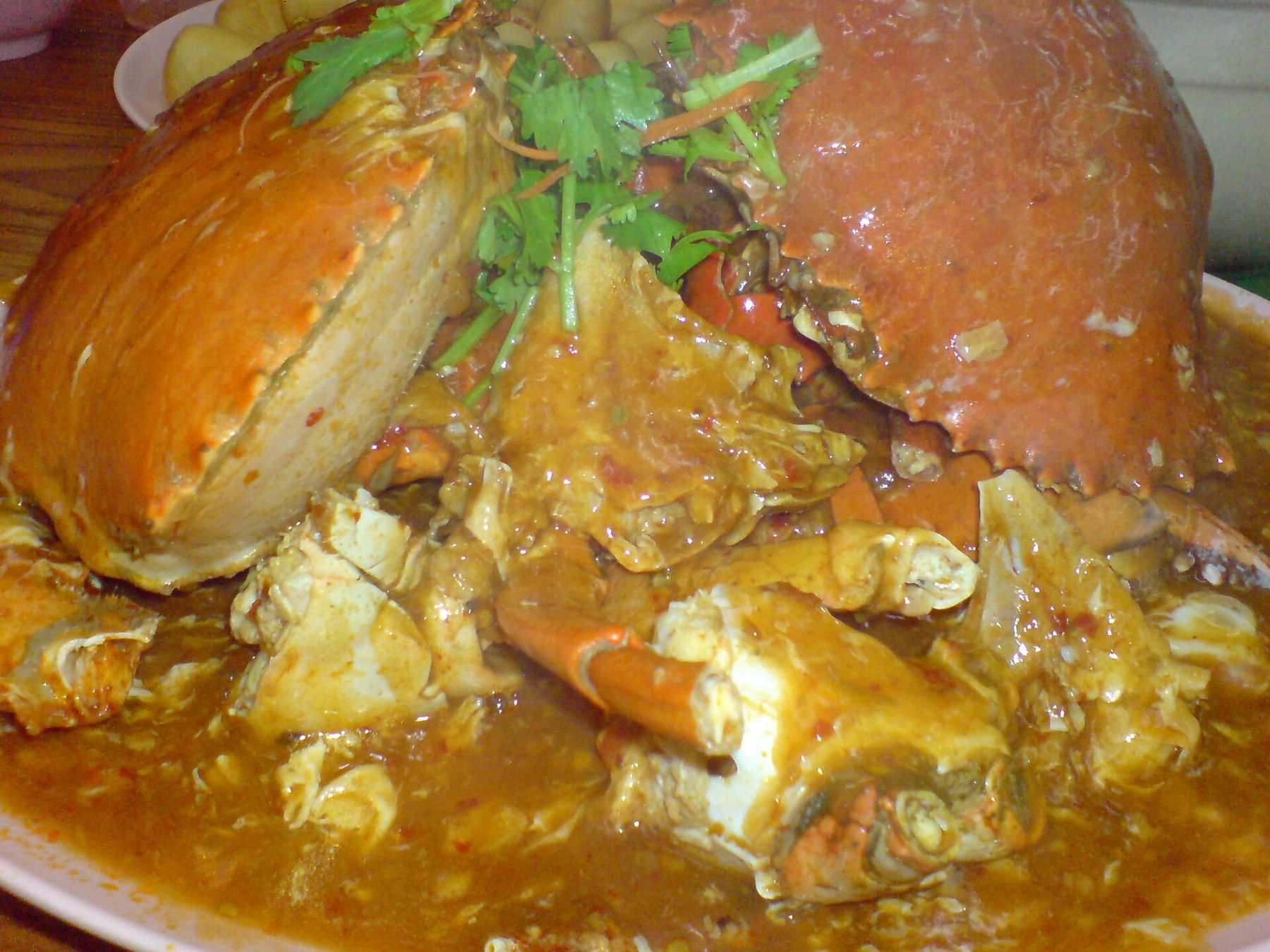
The origin of chilli crab is usually traced to the 1950s, to a couple who cooked crabs from a pushcart near the sea on the east coast. The first version, as the story is told, was crab stir-fried with tomato sauce and a little chilli. Their stall grew into a restaurant, and over the following decades other cooks reworked the dish into the one served today, with more chilli, a sweet and sour edge and beaten egg stirred into the sauce at the end so that it sets in soft ribbons.
The method is not complicated, but it is quick and hot. The crab is cleaned, cut into pieces and fried briefly in oil until the shell turns red. It goes into a wok of garlic, ginger, shallots and chilli paste, then tomato and chilli sauces, a little sugar and vinegar, and stock. The pan is covered while the crab steams through, the sauce is thickened, and the beaten egg goes in last. The whole thing is on the plate within minutes, and the sauce should be sweet first, then sour, then hot, with the heat building slowly as you eat.
That is the story most Singaporeans know, and like most food origins it is simpler than the reality. Crab was cooked with chilli across the region long before, and the dish took its present form over many kitchens rather than one. It is fairest to say that chilli crab as it is now eaten took shape in Singapore in the second half of the twentieth century, and that it has been the city's signature seafood dish for decades.
The rival: black pepper crab
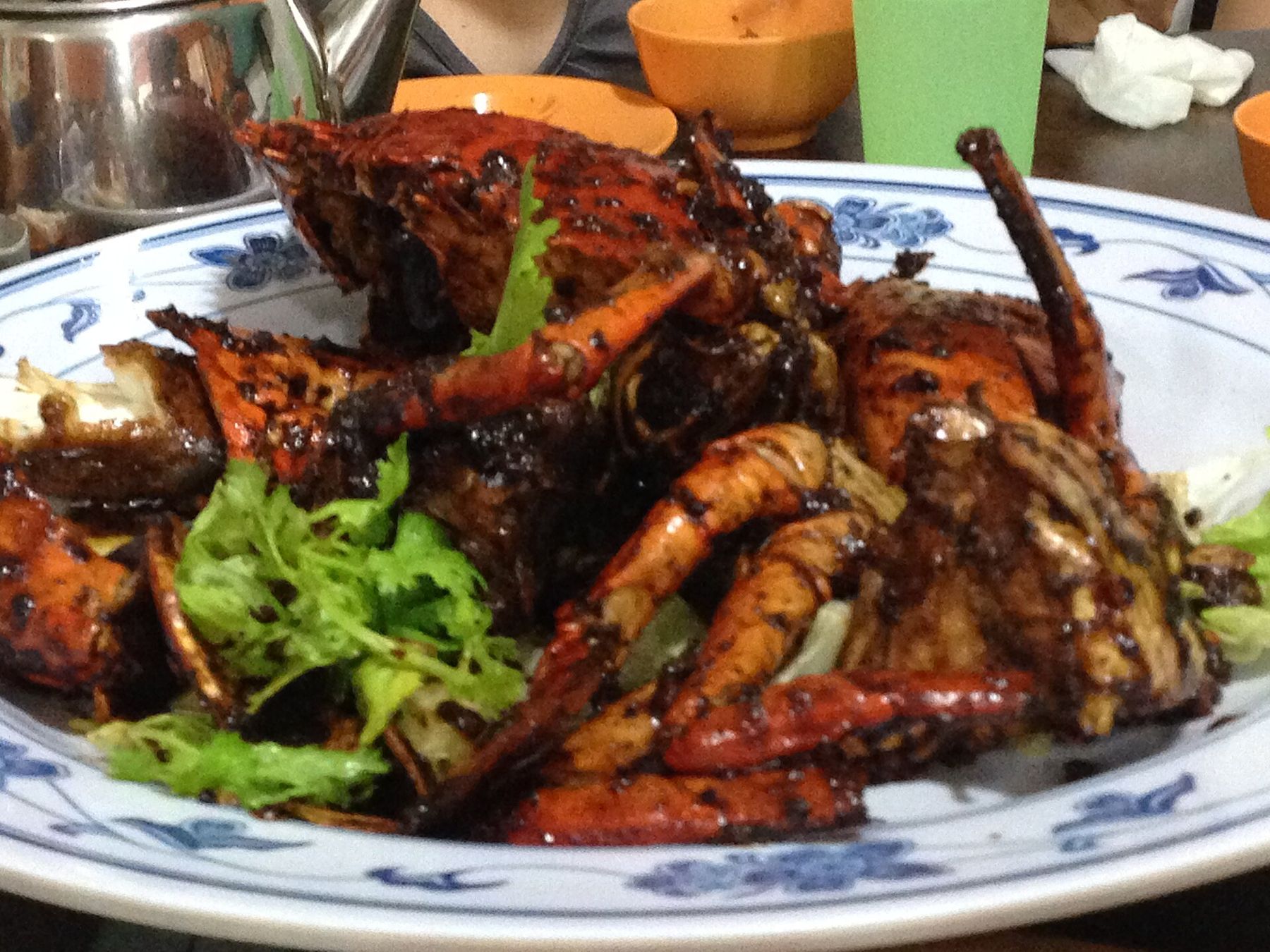
Black pepper crab is younger, and for many diners it is the better dish. The crab is fried with butter, garlic, curry leaves and an enormous amount of coarsely ground black pepper, sometimes with soy and oyster sauce, until the shell is coated in a dark, sticky, fiercely peppery crust. There is no sauce to speak of; the flavour is in the shell, and you suck it off as you go. It is usually said to have been created at one of the island's seafood restaurants as an answer to chilli crab, and it quickly became its equal.
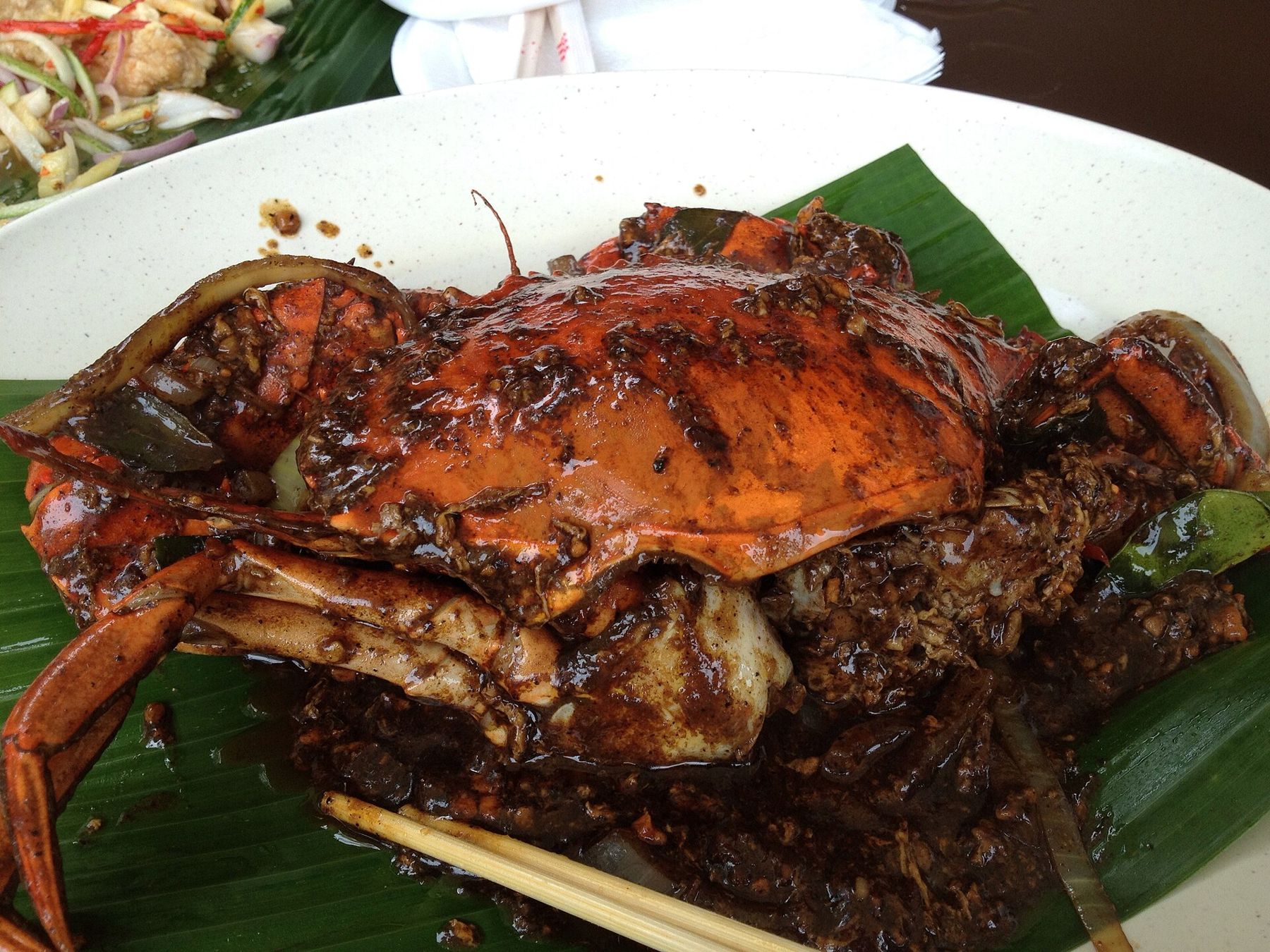
The two are often ordered together, one of each, to settle the argument at the table. It never settles. Other preparations have joined them over the years, among them salted egg yolk crab, white pepper crab and crab steamed with egg white and rice wine, and seafood menus also run to cereal prawns, sambal stingray, steamed fish and fried rice.  Next stall overTwelve dishes to know before you join the queue
The crab itself
The crab in both dishes is usually mud crab, a large, heavy-clawed species from mangrove coasts. Many are imported, and menus often name a country of origin, with Sri Lankan crabs widely prized for their size. Restaurants keep them alive in tanks, their claws tied, until they are chosen. At a serious seafood restaurant you may be asked to pick one or to choose a weight, and a server will weigh it before it goes to the kitchen.
That weighing is the moment that matters. Crab is sold by weight at "market price", which moves with the season and the supply, and a single large crab can cost far more than a visitor expects. Ask the price per kilogram, ask what the crab you have chosen weighs, and agree to it before it is cooked. Prices change, so treat any figure you have read as out of date. A fair restaurant will tell you plainly; a careful diner will ask anyway.
Size is a matter of taste. Larger crabs carry more meat in the claws and are the showpiece; smaller ones can be sweeter and are easier on the bill. Some diners ask for a female crab in season for its roe. As a rough guide, a big crab, with a few other dishes and rice, is enough for two or three people, and a table of six will want two or three crabs in different styles.
The East Coast
The natural home of the seafood supper is the east. The East Coast Seafood Centre sits in East Coast Park, a long strip of reclaimed land with the sea on one side and the expressway on the other, and its handful of large seafood restaurants have tables looking out toward the anchored ships in the Singapore Strait. Families come here for celebrations, and the dining rooms are loud, bright and full on weekend nights. The park itself runs for kilometres along the shore, with cycling paths and barbecue pits, and a walk on the beach before dinner is part of the evening.
The east is also where much of the island's seafood culture began, with fishing villages and kampongs on the coast before reclamation pushed the shoreline outward. Seafood restaurants are now found all over the island, from the riverside to the suburbs, and in the heartlands there are cheaper "zi char" stalls, cook-to-order kitchens in coffee shops, that also cook crab. Zi char is the everyday version of the seafood supper, with plastic chairs, a long laminated menu and a kitchen that will cook almost anything with a wok, and many families eat crab there more often than at a restaurant. The East Coast remains the place where the meal feels most like itself: by the water, at night, with the wind off the sea. For the shophouse district inland from the coast, see Joo Chiat and Katong.
Nobody at the table is going to stay clean.
How to eat it
Give up on cutlery. The crab will arrive cracked, but you will still need the crackers for the claws and the pick for the legs. Use your hands, and use the plastic gloves if they are offered and you mind the smell. Start with the body, where the meat is sweet and easy, and save the big claws for last.
With chilli crab, the sauce is half the dish. Order mantou, small buns that are either deep-fried until golden or steamed until soft, and drag them through the sauce once the crab is gone. Some tables order fried rice or plain rice for the same reason. With black pepper crab, have plenty of water or a cold beer to hand, and fresh lime juice for anyone who finds the pepper too much.
Book ahead at popular places on weekends. Bring cash and card, as payment habits vary. For a quieter meal, come early in the evening, and if you want to eat in the hawker style instead, centres such as Newton grill seafood in the open air; see our guide to hawker centres worth the trip.
What the supper is for
A crab meal is slow by design. It takes a long time to eat, and the cracking and picking leave everyone with their hands busy and their attention on the table. It is a meal for groups, and the conversation goes on long after the shells are piled up.
That is why it marks occasions. Families book a round table for a grandparent's birthday or a child's return from studying overseas, and companies take visiting colleagues to the East Coast on their first night in town. The dish has travelled, too, and Singaporean restaurants abroad put it at the top of the menu. But it tastes most like itself here, eaten late, in the heat, with the sound of the sea or the hum of a ceiling fan, and a table of people who are in no hurry to leave.
At the end there is a bowl of empty shells, a stack of used bibs and a sauce-smeared tablecloth. Somebody is still working at a claw. Somebody else asks for one more plate of buns, and the last of the red sauce disappears.