- Joo Chiat Road, north end Where Joo Chiat meets Geylang Serai
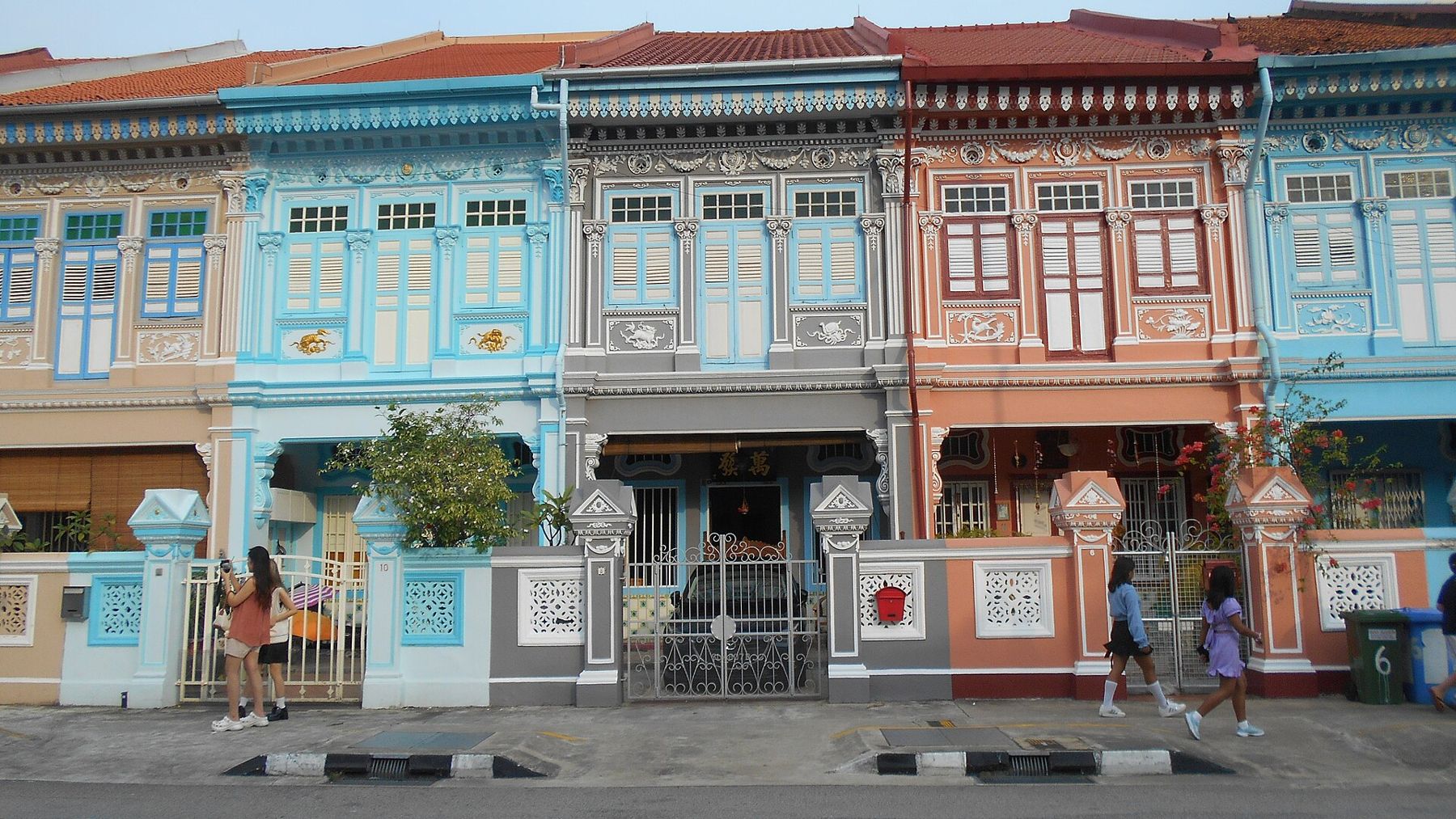
- Koon Seng Road Ornate pastel terrace houses of the 1920s and 1930s
- Joo Chiat Road shophouses Long rows of shophouses, eateries and small shops
- East Coast Road Katong's main street, home of Katong laksa
- Sri Senpaga Vinayagar Temple Temple to Ganesha founded by Ceylon Tamils
- Church of the Holy Family Catholic parish church of old Katong
- Marine Parade Road Roughly the old shoreline before reclamation
Koon Seng Road is quiet at nine in the morning. A man waters the plants in his front yard, a delivery van idles, a woman in a floral blouse unlocks a gate. Above them the terrace houses run down the street in a row of pastel colours, pink, mint, sky blue and pale yellow, each front a riot of plaster flowers, painted tiles, carved fanlights and shuttered windows. It looks like a stage set. It is in fact a street of family homes, built nearly a century ago.
Joo Chiat and Katong lie a few kilometres east of the city centre, on what was once the coast. In the nineteenth century this was a country of coconut plantations. In the early twentieth century, as the town spread, it became a seaside suburb where wealthy Peranakan, Eurasian and other families built bungalows and villas with gardens running down to the beach. The sea has since moved away, pushed back by land reclamation, but the neighbourhood kept its terraces, shophouses, churches and temples, and its reputation for food.
This walk runs from the northern end of Joo Chiat Road, by Geylang Serai, down to East Coast Road and the old shoreline.
Joo Chiat Road, north end
Joo Chiat Road takes its name from Chew Joo Chiat, a wealthy Chinese landowner of the early twentieth century who bought up much of the land here and laid out the road through his plantations. Begin at its northern end, by Geylang Serai, the historic heart of the Malay community in the east, where the market and the civic centre stand.
From here the road runs south for about a kilometre and a half, lined almost all the way with two-storey shophouses. Joo Chiat was gazetted as a conservation area in 1993, and the rows show the late styles of the shophouse at their most exuberant, with ornate plaster, glazed tiles and bright paint.
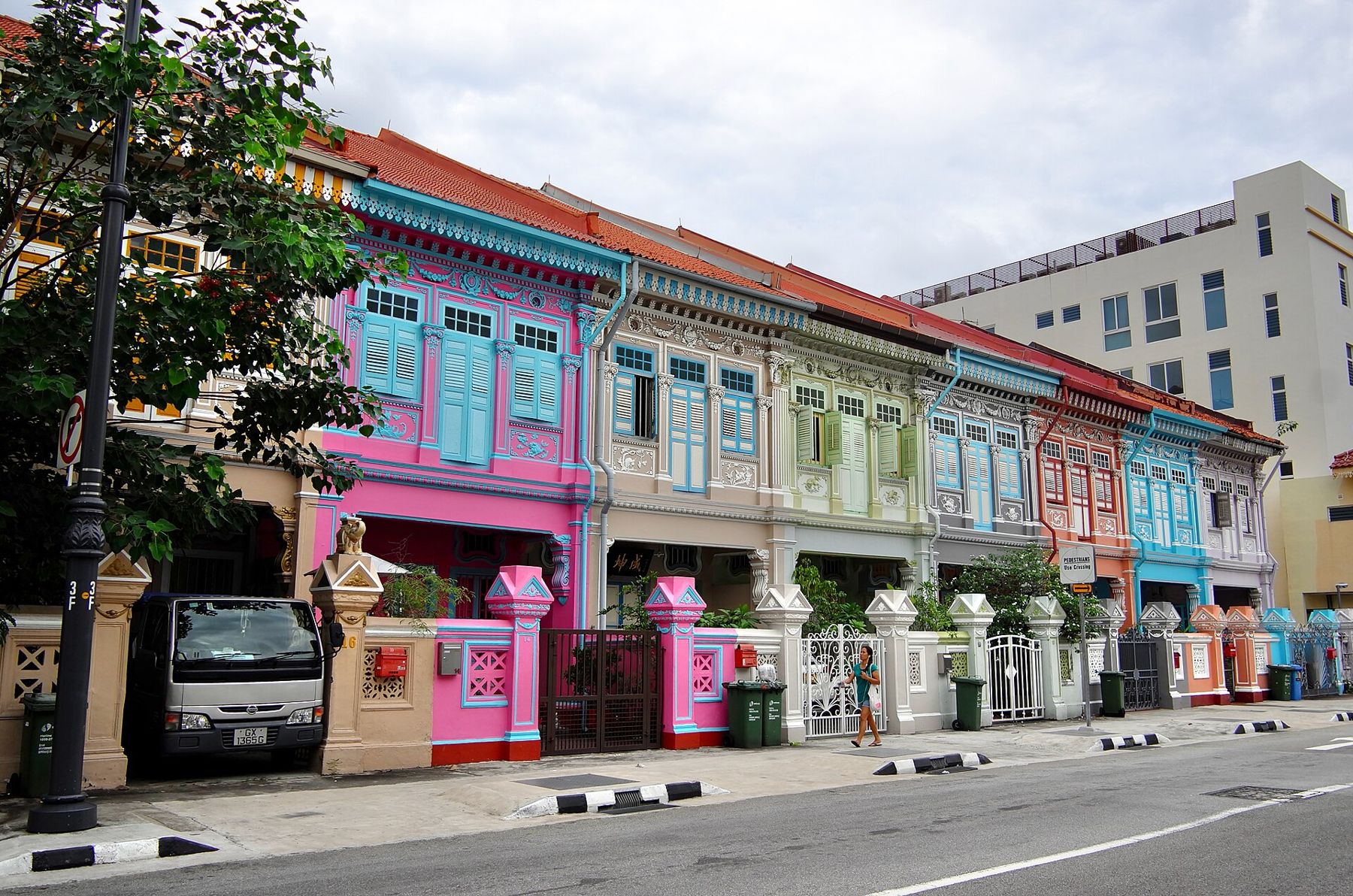
Koon Seng Road
Turn east off Joo Chiat Road into Koon Seng Road. The terrace houses here were built in the 1920s and 1930s and are among the most photographed buildings in Singapore. They are residential terraces rather than shophouses, with small front gardens, low gates and pintu pagar, the half-height swing doors that let air into the house while keeping out the eyes of passers-by.
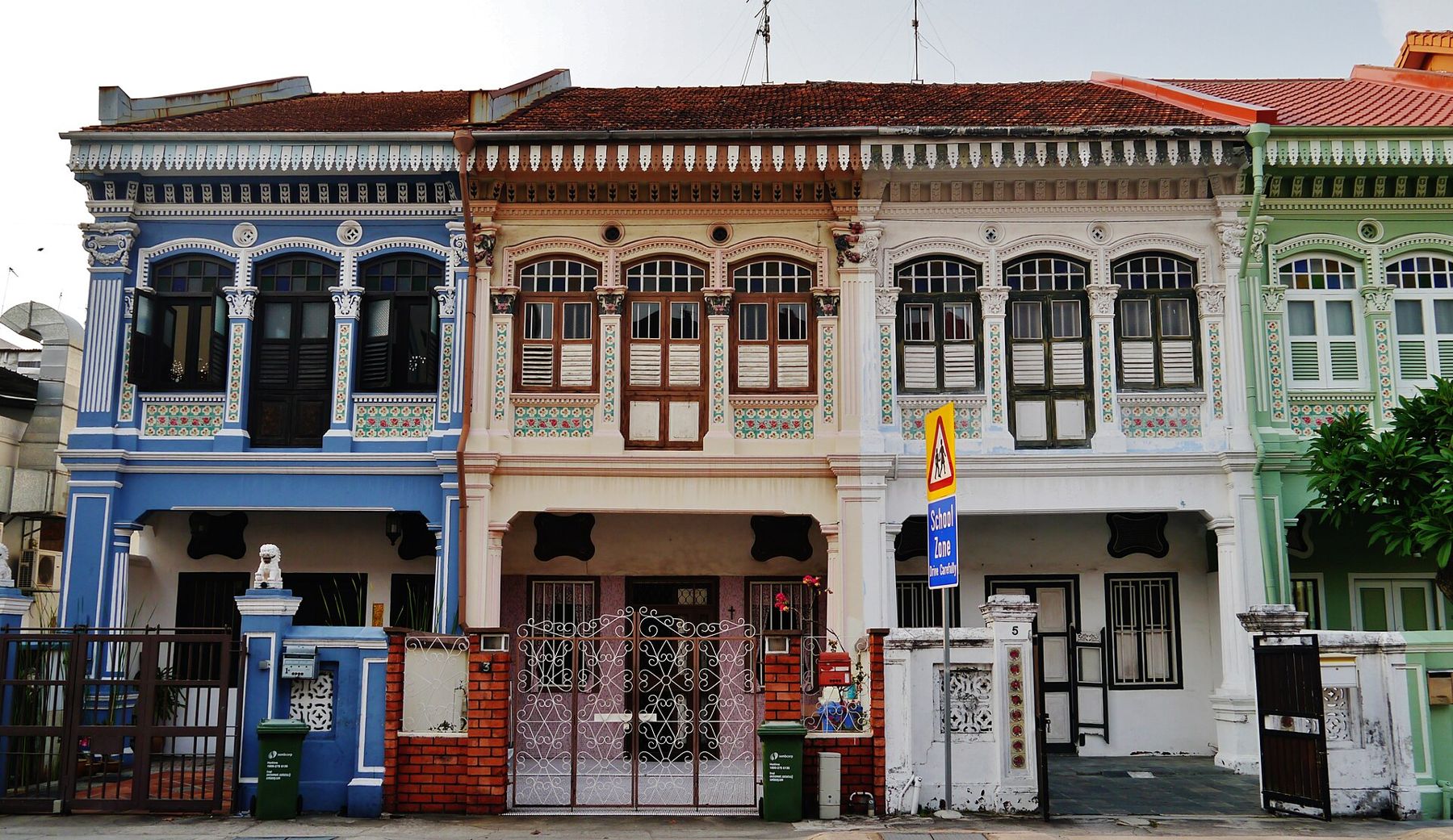
The style is often called Peranakan, because it was popular with Peranakan families, and it blends Chinese, Malay and European details: Chinese motifs of birds and flowers in the plasterwork, Malay timber fretwork in the eaves, and European pilasters and tiles. The tiles were often imported from Europe or Japan, and they are worth a close look from the pavement. Remember that people live here; keep to the pavement, do not block gates, and do not photograph residents without asking.
Nearby Tembeling Road and the lanes around it hold more terraces and a small Chinese temple, a reminder of how mixed the area always was.
Joo Chiat Road shophouses
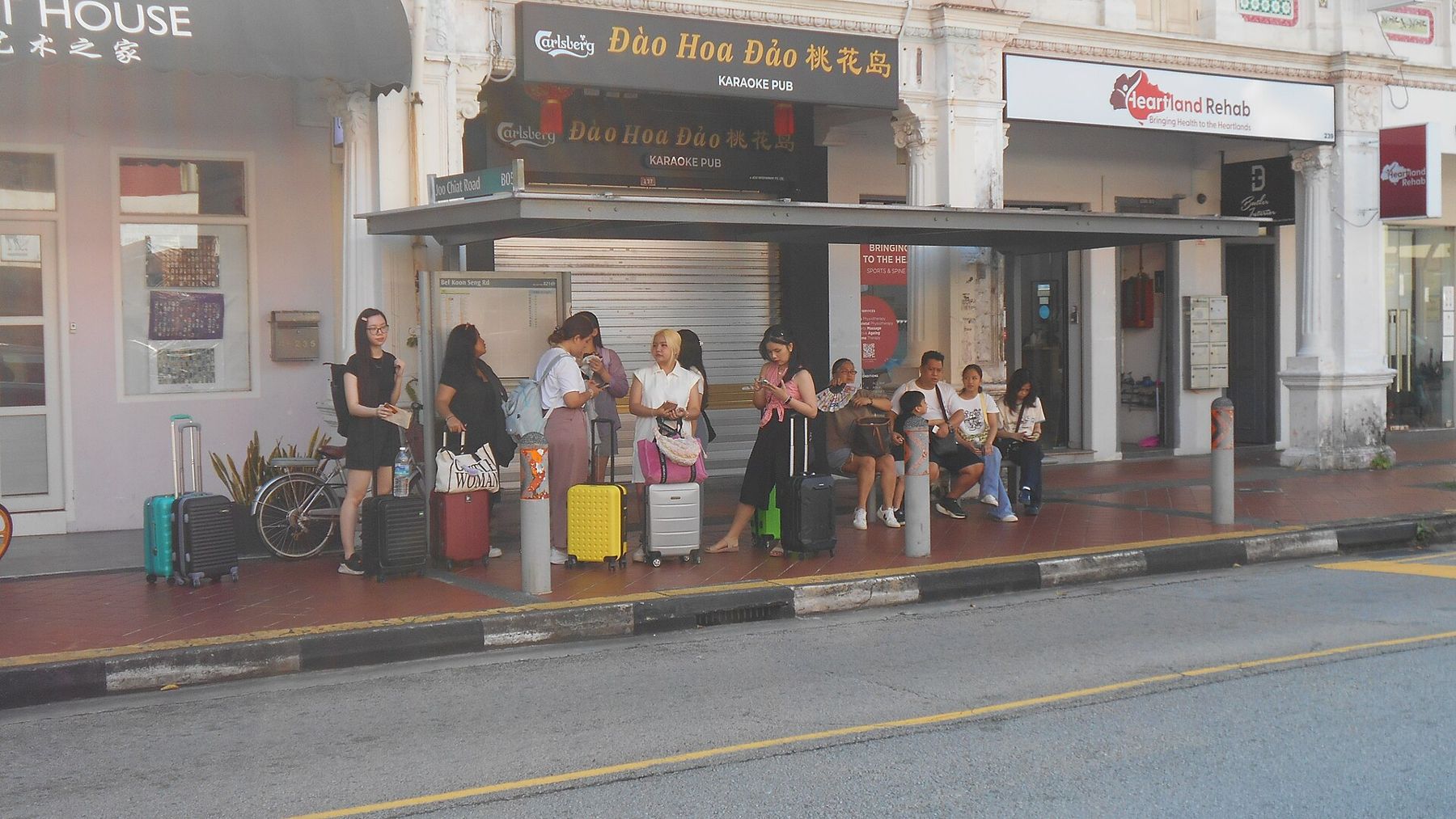
Back on Joo Chiat Road, walk south. The shophouses here are a mix of old businesses and new: shops selling Peranakan kueh and ceramics, Vietnamese and Malay eating houses, coffee shops, hardware stores and small hotels. The street had a rougher reputation for a time, with bars and karaoke lounges, but it has changed again in the past two decades.
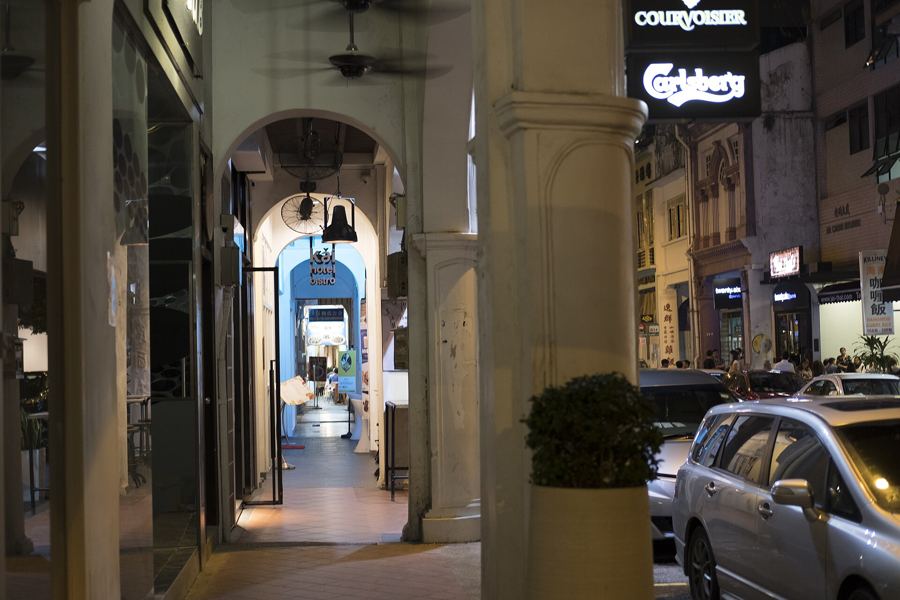 Next stall overShophouses, explained: the five-foot way, the styles and why they survived
Look up as you walk, above the shop signs. The upper floors keep the original facades: timber windows with louvred shutters, plaster mouldings and dates in the gables. At the corners, some of the shophouses are given rounded or angled fronts with extra decoration, a sign that the builder wanted to make the most of a site seen from two streets.
East Coast Road
At its southern end, Joo Chiat Road meets East Coast Road, the main street of old Katong. This is the place for laksa. Katong laksa is the local version of the dish: thick rice noodles in a rich, spicy broth of coconut milk and dried shrimp, with cockles, prawns and fishcake, and a spoon of sambal on the side. The difference is that the noodles are cut short, so the whole bowl can be eaten with a spoon. Several shops along this stretch serve it, and loyalties run deep; prices and opening hours change.
East Coast Road also has bakeries and shops selling Peranakan kueh, rempah and other ingredients for nyonya cooking, as well as cafés in restored shophouses. If you want to see more of the culture beyond the plate, the Peranakan Museum in the city is the place to go.
Sri Senpaga Vinayagar Temple
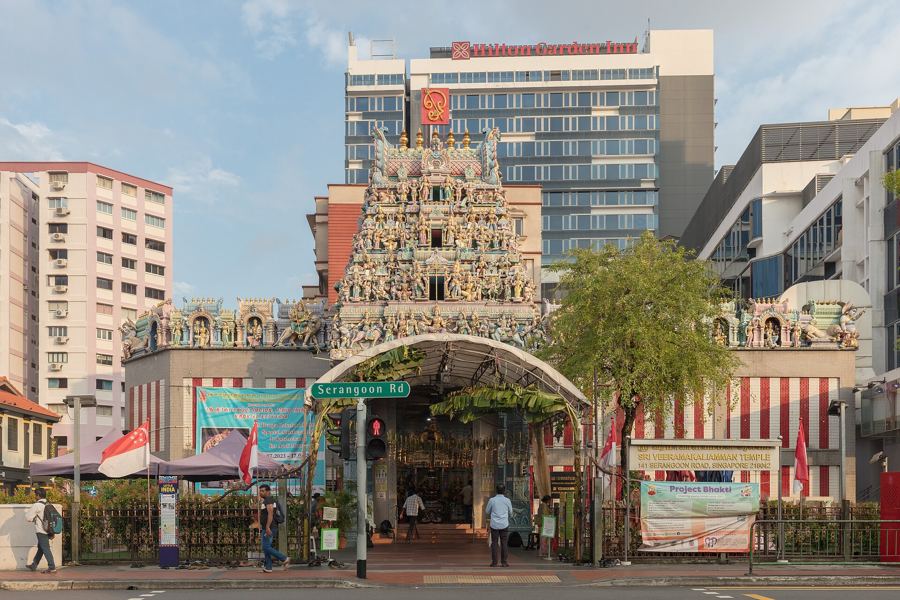
On Ceylon Road, a short walk away, stands the Sri Senpaga Vinayagar Temple, dedicated to Ganesha, the elephant-headed god of beginnings and the remover of obstacles. It was founded in the nineteenth century by Tamils from Ceylon, now Sri Lanka, and takes its name from the senpaga tree under which the first image was said to have been found. The present temple, with its tall gopuram and richly carved halls, is a later rebuilding.
Visitors are welcome outside prayer times. Remove your shoes, dress modestly and move quietly. Ceylon Road itself is also home to the Eurasian community's association, with a small gallery of Eurasian history, a reminder of another community that made Katong its own.
Church of the Holy Family
Further east on East Coast Road is the Church of the Holy Family, the Catholic parish church of Katong. The parish dates back to the early twentieth century, when many Eurasian and Peranakan Catholic families lived in the district, and the church has been rebuilt more than once; the present building is modern. It remains a centre of community life, especially at Christmas and Easter.
Walk the side streets around it, between East Coast Road and Marine Parade Road. A few of the old seaside bungalows survive here, with deep verandahs, tiled roofs and gardens full of frangipani and bougainvillea, alongside newer houses and condominiums.
Marine Parade Road
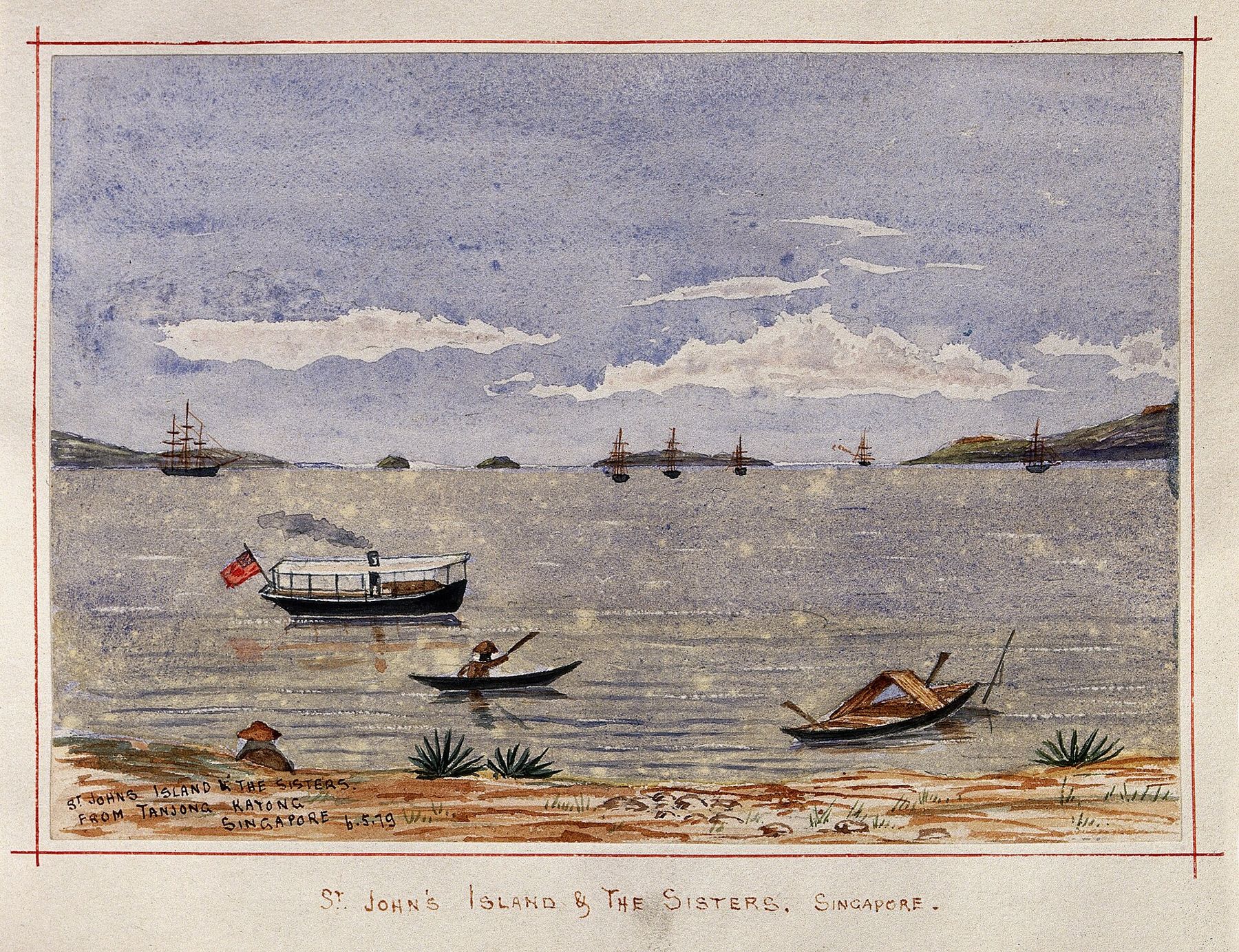
End at Marine Parade Road, which runs roughly along the line of the old shore. Until the 1960s and 1970s, the sea came almost to here, and the houses along the coast had their own beaches and bathing pavilions. Then the land was reclaimed, and the new ground was built up with the Marine Parade housing estate and, further out, East Coast Park, with its beaches, cycle tracks and seafood restaurants. An 1879 watercolour of the view from Tanjong Katong shows islands offshore and a quiet beach where housing blocks now stand.
Practical notes
Paya Lebar or Eunos MRT stations are closest to the start. The Thomson-East Coast Line has stations in Marine Parade and Katong that make the return easy; buses also run along East Coast Road back to the city. The walk is flat and shaded in places by the five-foot ways. Opening hours change, so check the temple and any restaurant you have in mind before you go.
For a comparison with the city's other historic districts, see the old quarters, compared, and for the hawker side of a visit to the east, dishes to know.
End with a bowl of laksa on East Coast Road, eaten with a spoon, the way Katong intended.