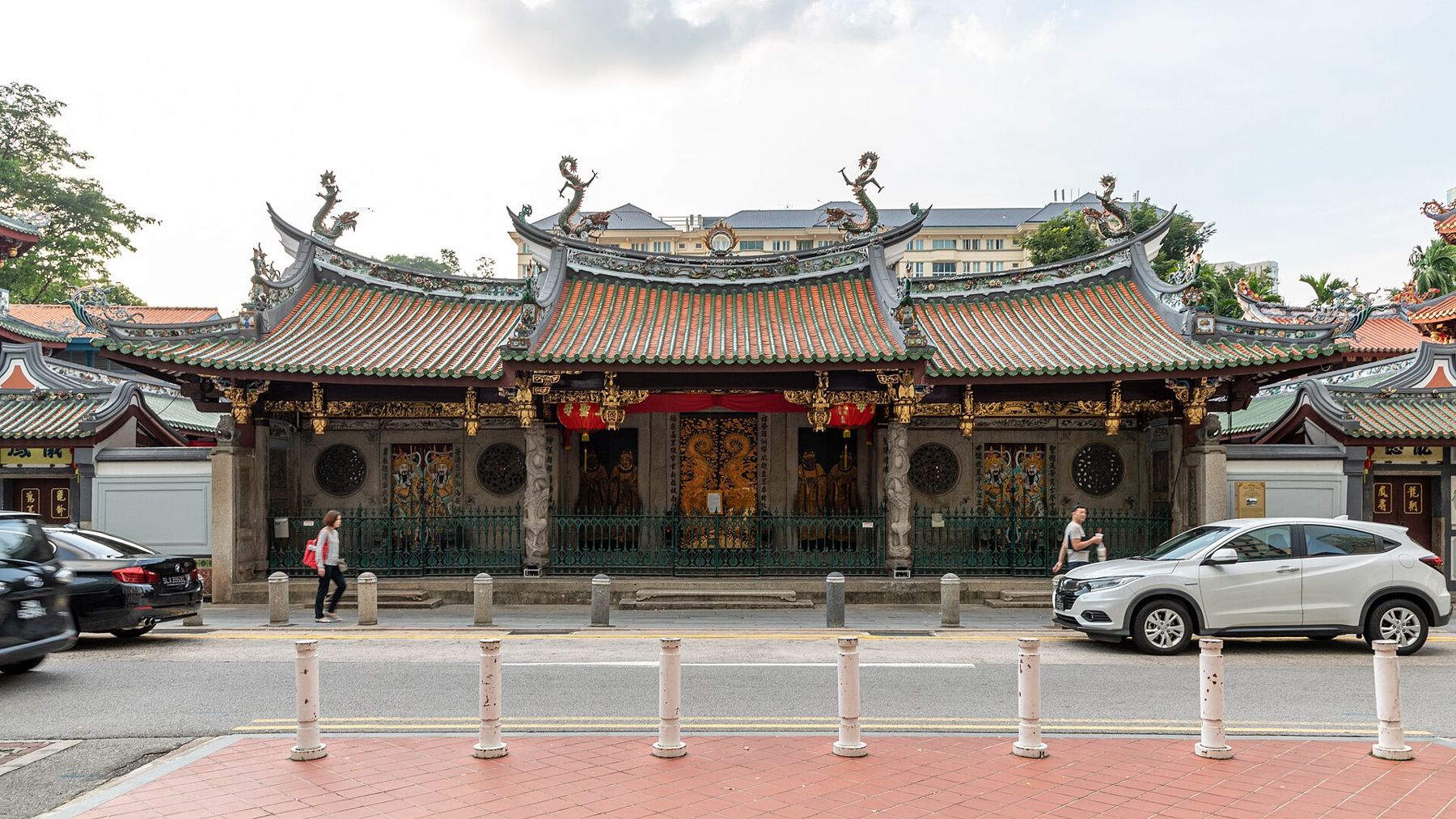
- Thian Hock Keng Hokkien temple to Mazu, the sea goddess, 1840s
- Ann Siang Hill Small hill of shophouses with a pocket park
- Club Street Street of old clan associations and guilds
- Buddha Tooth Relic Temple Tang-style Buddhist temple completed in 2007
- Sri Mariamman Temple Singapore's oldest Hindu temple, founded 1827
- Pagoda Street Shophouse street named after the temple's tower
The first thing you notice in the courtyard of Thian Hock Keng is the smoke: coils of incense hung from the roof beams, burning for weeks, and joss sticks smouldering in great bronze urns. Then the roof, which seems to be alive with dragons, carp and porcelain figures. Then the quiet. Outside, Telok Ayer Street is lined with office workers buying coffee. Inside, an old woman bows three times with a bundle of joss sticks, then plants them in the urn and moves on.
Chinatown was laid out under the 1822 town plan as the Chinese district, on the south-west bank of the Singapore River. Its Chinese names reflect its early life: in Cantonese it is still sometimes called Ngau Che Shui, bullock-cart water, after the carts that brought water to its streets. It grew into the most crowded part of the city, with shophouses, temples, clan houses and coolie lodgings packed into a few blocks. Much of it was cleared and rebuilt after independence, but a large area was conserved from 1989, and the shophouse rows you walk through today are the result.
This walk follows the temples, which show something else about the quarter: that it was never only Chinese. A Hokkien temple, a Hindu temple, a mosque and a modern Buddhist temple all stand within a few minutes of each other.
Thian Hock Keng
Thian Hock Keng, the Temple of Heavenly Happiness, was built between 1839 and 1842 by the Hokkien community and is dedicated to Mazu, the goddess of the sea. When it was built, Telok Ayer Street ran along the shore; the name means bay water in Malay. Chinese immigrants who had survived the voyage from Fujian came here to give thanks for a safe crossing. Land reclamation later pushed the sea far away, and the temple now faces a row of office towers.
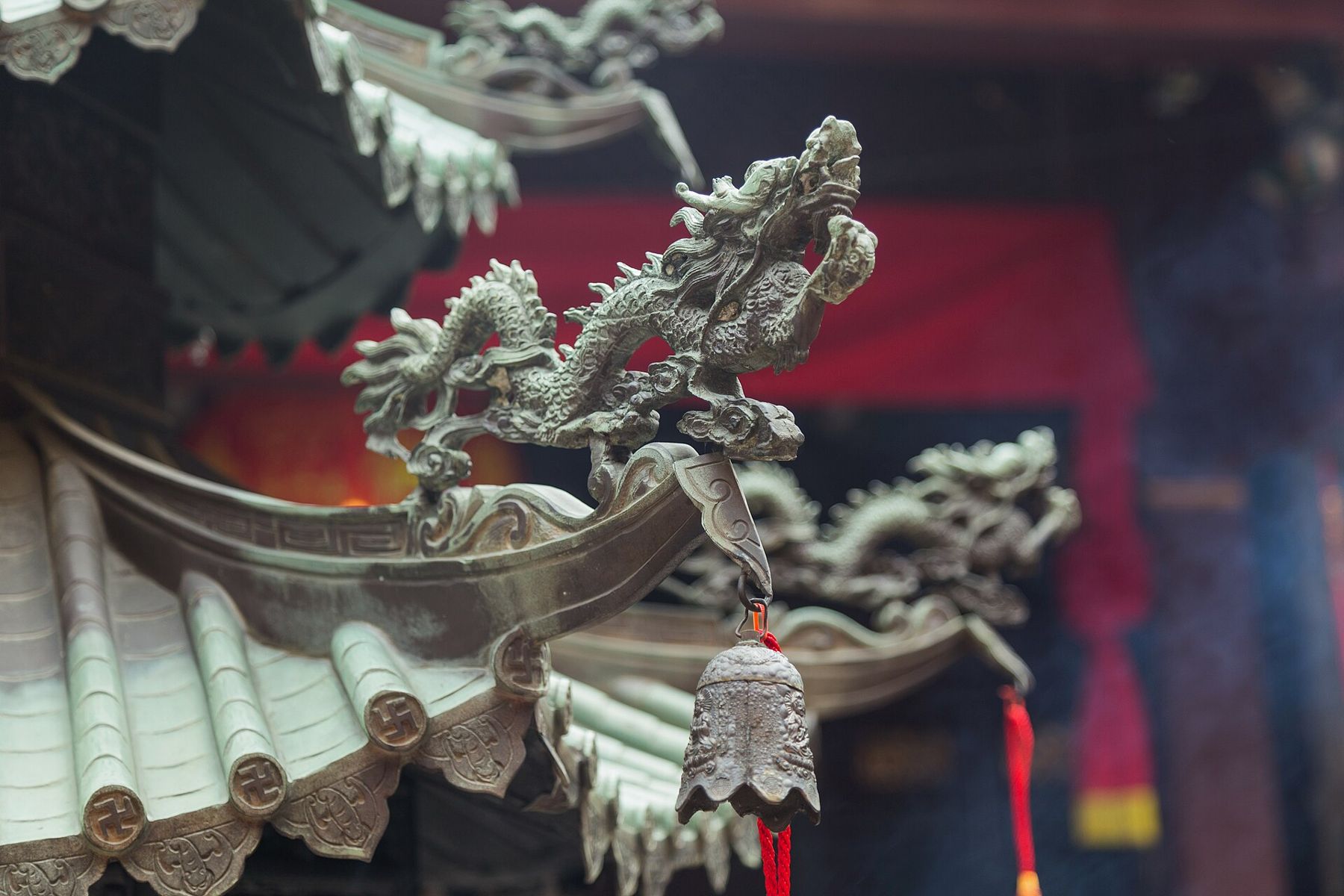
The temple is built in the southern Chinese style, with granite columns, carved timber beams and roof ridges crowded with figures. It was gazetted as a national monument in 1973 and carefully restored around the turn of the century. Inside, the main hall holds the image of Mazu, with further halls and shrines behind. Visitors are welcome. Stay to the side when people are praying, and do not step on the raised thresholds at the doors.
Walk a little way along Telok Ayer Street before leaving it. Within a few hundred metres are the Al-Abrar Mosque, founded by Tamil Muslims in the early years of the settlement, and the Nagore Dargah, a shrine built in the 1820s and 1830s for south Indian Muslims, which has housed a small heritage centre. The street was one of the most religiously mixed in Singapore from the start.
Ann Siang Hill
From Telok Ayer Street, climb the steps of the small park by Amoy Street and you reach Ann Siang Hill, one of the few hills that survived in the old town. It is named after Chia Ann Siang, a nineteenth-century Hokkien merchant who owned land here, and the hill was once planted with nutmeg and clove before the town grew over it.
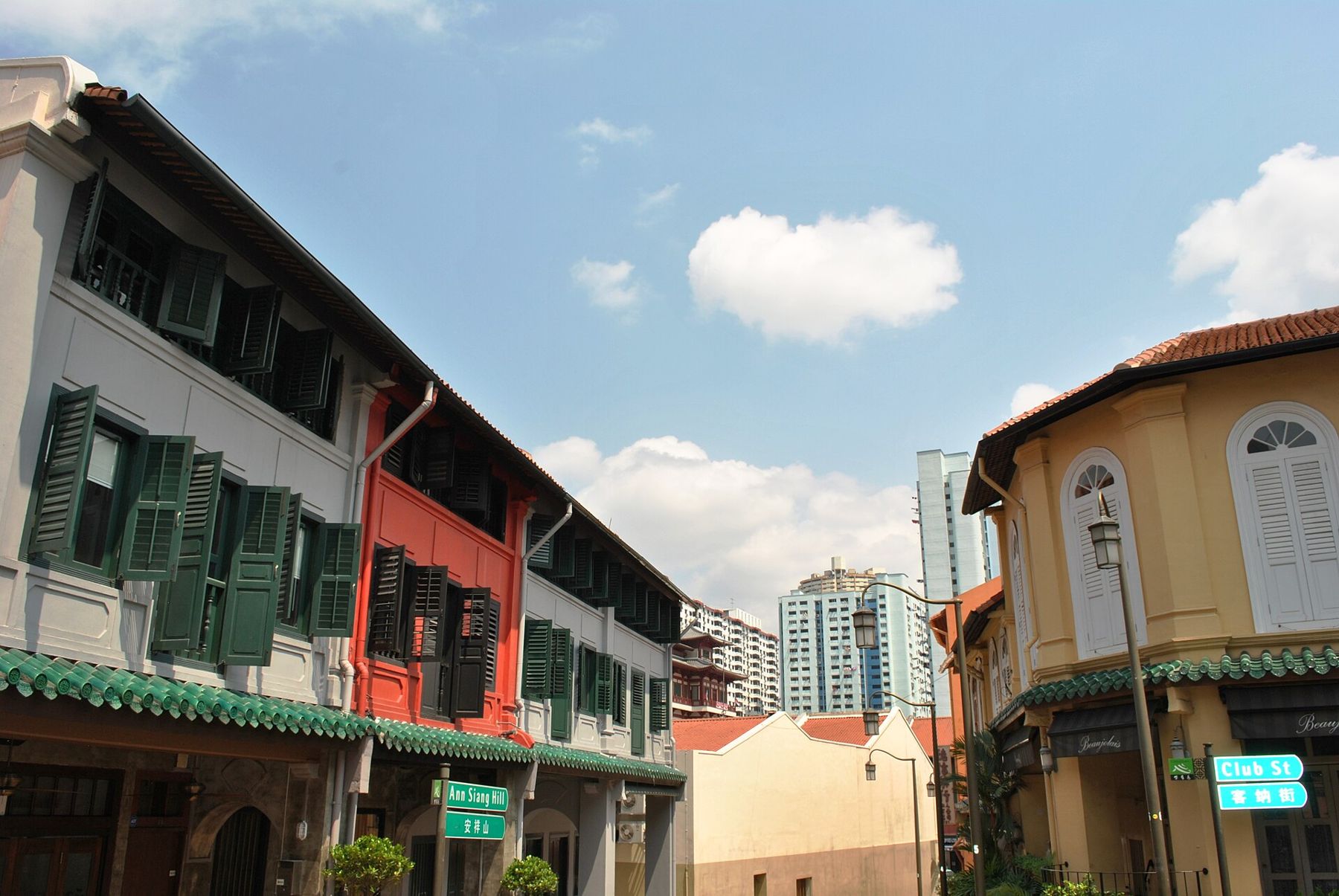
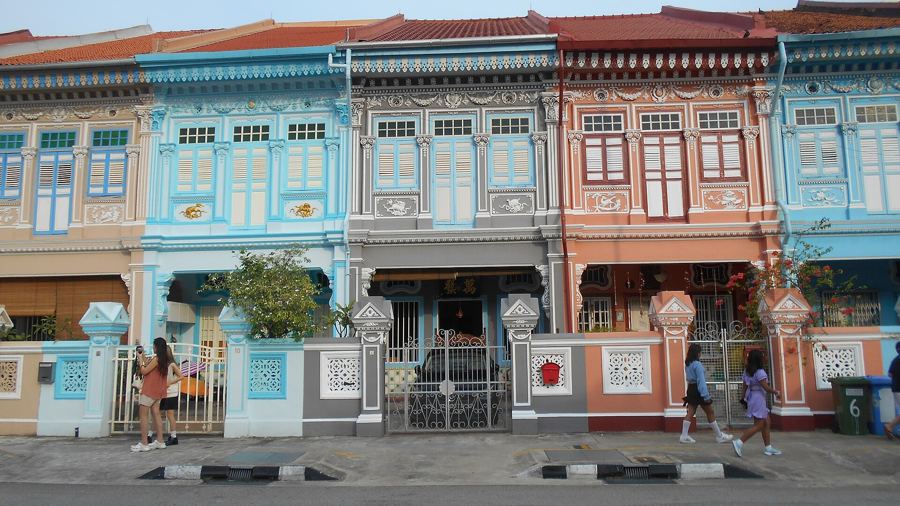
Ann Siang Hill and Ann Siang Road curve up and over the top, lined with two- and three-storey shophouses in many styles, from plain early fronts to Art Deco. Many have been restored and painted in soft colours, and they now hold small hotels, restaurants and shops. The pocket park at the top is a good place to stop for a minute in the shade and look back down towards Telok Ayer.
Club Street
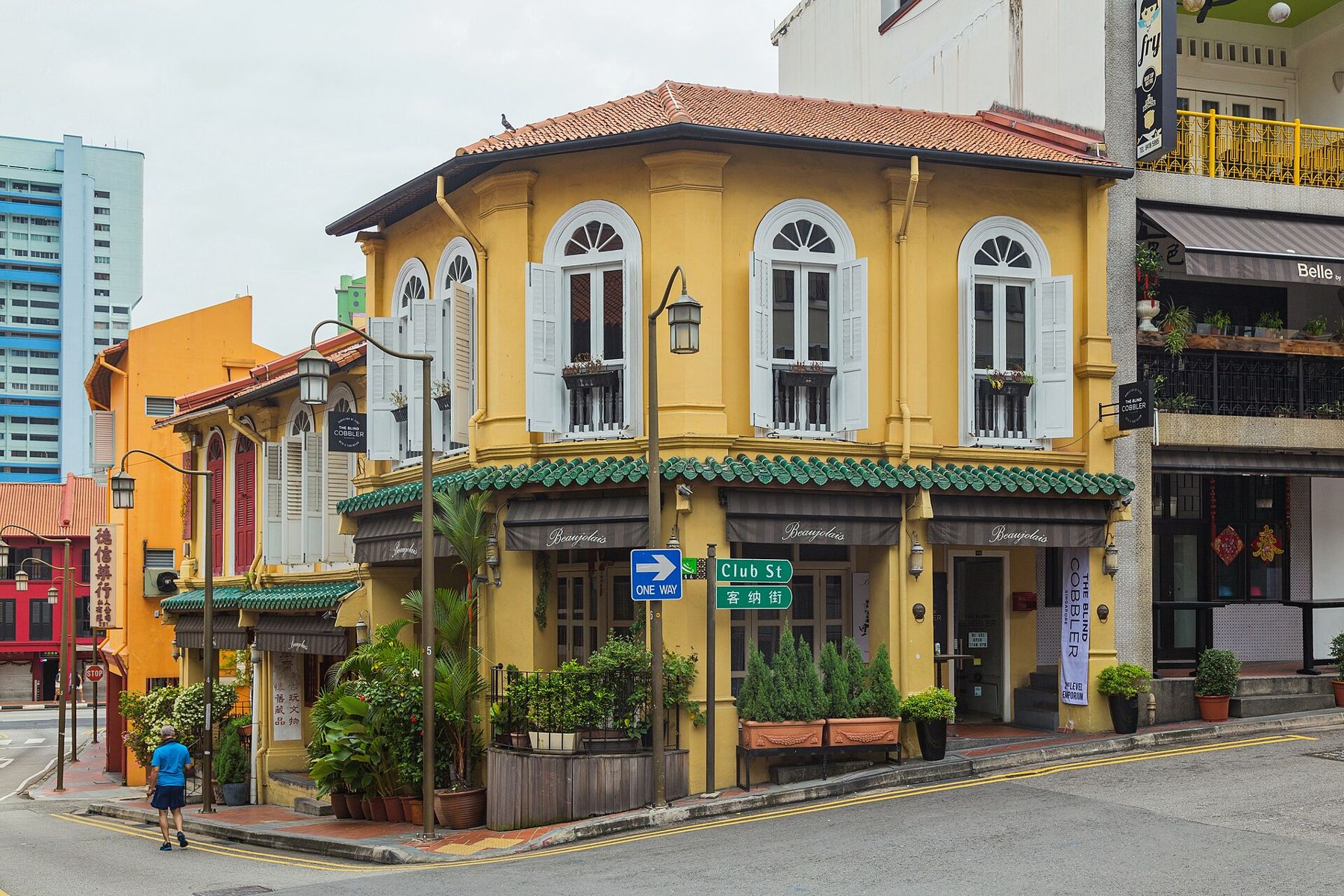
From the top of the hill, Club Street runs down towards Cross Street. It takes its name from the Chinese clubs, clan associations and guilds that made their homes here, and some of their buildings still stand, with gilded name boards over the doors. Others are now bars, restaurants and design studios.
 Next stall overLittle India by morning, from the Tekka market to the temples of Serangoon Road
Club Street is busy at night and on weekend evenings, when part of it may be closed to traffic and tables spill into the road. In the morning it is quiet, and you can look properly at the facades: the decorated pilasters, the timber shutters, the plaster swags and the names of the associations moulded into the gables. It is one of the best streets in Singapore for seeing how the shophouse evolved.
Buddha Tooth Relic Temple
Cross South Bridge Road and walk south to the corner of Sago Street, where a tall red and gold building rises over the shophouses. The Buddha Tooth Relic Temple was completed in 2007 and is built in the style of the Tang dynasty, with layered roofs and deep eaves. It houses what the temple holds to be a tooth relic of the Buddha, kept in a large stupa of gold on an upper floor, which visitors can view from a set area.
The temple is large and busy, with a main hall lined with small Buddha images, a museum of Buddhist art and history, and a rooftop garden with a big prayer wheel that visitors may turn. Dress modestly; the temple asks that shoulders and knees be covered, and it lends shawls at the door. Chanting sessions take place at set times, and visitors may sit quietly at the back.
Sri Mariamman Temple
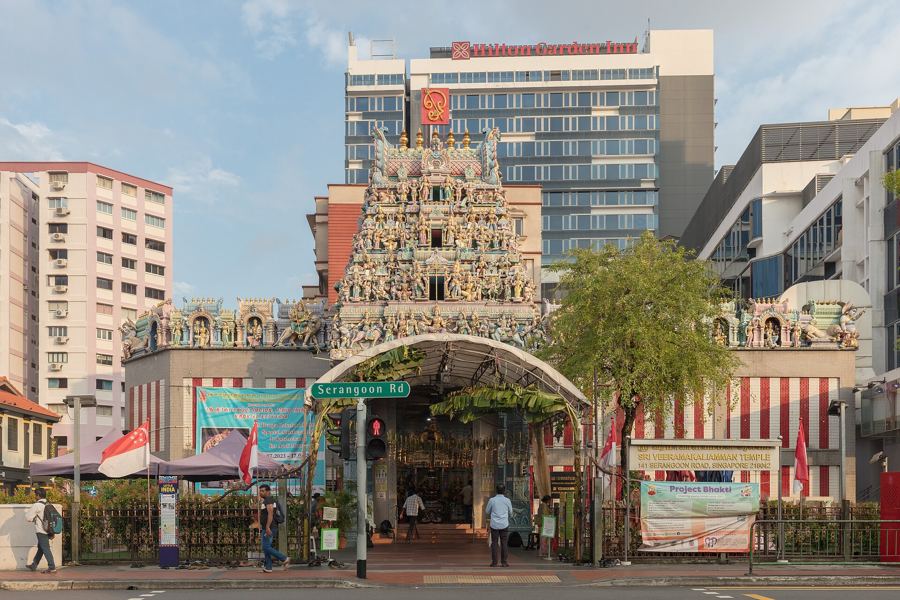
Walk north along South Bridge Road and you reach the gopuram, the tall gate tower, of the Sri Mariamman Temple, covered in brightly painted figures of gods, goddesses and guardians. This is the oldest Hindu temple in Singapore. It was founded in 1827 by Naraina Pillai, a trader from south India who arrived with Raffles, and the main building was rebuilt in brick in the 1840s. The temple is dedicated to Mariamman, a mother goddess worshipped for protection from illness.
Leave your shoes outside the entrance and walk in. The main shrine faces the gate, with smaller shrines around the walls, and there is usually a puja, a prayer ritual, under way, with bells, flames and offerings of flowers and fruit. Each year the temple holds Theemithi, the fire-walking festival, when devotees walk across a pit of hot coals in an act of faith.
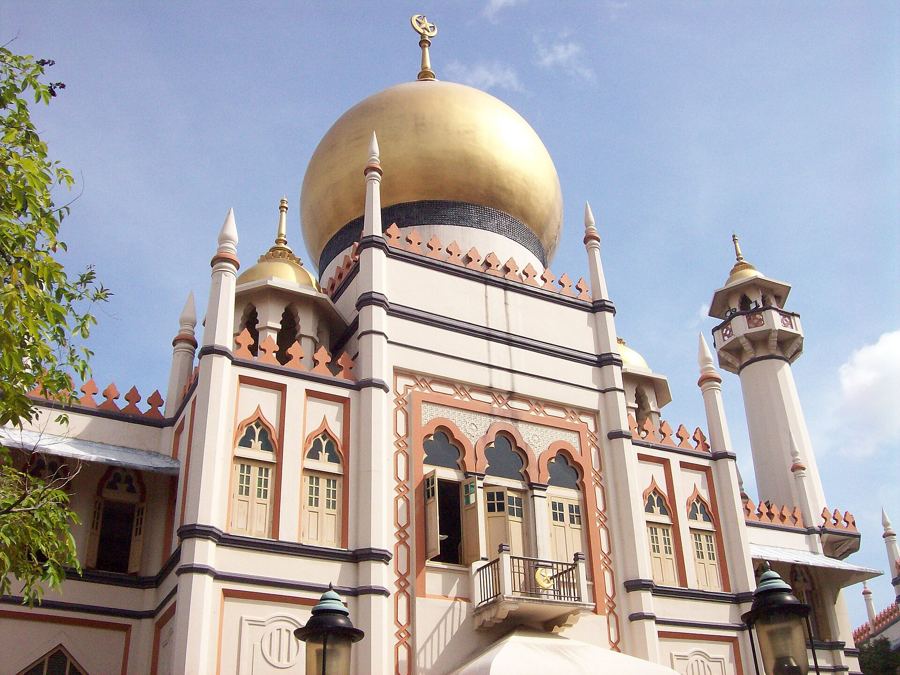
A little further along South Bridge Road is Masjid Jamae, built by Chulia Muslims from south India in the 1820s and 1830s, with two minarets that echo the temple tower. The two buildings have stood near each other for nearly two centuries.
Pagoda Street
Pagoda Street runs from South Bridge Road beside the Sri Mariamman Temple, and it takes its name from the temple's tower. Today it is the busiest street in Chinatown, lined with souvenir stalls, tailors and restaurants under the shophouse arcades. In the nineteenth century, the shophouses here held coolie lodgings, where dozens of labourers shared rooms divided into cubicles, and trading houses that dealt in labour from China.
A heritage centre in three restored shophouses on the street has recreated the cramped rooms of that era; check whether it is open before you plan around it. Turn into Trengganu Street and Smith Street for more shophouse rows, then end at Chinatown MRT station at the bottom of Pagoda Street.
Practical notes
Start at Telok Ayer MRT station on the Downtown Line and finish at Chinatown station. The walk is mostly flat and partly shaded by the five-foot ways, with one short climb up Ann Siang Hill. Opening hours of temples and museums change, so check before you go; mornings are the best time, when the temples are busiest with worshippers and quietest with visitors.
For food, Chinatown has several hawker centres within a few minutes' walk of the route, including Maxwell Food Centre and Chinatown Complex; the best hawker centres story covers them. For how the old rows were built and why they look the way they do, read our guide to the shophouse, and for a comparison with the city's other quarters, see the old quarters, compared.
End with a cup of tea in one of the teahouses on the side streets, watching the afternoon light come down Pagoda Street and the temple tower above it.