- Tekka Centre Wet market, hawker centre and tailors under one roof
- House of Tan Teng Niah Brightly painted Chinese villa of 1900
- Campbell Lane and the Indian Heritage Centre Garland stalls and a museum of Indian Singapore
- Abdul Gafoor Mosque Mosque of 1910 on Dunlop Street
- Sri Veeramakaliamman Temple Temple to the goddess Kali, founded 1850s
- Sri Srinivasa Perumal Temple Vishnu temple where the Thaipusam procession begins
At seven in the morning the garland makers on the five-foot ways of Little India are already at work. They sit cross-legged behind heaps of jasmine, marigold, rose petals and green leaves, threading flowers on string with quick fingers, while customers stop to buy a strand for a temple, a shrine at home or a doorway. The smell of jasmine mixes with incense, frying dough and diesel. Across the road, the wet market is in full voice.
Little India grew up along Serangoon Road in the nineteenth century, outside the original town plan. Its early trades were cattle and brick-making, which brought Indian workers, many of them from south India, to the area; Kerbau Road and Buffalo Road still carry the memory of the cattle. The quarter became the centre of Indian life in Singapore, with temples, mosques, churches, shops and eating houses, and it was gazetted as a conservation area in 1989. It is still a working neighbourhood, busiest on Sundays, when many migrant workers come for their day off.
This walk follows Serangoon Road from south to north, from the market to the temples, and takes a morning.
Tekka Centre
Start at Tekka Centre, the big market at the corner of Serangoon Road and Buffalo Road, across from Little India MRT. The name is usually traced to a Hokkien phrase meaning the foot of the small bamboos, after the bamboo that once grew along the nearby canal. The ground floor holds a wet market, one of the largest in Singapore, with fish laid out on ice, mutton and chicken, piles of vegetables used in Indian, Chinese and Malay cooking, and spice stalls grinding masala to order.
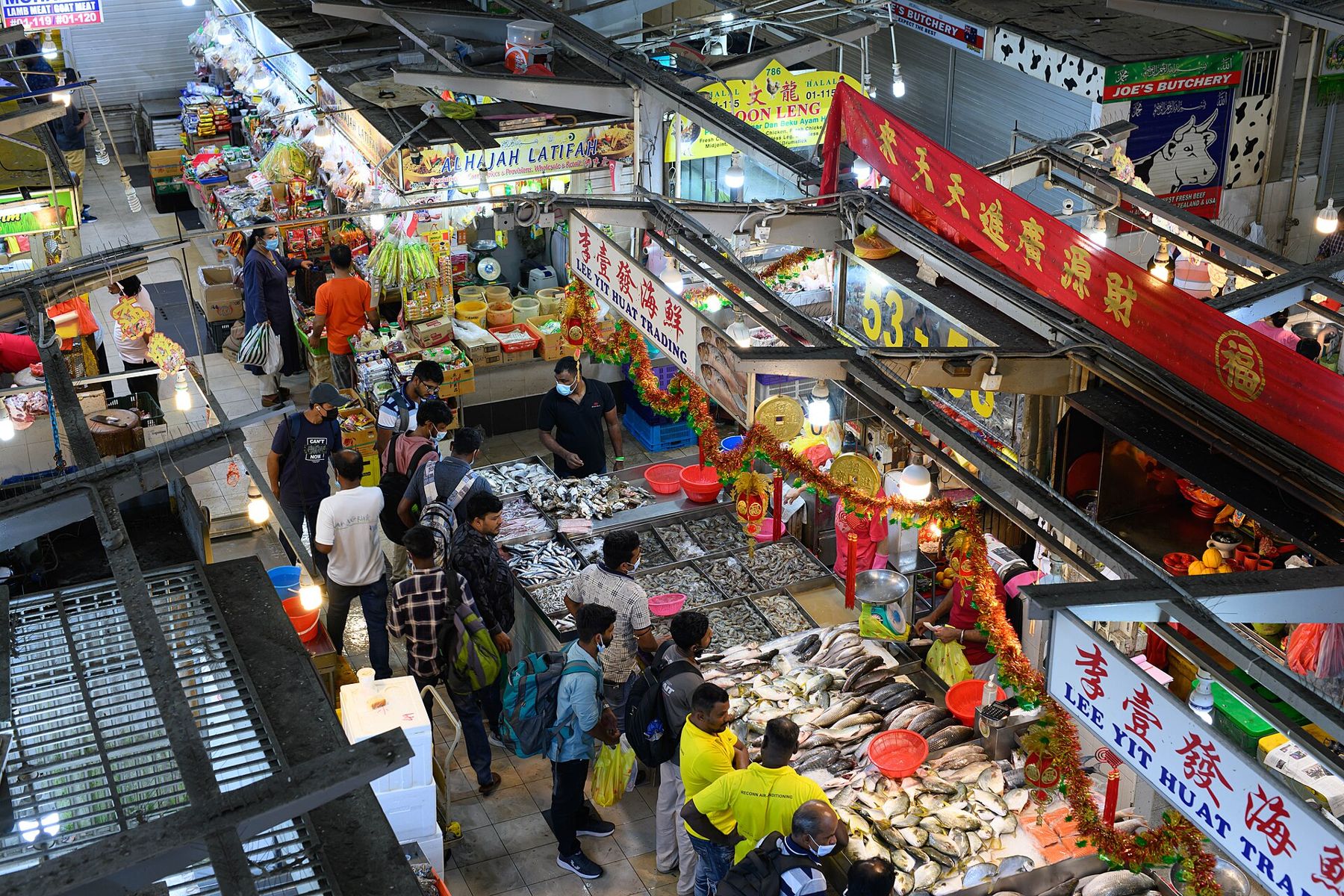
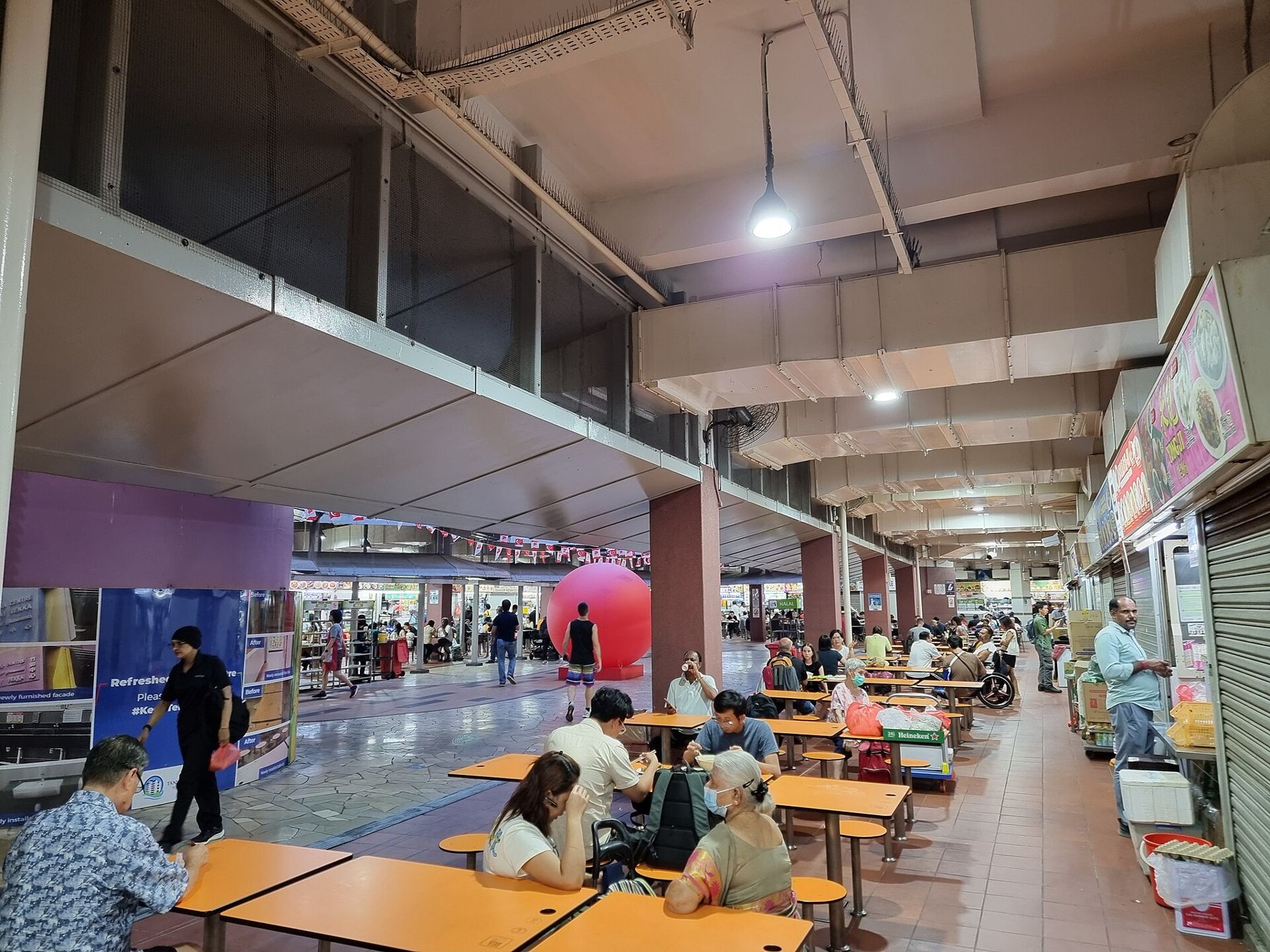
The other half of the ground floor is a hawker centre, where breakfast might be thosai, appam, idli, prata, biryani or a cup of strong pulled tea. The upper floor is a maze of tailors and shops selling saris, salwar kameez and fabric by the metre. Come before nine, when the market is busiest and the hawker centre is full of people on their way to work.
House of Tan Teng Niah
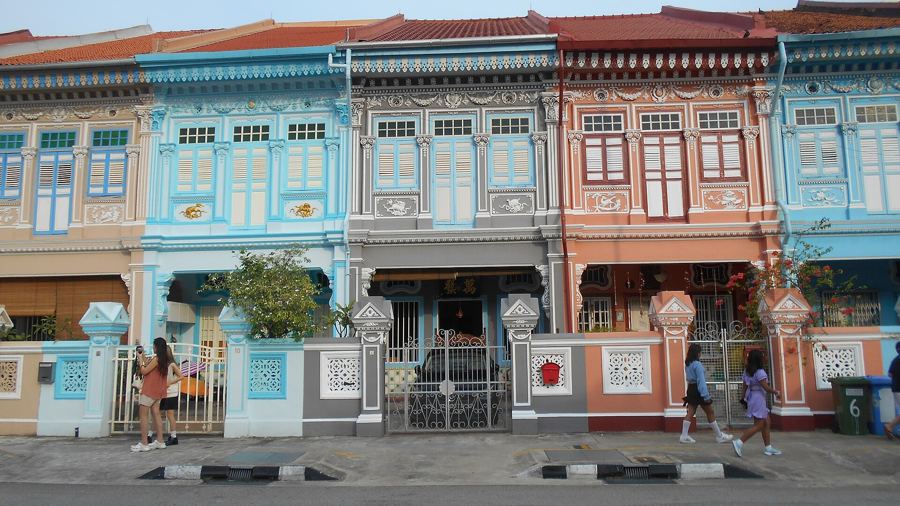
Cross Serangoon Road and walk up Kerbau Road to the most photographed house in the neighbourhood. The House of Tan Teng Niah was built in 1900 for a Chinese businessman of that name who ran businesses in the area. It is a rare surviving Chinese villa in Little India, with carved timber doors, shuttered windows and deep eaves.
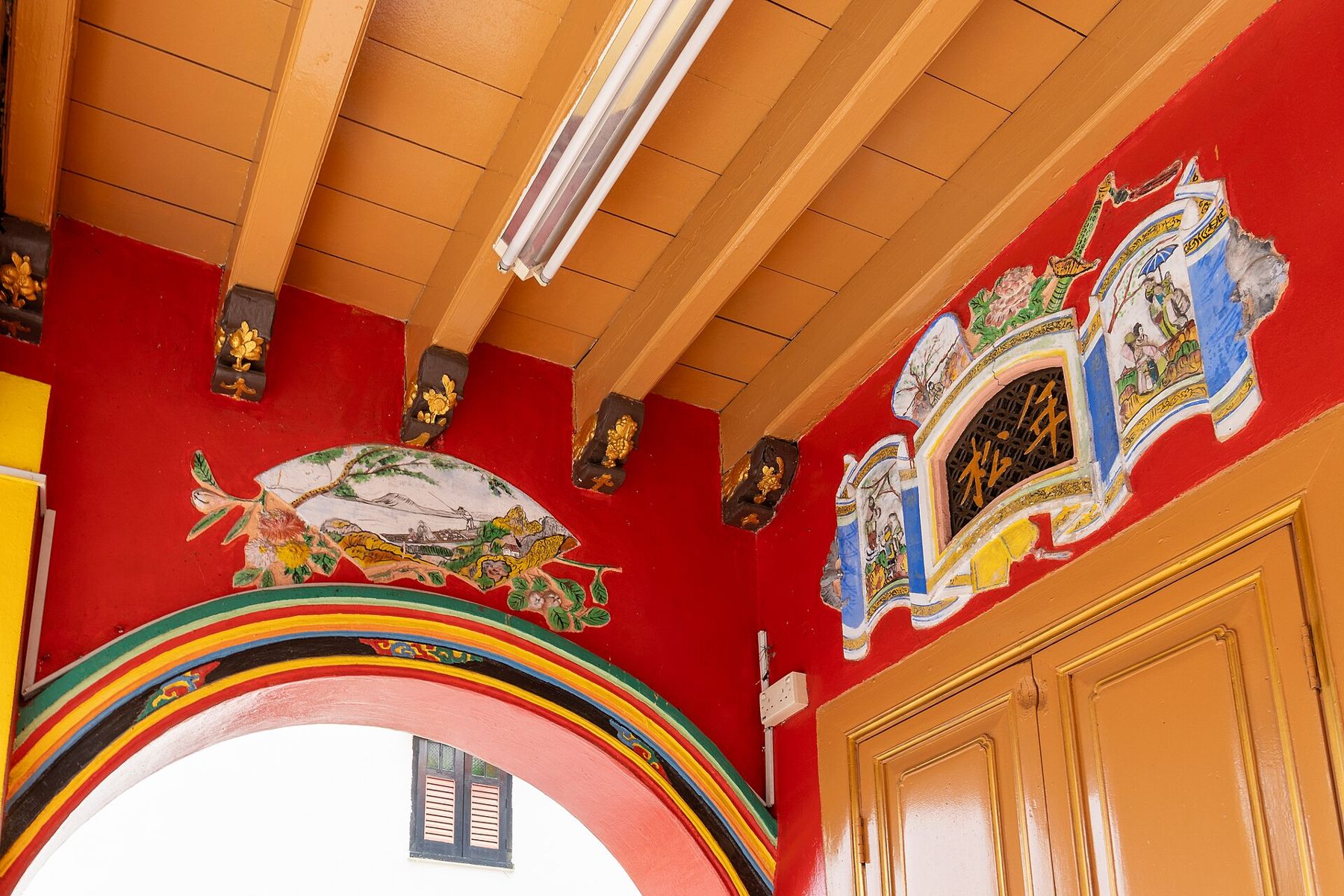
Its fame comes from its paint. When it was restored, the house was coloured in every shade of the rainbow, door by door and window by window, and it now stands as a cheerful reminder that Little India was always a mixed neighbourhood. It is a private building, so admire it from the street.
Campbell Lane and the Indian Heritage Centre
Walk back down Serangoon Road to Campbell Lane, where garland stalls, shops of brass lamps, puja goods and festival decorations line the five-foot ways. Before Deepavali, the festival of lights, the lane and the whole of Serangoon Road are hung with lights and filled with stalls selling sweets, clothes and decorations.
At the end of Campbell Lane is the Indian Heritage Centre, opened in 2015, a modern building of glass and coloured screens whose design draws on the stepped wells of India. Its galleries tell the story of Indian and South Asian communities in Singapore and the region, from the early traders and convict labourers to the professionals, merchants and workers who built the modern city. Hours and prices change, so check them before you go.
 Next stall overChinatown, temple to temple, from Telok Ayer to Pagoda Street
Abdul Gafoor Mosque
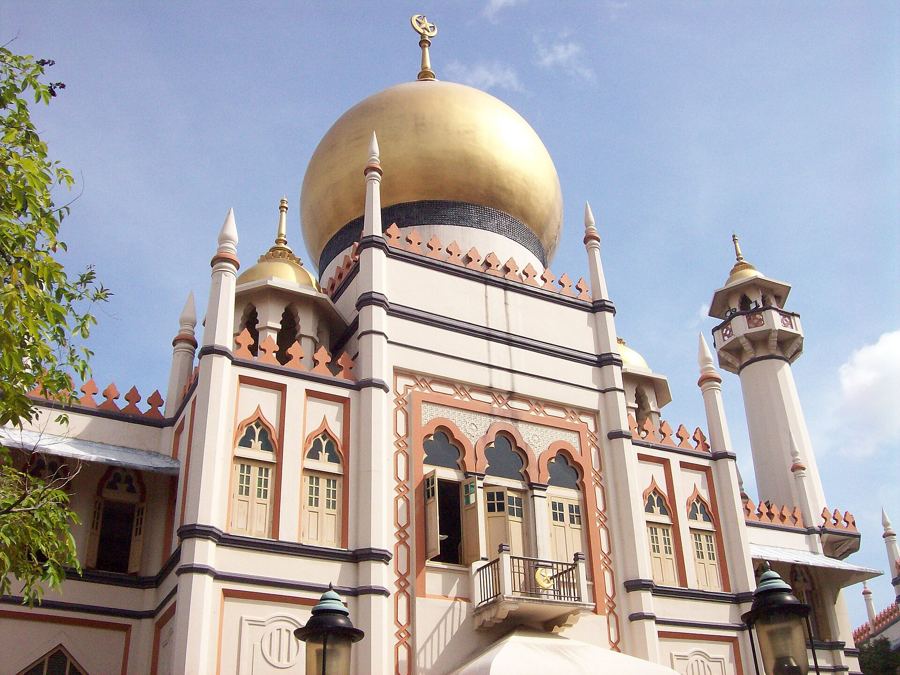
Cross Serangoon Road to Dunlop Street and the Abdul Gafoor Mosque, completed in 1910. It was built for the south Indian Muslim community that worked and traded in the area, and it is one of the most ornate mosques in Singapore, with a mix of Islamic and European details, small onion domes, star and crescent finials and a decorative panel over the main entrance in the shape of a sunburst.
The mosque was restored in the early 2000s, and its courtyard is calm after the bustle of Serangoon Road. Visitors may look in from the courtyard outside prayer times, dressed modestly. The street around it holds small hotels, money changers, eating houses and shops selling everything from gold to luggage.
Sri Veeramakaliamman Temple
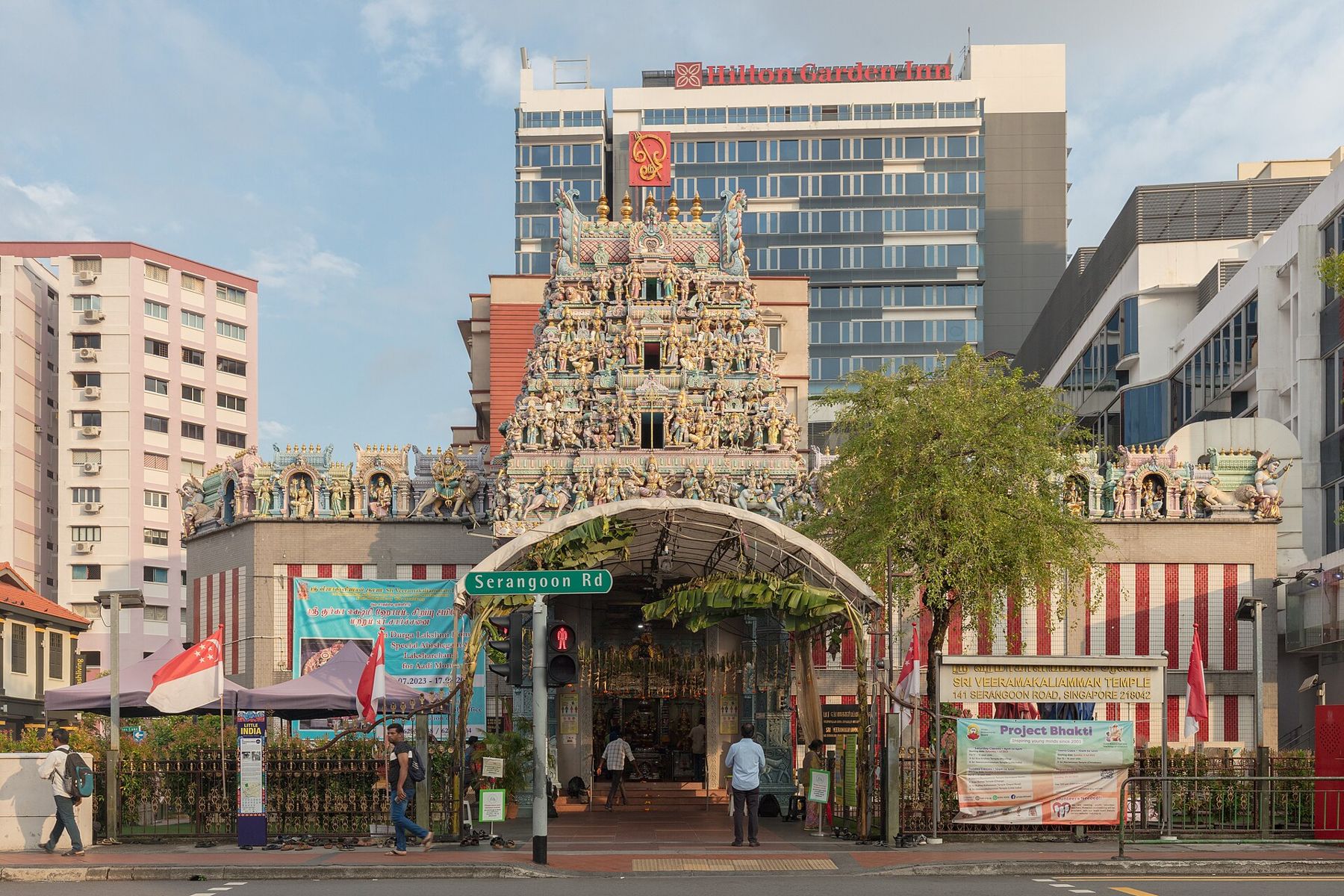
Walk north up Serangoon Road to the Sri Veeramakaliamman Temple, one of the oldest Hindu temples in Singapore. It was founded in the 1850s by Indian workers who settled in the area, and it is dedicated to Kali, the fierce form of the goddess, who protects her devotees from evil. The gopuram over the entrance is covered with sculptures of deities, and the interior is full of shrines, with Kali in black at the centre.
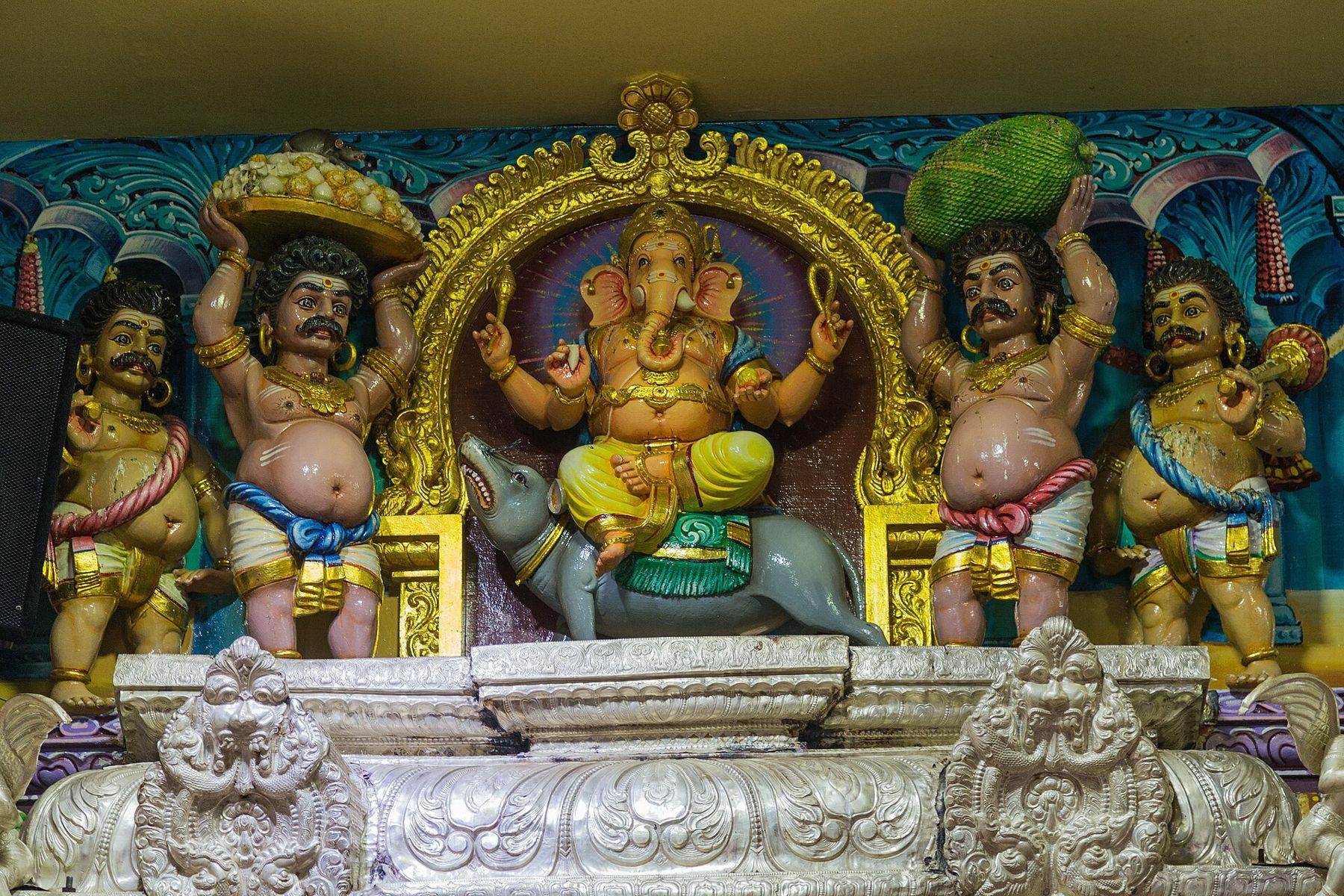
The temple is busiest in the morning and evening, when the priests perform puja and the bells ring. Visitors are welcome: leave your shoes at the entrance, walk clockwise around the shrines as worshippers do, and stand back from the inner sanctum. Do not photograph the priests or the deities during prayers without asking. Many visitors find that simply sitting at the side and watching for a few minutes is the best way to understand the place.
Sri Srinivasa Perumal Temple
Continue north along Serangoon Road, past shophouses of jewellers, sari shops and vegetarian restaurants, to the Sri Srinivasa Perumal Temple, dedicated to Vishnu. It was founded in the 1850s, and its six-tiered gopuram, completed in the 1960s, is one of the most striking on the island, crowded with painted figures of Vishnu's avatars.
Each year, during the festival of Thaipusam, the temple is the starting point of a procession in which devotees carry kavadi, elaborate frames of metal and peacock feathers, some attached to the skin with hooks and skewers, and walk several kilometres to the Sri Thendayuthapani Temple on Tank Road as an act of devotion and thanksgiving. Visitors may watch from the roadside and should keep the route clear.
Practical notes
Start at Little India MRT station, beside Tekka Centre, and finish at Farrer Park station, near the Sri Srinivasa Perumal Temple. Both are on the North East Line. The walk is flat and shaded in places by the five-foot ways, but it is hot by late morning, so start early. Opening hours of temples and museums change, and the temples close in the middle of the day for some hours, so plan to see them in the morning.
Little India is close to Kampong Glam, a fifteen-minute walk to the south-east, and the two combine well in a day. For the city's other historic districts, see the old quarters, compared, and for the festival calendar, including Deepavali, Thaipusam and Pongal, see the festivals of the year.
If you have time for one more stop, the side streets between Serangoon Road and Jalan Besar repay wandering: Dickson Road, Upper Dickson Road and Hindoo Road are lined with shophouses, many restored in pastel colours, and the old trades of the area, from goldsmiths to ironmongers, still share the rows with newer cafés and hotels. It is a reminder that this quarter, like the others, was always more mixed than its name suggests.
Buy a strand of jasmine on the way back to the station. It costs little, it smells wonderful, and it will scent your room for the rest of the day.