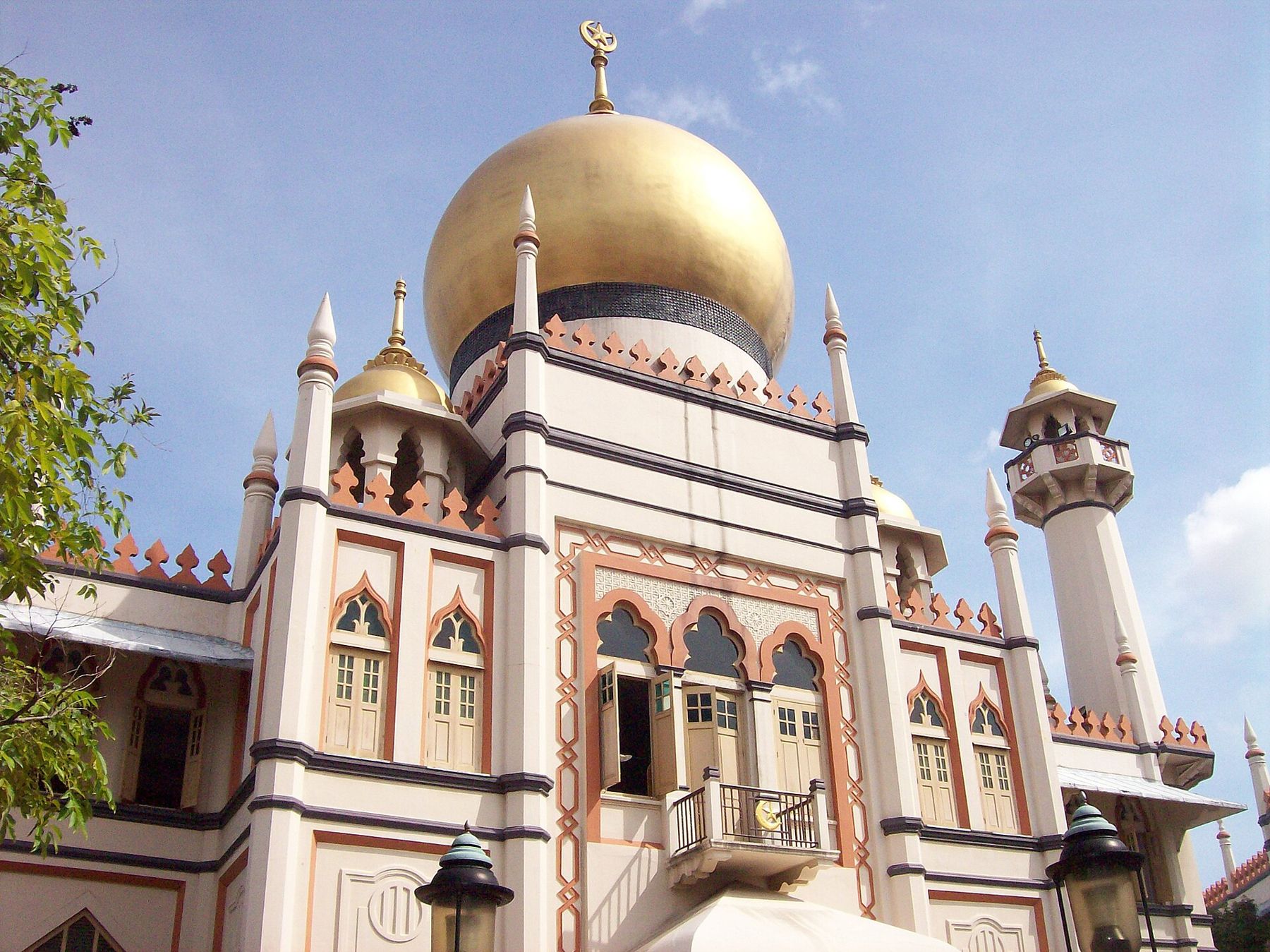
Walk down Bussorah Street towards the mosque in the late afternoon and the domes fill the end of the street, gold against the sky, framed by palm trees and the painted fronts of shophouses. Five times a day the call to prayer rises from the minarets, and for a few minutes the street changes pace: men in white caps walk quickly towards the gate, shopkeepers pull down shutters halfway, a café goes quiet. Then the street fills again with diners, tourists and families strolling after the heat.
Kampong Glam is the historic Malay and Muslim quarter of Singapore, and its royal quarter too. It takes its name from the gelam, a paperbark tree that once grew thickly along this stretch of coast, and its streets carry the names of the places its traders came from: Arab Street, Bussorah Street, Baghdad Street, Muscat Street, Kandahar Street. It is one of the smallest of the old quarters, and one of the richest in history.
A sultan's town
When Raffles arrived in 1819, he signed a treaty with Sultan Hussein Shah of Johor and the Temenggong, the local chief, which allowed the British to set up a trading post. In return the sultan received an allowance and land. Under the 1822 town plan Kampong Glam was set aside for him, his household and followers, and for the Arab, Bugis and other Muslim traders who settled around him.
The sultan's son, Sultan Ali, built the istana, or palace, in the 1840s. It is a long, low building in a Palladian style, with a raised ground floor and a broad flight of steps, set in a compound with a gateway on Sultan Gate. Next to it is Gedung Kuning, the Yellow Mansion, built for a member of the royal family. In the twentieth century, after disputes over succession, the estate passed to the government, and descendants of the sultan continued to live in the compound until the late 1990s.
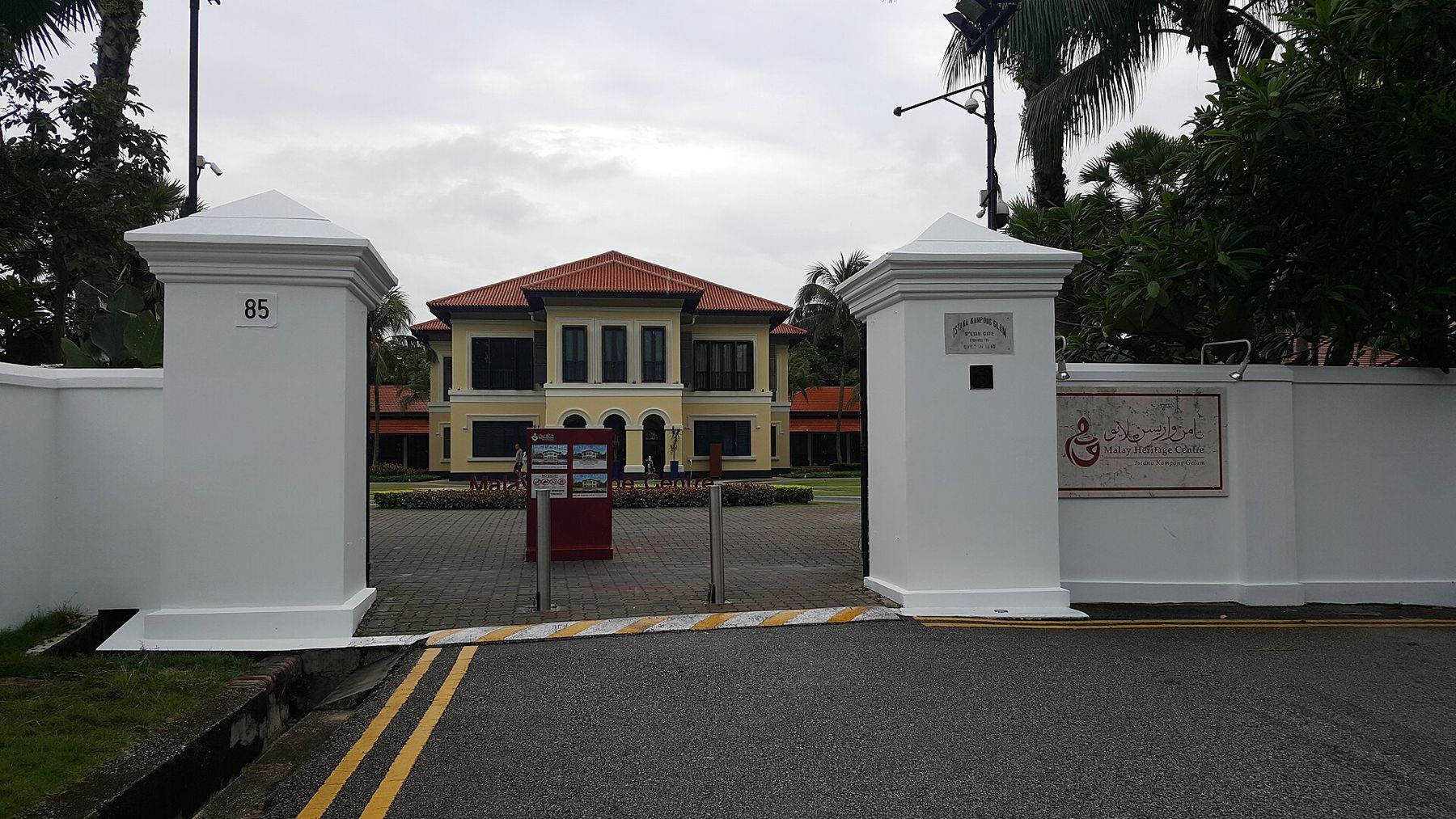
The istana was restored and opened in 2012 as the Malay Heritage Centre, which tells the history of the Malay world and its people in Singapore, from the seafaring Bugis and Javanese to the Boyanese and the Orang Laut. It closed for a renewal and reopened in 2026 with a festival in its grounds. The gardens are open, and the building is at its loveliest at dusk, when it is lit up against the dark trees.
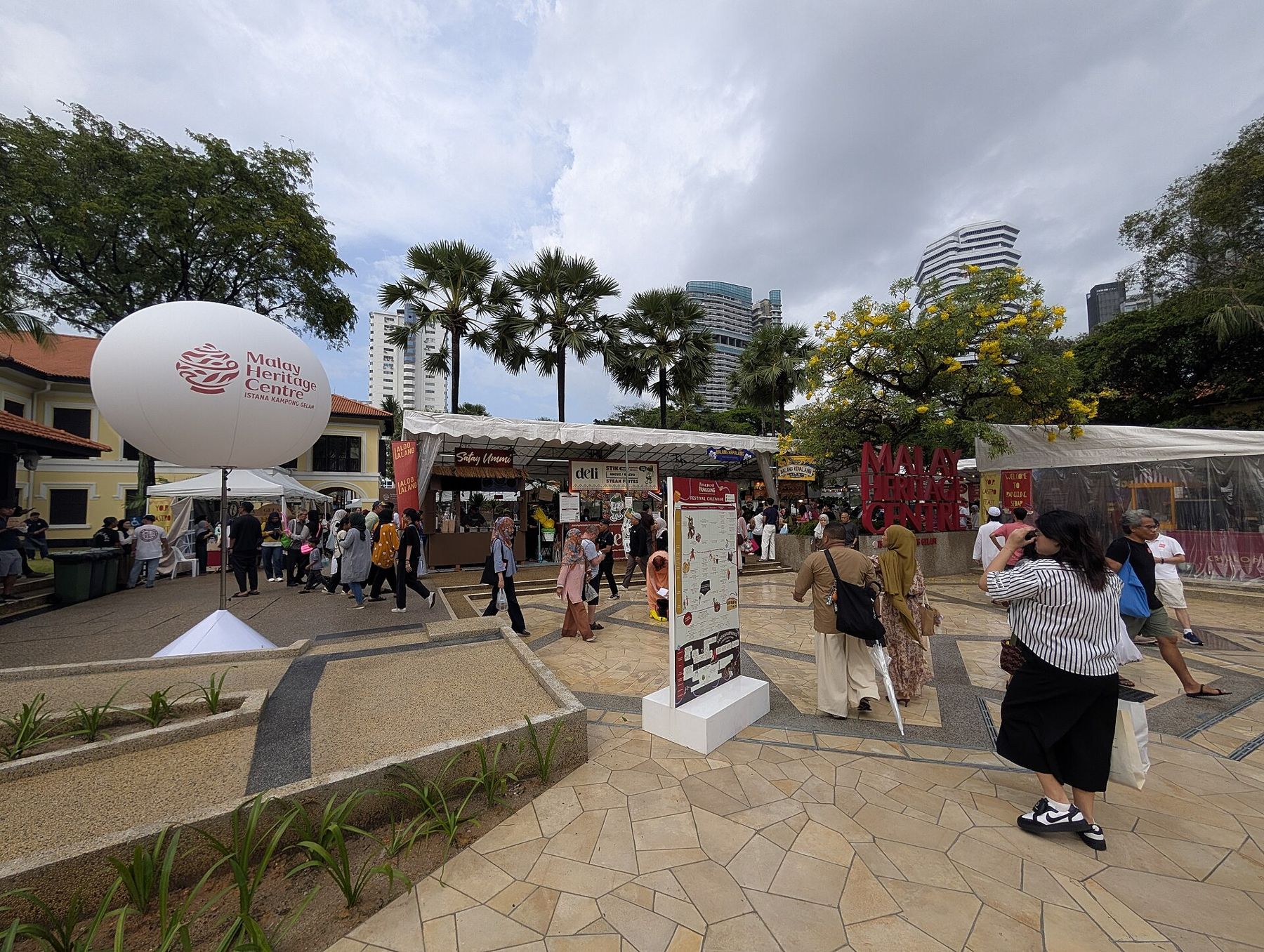
The galleries are worth more time than most visitors give them. They have covered the old maritime world in which Singapore was one port among many, the arrival of migrants from across the archipelago, the role of Kampong Glam as a centre of Malay publishing and religious learning in the nineteenth and twentieth centuries, and the music, film and literature of Malay Singapore after the war. Prices and opening hours change, so check before you go.
The Sultan Mosque
The first mosque on this site was built in the 1820s with help from the East India Company, a modest building with a tiered roof. A century later it was too small for the community, and the present Sultan Mosque, Masjid Sultan, was built between 1928 and 1932 to a design by Denis Santry of the firm Swan and Maclaren. It is in a style often called Indo-Saracenic, with minarets, balustrades and arches, and two great golden domes.
At the base of each dome is a band of what look like dark glass tiles. They are the ends of glass bottles, given by poorer members of the congregation so that everyone could contribute to the building. It is the detail that most visitors remember.
They are the ends of glass bottles, given by poorer members of the congregation so that everyone could contribute to the building.
The mosque was gazetted as a national monument in 1975. Its main prayer hall can hold thousands of worshippers, and on Friday at midday and during Ramadan it is full. Visitors are welcome outside prayer times: dress modestly, take off your shoes, and use the robes that are lent at the entrance. Non-Muslims may look into the prayer hall from the visitors' area but should not enter it. Volunteers are often on hand to answer questions.
 Next stall overRules, fines and manners: what a visitor needs to know in Singapore
Arab Street and the cloth trade
Arab Street runs from Beach Road across North Bridge Road, and for more than a century it has been the city's street of textiles. Arab merchants, many of them from families of the Hadhramaut in southern Arabia, became important landowners and traders in early Singapore, and the shops on this street still sell the cloth that made the area's fortune: batik from Java and Malaysia, songket woven with gold thread, silks, lace, and the fabric for baju kurung and other formal dress.
Walk slowly here. Many shops have been run by the same families for generations, and the owners will unroll bolts of cloth on the counter, explain where they come from and measure out lengths. There are also shops selling rattan and basketry, prayer mats and carpets, perfumes and attar, and the brassware and crockery needed for big family gatherings. Prices and stock change with the season, especially in the weeks before Hari Raya Puasa.
Haji Lane and the side streets
Haji Lane is barely wide enough for a car. Its name recalls the pilgrims who passed through the area on their way to Mecca for the haj, when Singapore was an important stop for pilgrims from across the region. Today it is something else entirely: a lane of small independent shops, cafés and bars, with murals painted across the walls and shutters, and crowds who come to photograph them.
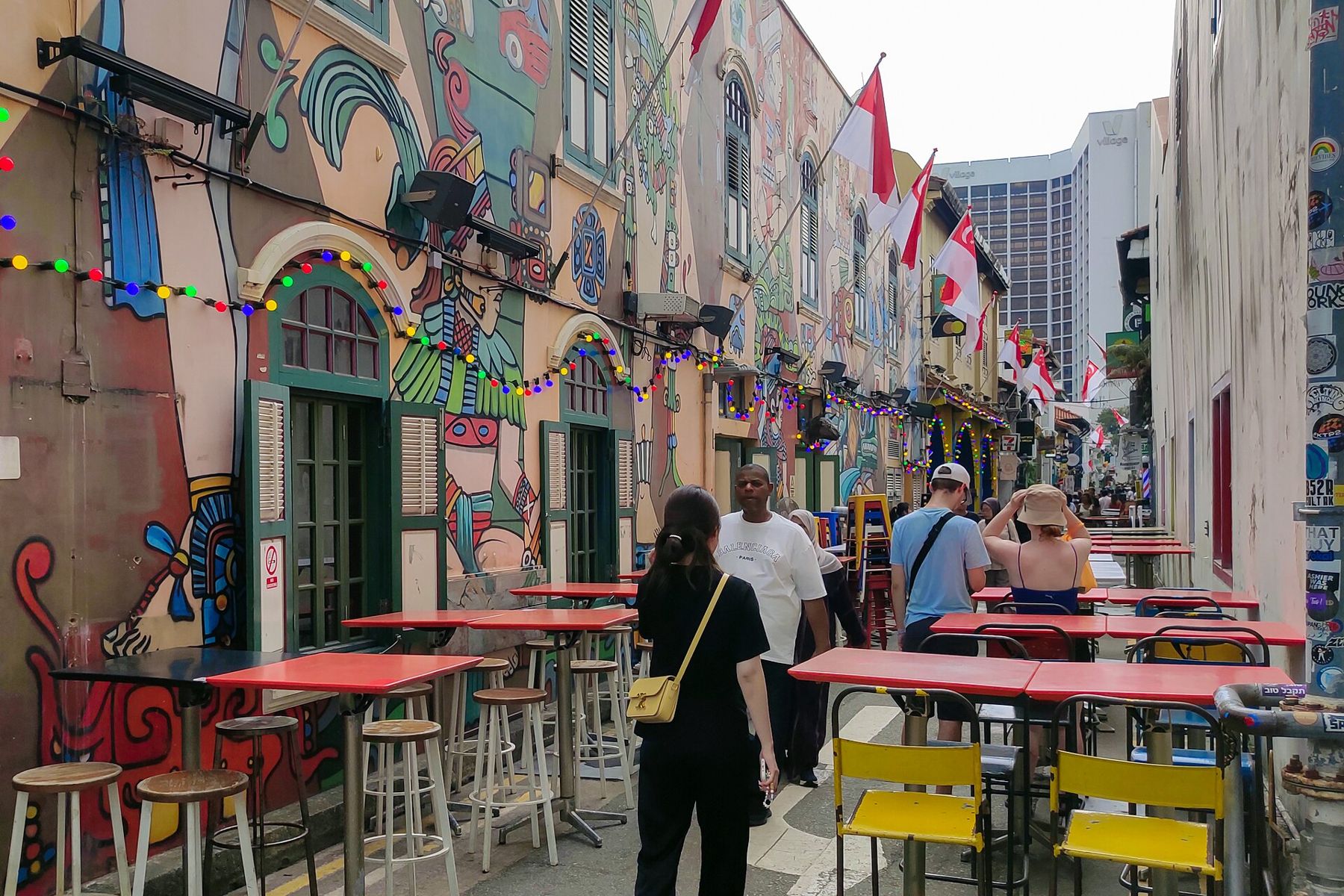
The contrast is part of the area's character. A few metres from the mosque are boutiques and cocktail bars; beside the textile shops are restaurants serving food from across the Muslim world, from nasi padang and murtabak to Turkish, Lebanese and Egyptian dishes. Most restaurants in the area are halal, and many do not serve alcohol; check if it matters to you.
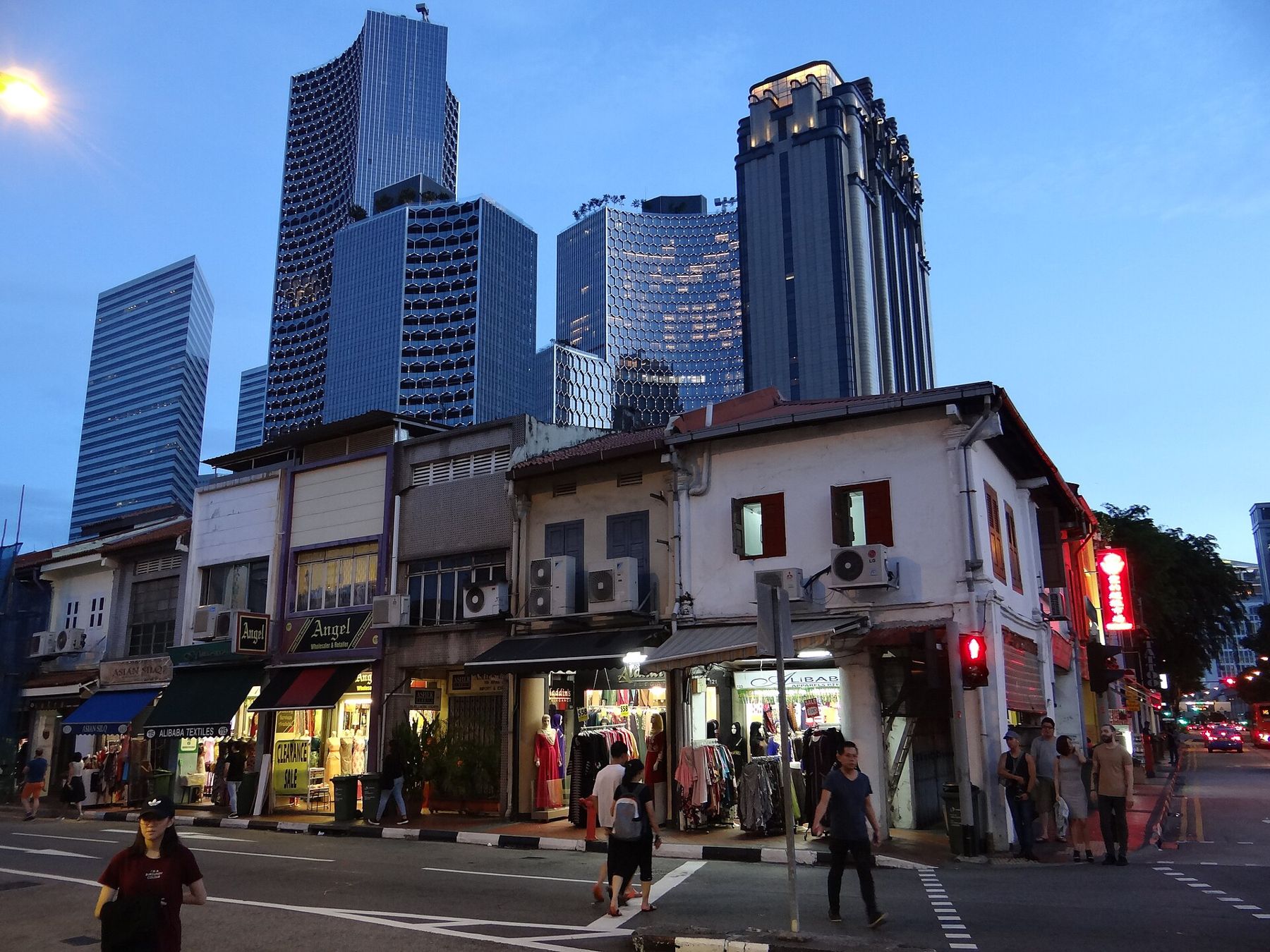
Other buildings worth finding are the Malabar Mosque on Jalan Sultan, faced in blue and white tiles, and the Hajjah Fatimah Mosque on Beach Road, built in the 1840s and named after the Melaka-born businesswoman who paid for it, whose minaret leans a little from the vertical.
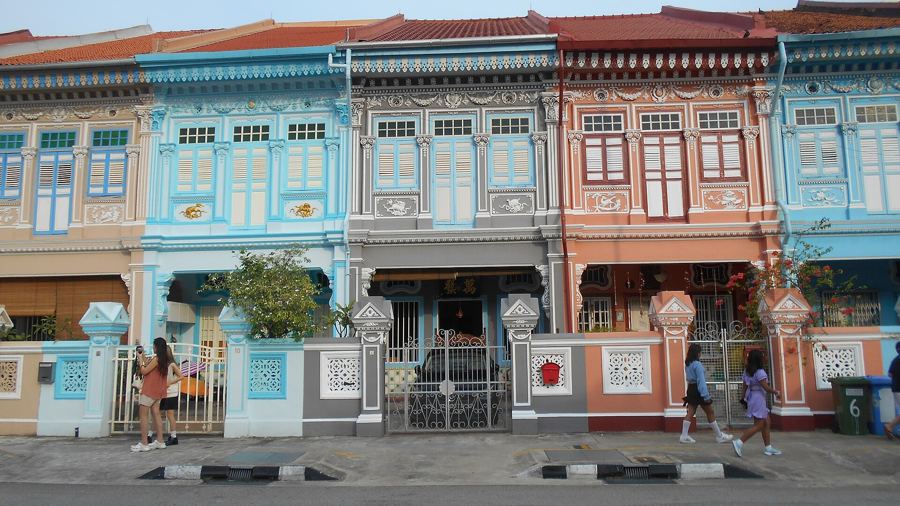
Bussorah Street itself, the palm-lined approach to the mosque, is one of the most photographed streets in Singapore and one of the best places to see the range of shophouse styles. The quarter was gazetted as a conservation area in 1989, and the rows have been restored with care: timber shutters, plaster mouldings, glazed tiles and fanlights over the windows. At street level the five-foot ways are given over to café tables, rugs and racks of cloth, and the upper floors are still homes and offices. Look up as you walk.
Ramadan and Hari Raya
The best time to see Kampong Glam at full strength is during the fasting month of Ramadan. In the evenings, as the time to break the fast approaches, stalls and families fill the streets around the mosque, and the whole quarter waits together for the call to prayer at sunset. Afterwards the restaurants fill and stay busy late into the night.
At the end of the month comes Hari Raya Puasa, also called Hari Raya Aidilfitri, when families visit each other in new clothes and the shops of Arab Street do their busiest trade of the year. Visitors are welcome to look and to eat, but should remember that the month is a religious observance first; avoid eating or drinking in front of people who are fasting in the mosque grounds.
Getting there and around
Bugis MRT station is a five-minute walk away. The quarter is small enough to see in an afternoon, and the streets are mostly pedestrian-friendly, with the five-foot ways giving shade. Opening hours of the mosque, the heritage centre and the shops change, and prayer times change through the year, so check before you go.
Kampong Glam combines easily with the Bras Basah and Bugis walk to the west, and with Little India, a fifteen-minute walk north along Jalan Besar or Victoria Street. The old quarters, compared sets it alongside the city's other historic districts.
Stay until dark, when the lights come on along Bussorah Street and the domes glow above the palms.