- Former St Joseph's Institution (Singapore Art Museum) Mission school of 1867, later the art museum's home
- Cathedral of the Good Shepherd Singapore's oldest Catholic church, completed in 1847
- CHIJMES Convent cloisters and a Gothic chapel of 1904
- Bras Basah Complex A 1980s block still full of bookshops
- National Library, Victoria Street Sixteen storeys of books with public reading terraces
- Kwan Im Thong Hood Cho Temple Guan Yin temple on pedestrian Waterloo Street
- Bugis Street Covered market recalling the old night street
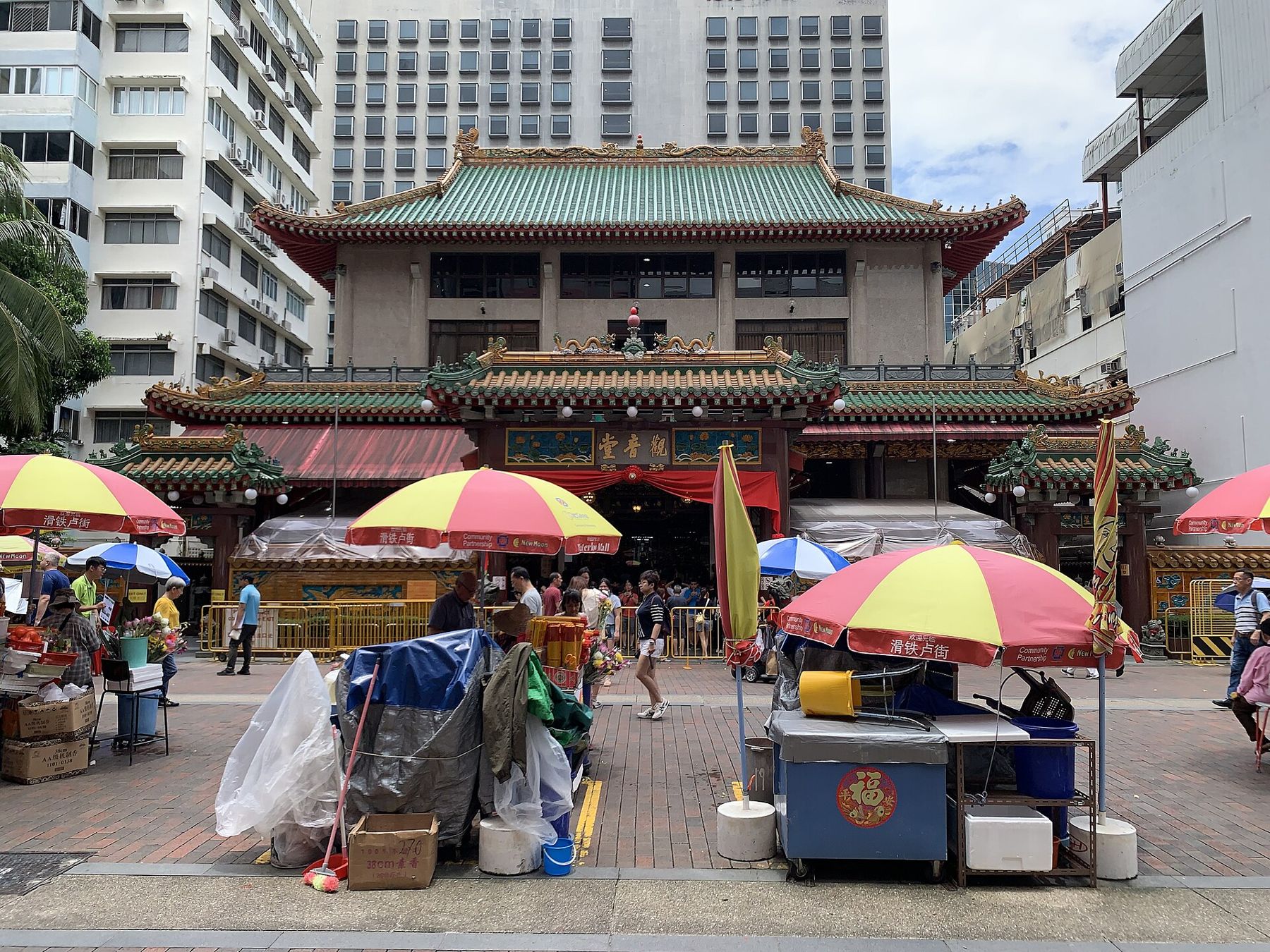
At nine in the morning Waterloo Street smells of incense and chrysanthemums. Sellers under red and yellow umbrellas hand bundles of joss sticks and lotus buds to office workers who have stepped off the bus on their way to work, and a steady line of people climbs the steps of a temple to Guan Yin, the goddess of mercy. Ten minutes' walk south, the same morning is quiet: a cathedral garden, a shuttered convent courtyard, a school building with its shutters open to the trees.
Bras Basah and Bugis together make one of the city's most rewarding short walks, because so much of Singapore's education, faith and street life was packed into these few blocks between Fort Canning and the Rochor Canal. The name Bras Basah is usually read as Malay for "wet rice", from the rice once dried on the banks of the stream that ran here. Under the 1822 town plan this was the European and missionary edge of town, and the Catholic and Protestant orders built their schools along the road. Bugis, to the north-east, took its name from the seafaring Bugis traders of Sulawesi, who settled near the mouth of the Rochor River in the early years of the settlement.
The walk runs roughly north-east, from the museums on Bras Basah Road to Bugis MRT station, and is flat the whole way.
Former St Joseph's Institution (Singapore Art Museum)
Start at the curved white facade on Bras Basah Road, with its central portico and the statue of St John Baptist de La Salle with two boys above the door. This was St Joseph's Institution, the Catholic boys' school run by the De La Salle Brothers, whose main building went up in 1867, with the curved wings added around the turn of the century. The school moved to Malcolm Road in 1988, and in 1996 the building reopened as the Singapore Art Museum, one of the first museums in the region given over to contemporary Southeast Asian art.
The building has since been closed for a long redevelopment while the museum shows its work elsewhere, so check what is open before you plan around it. Even from the pavement, the old school is worth a look: the deep verandahs, the louvred windows, the lawn under rain trees.
Cathedral of the Good Shepherd
Cross Queen Street to the cream-coloured church set back in its garden. The Cathedral of the Good Shepherd was completed in 1847 and is the oldest Catholic church in Singapore, built in a plain Renaissance style in the shape of a Latin cross, with a slender spire. It became a cathedral in 1888, and it was restored in the 2010s after cracks appeared in its walls. Inside, the light is soft and the ceiling fans turn slowly over the pews.
The grounds are open to visitors outside services; keep to the back if a Mass is under way.
CHIJMES
Next door along Bras Basah Road is CHIJMES, the former Convent of the Holy Infant Jesus. French nuns arrived in 1854 and bought Caldwell House, a fine 1840s residence, as their first home; it still stands at the corner of the site. Over the following decades the sisters added classrooms, an orphanage and, in 1904, a Gothic chapel with stained glass, slender columns and a spire that still catches the eye from Victoria Street.
Along the Victoria Street wall is the small Gate of Hope, where, the convent's history records, babies were left with the sisters by families who could not keep them. The convent school moved to Toa Payoh in 1983, the chapel and Caldwell House were made national monuments, and the cloisters reopened in 1996 as a courtyard of restaurants and bars. The chapel, now a hall used for weddings and concerts, is the reason to come. Walk around its outside and look up at the carved capitals and the tracery of the windows.
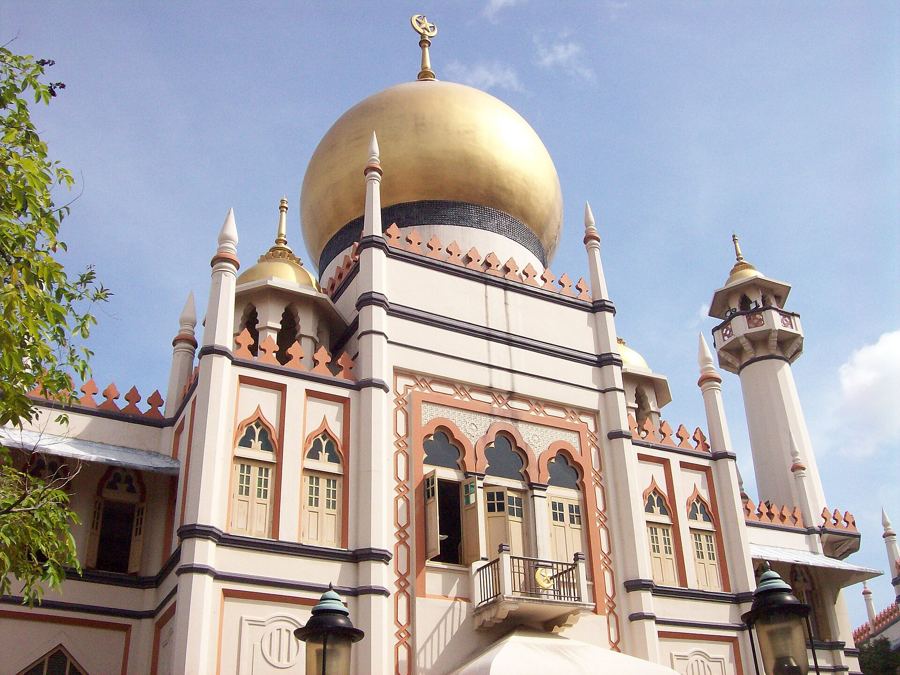 Next stall overKampong Glam and the Sultan Mosque: domes, textiles and a sultan's istana
Bras Basah Complex
From the cloisters, walk along Victoria Street and turn into Bain Street. Bras Basah Complex is a plain block of shops and flats from the early 1980s, and it is where many of the old secondhand booksellers of Bras Basah Road moved when their shophouses were cleared. People still call it the city of books. Inside are school-textbook shops, art suppliers, stamp and coin dealers, Chinese calligraphy brushes and a few shops of secondhand English and Chinese titles, stacked to the ceiling.
It is not a pretty building, and that is part of its charm: fluorescent light, narrow corridors and people who have run the same counter for decades. Walk the upper floors as well as the ground.
National Library, Victoria Street
Across the road rises the National Library building, opened in 2005 to replace the red-brick library on Stamford Road, which was demolished to make way for a road tunnel under Fort Canning. Its two blocks are joined by bridges and shaded by long sun fins, and the building was designed with planted terraces and plenty of natural light.
The lending library is in the basement and the reference library on the floors above. Ordinary visitors can walk in, sit by the windows and read. It is the coolest stop on the walk, and the view from the upper floors, over the rooftops towards Bugis, explains the street pattern better than any map.
Kwan Im Thong Hood Cho Temple
Head north along Victoria Street and turn right into Waterloo Street, now closed to traffic along the temple stretch. Kwan Im Thong Hood Cho Temple was founded in 1884 and rebuilt in the early 1980s in a traditional style, with green glazed tiles and dragons along the ridges. It is dedicated to Guan Yin and is among the busiest Chinese temples in Singapore, especially on the first and fifteenth days of the lunar month and on the eve of Chinese New Year, when queues wind down the street.
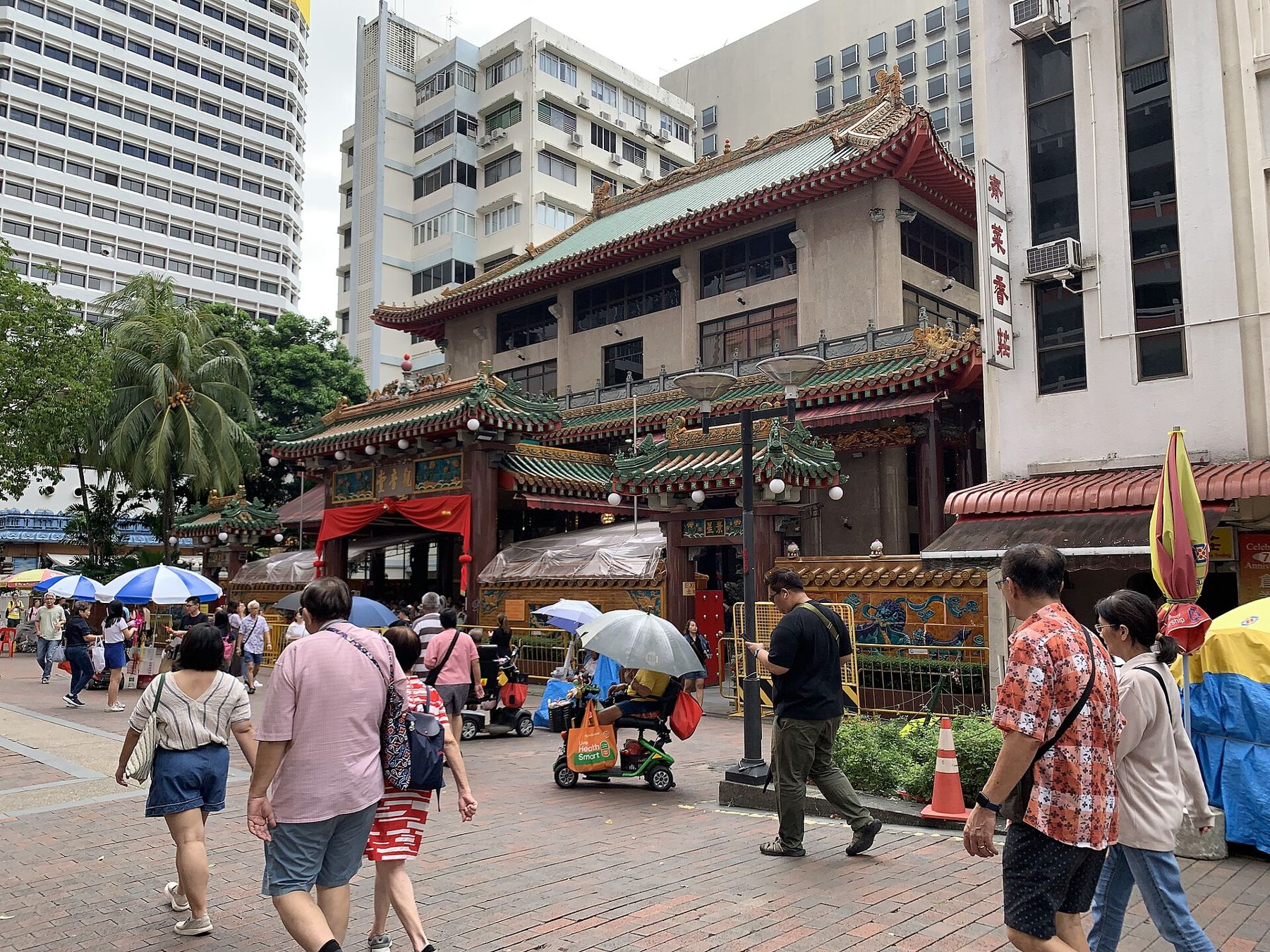
Inside, worshippers kneel and shake bamboo cylinders of numbered fortune sticks, then take the stick that falls out to be read. Photography of the altar is best avoided, and visitors should stand aside from anyone praying. A few doors along is the Sri Krishnan Temple, a Hindu temple founded in the 1870s, and many people who pray at one also bring offerings to the other, a habit of the street that visitors often notice.
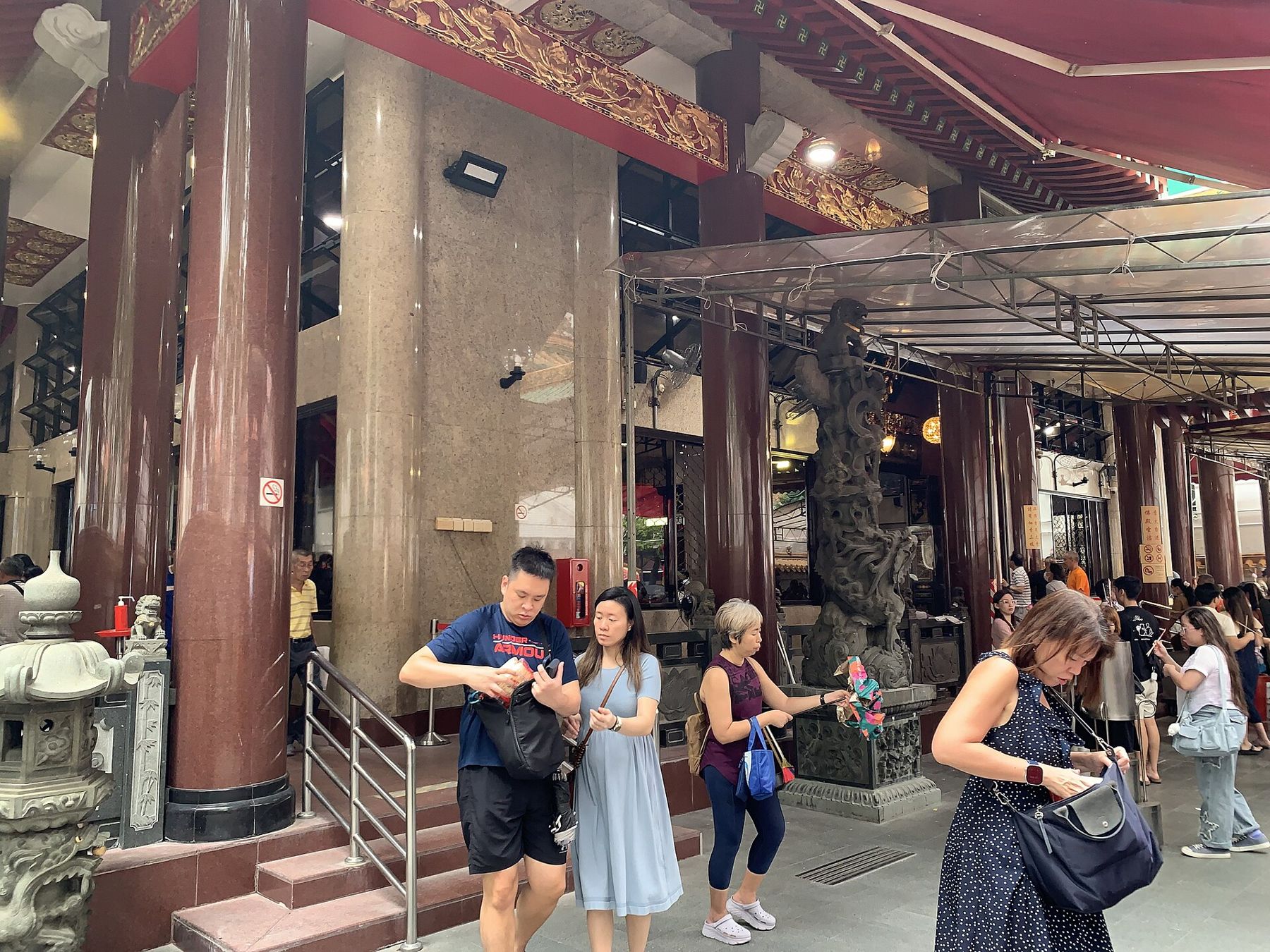
The stalls outside sell flowers, joss, fruit and small charms. If you want to make an offering yourself, a bundle of joss sticks is the usual choice, and nobody minds a visitor asking how.
Bugis Street
Walk back towards Victoria Street to the covered market under the Bugis Street sign. The original Bugis Street, a short lane a little to the east, was famous from the 1950s to the 1980s as a night market whose late-night crowds of sailors, tourists and transgender performers made it one of the best-known streets in Asia. It was cleared in 1985 for the building of the MRT, and a new market opened nearby in the early 1990s.
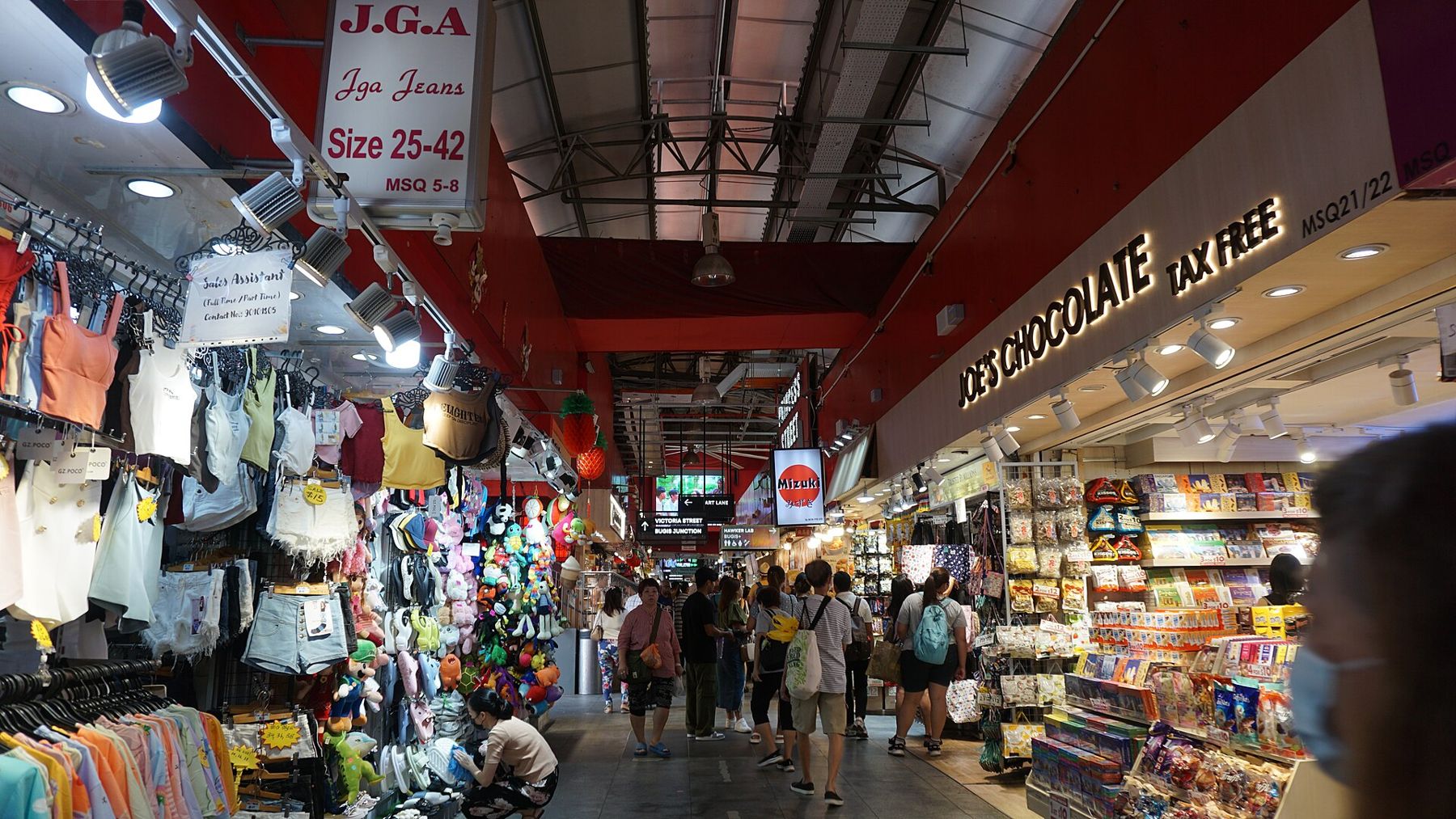
Today it is a dense warren of small stalls: cheap clothing, phone cases, souvenirs, fruit juice and snacks, under one roof and over several floors. It is loud and cheerful and nothing like the old street, but the name, at least, survives.
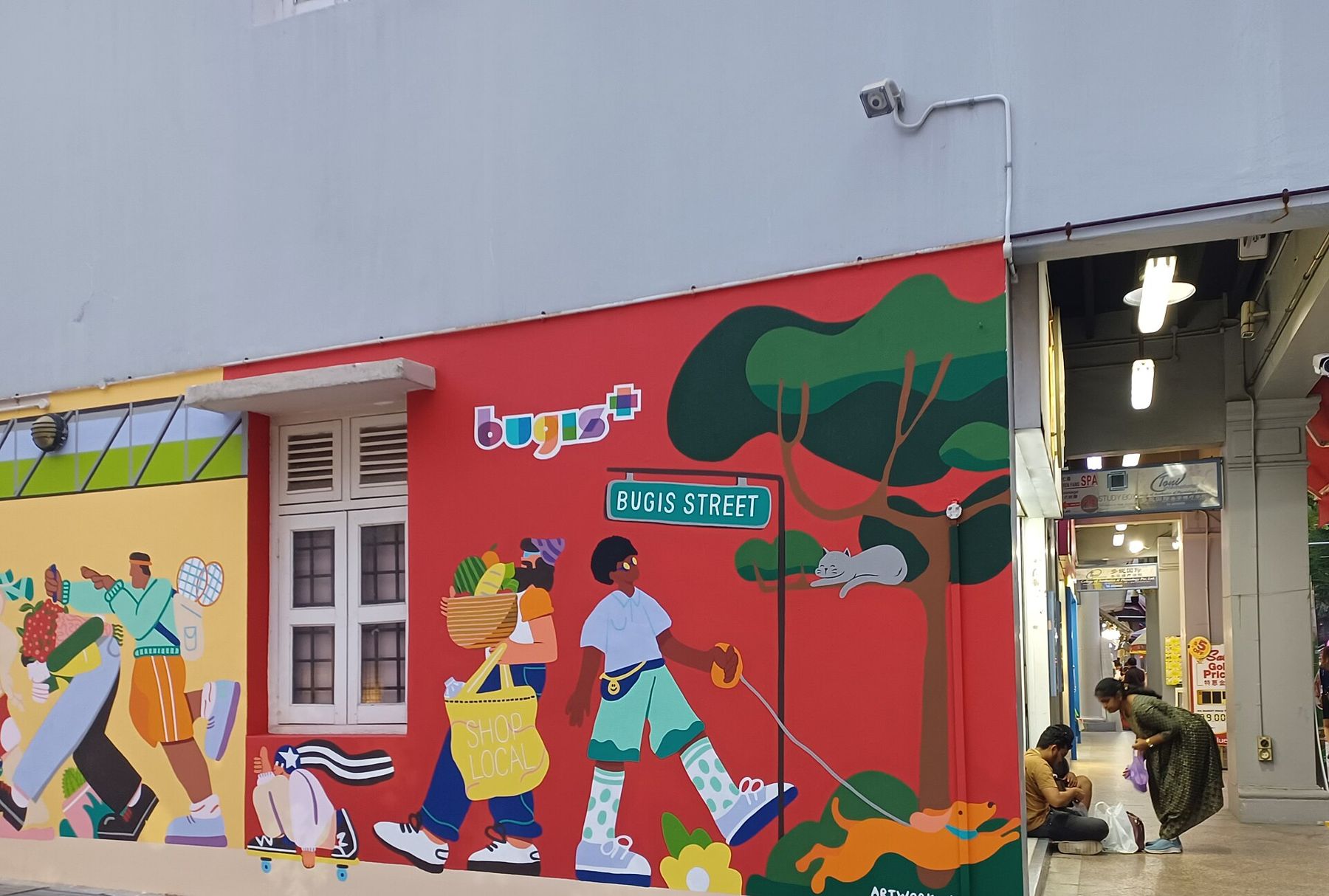
Come hungry rather than with a shopping list. For the history of the area as a whole, the old shophouse rows on nearby streets tell more.
Practical notes
Bras Basah MRT station on the Circle Line is the nearest to the start, and Bugis station on the East-West and Downtown Lines is at the finish; buses run the length of Victoria Street. Fares and opening hours change, so check them before you go. The temple is open from early morning and is at its busiest before work and at lunch. CHIJMES is open late, the library keeps public library hours, and most shops in Bras Basah Complex close in the early evening and on some public holidays.
Carry water and walk on the shaded side. For more of the old town, cross Stamford Road to the National Museum and the slope of Fort Canning, or carry on east from Bugis to the Sultan Mosque and the lanes of Kampong Glam, ten minutes away.
End where the walk began, if you like, back on Waterloo Street at dusk, when the flower sellers pack their umbrellas and the smell of incense lingers on the empty street.