Climb the steps from Hill Street on a weekday morning and the noise of the city drops away within a minute. There are rain trees and frangipani, a lawn where a few people practise tai chi, joggers on the paths and the call of koels in the canopy. At the top, under an old tree, is a small shrine in a pavilion, its tomb covered with cloth. It marks, by long tradition, the resting place of a king.
Fort Canning Hill is only about 50 metres high, but no piece of ground in Singapore has carried more history. In the space of an hour's walk you pass the site of a fourteenth-century palace, the plots of Raffles's first garden, the gate of a British fort, the gravestones of the early colonial town and the entrance to the bunker where Singapore's surrender was decided in 1942.
Bukit Larangan, the forbidden hill
When the British arrived in 1819, the local people called the hill Bukit Larangan, the Forbidden Hill. They told the newcomers that the kings of old Singapura had lived there, and that ordinary people should not climb it. The Malay Annals, the court chronicle of the Melaka sultanate, tell of a line of rulers of Singapura beginning with Sang Nila Utama, who is said to have named the island after seeing a lion, and of the fall of the kingdom at the end of the fourteenth century.
For a long time this was regarded as legend. Then, from 1984, archaeologists dug on the hill and found what the stories had promised: fragments of Chinese porcelain and stoneware, glass beads, coins and the remains of workshops dating to the 1300s. Together with earlier finds of gold ornaments on the slope in 1928, the excavations showed that Temasek, as the port was then known, was a real and prosperous settlement, with the hill as its centre.
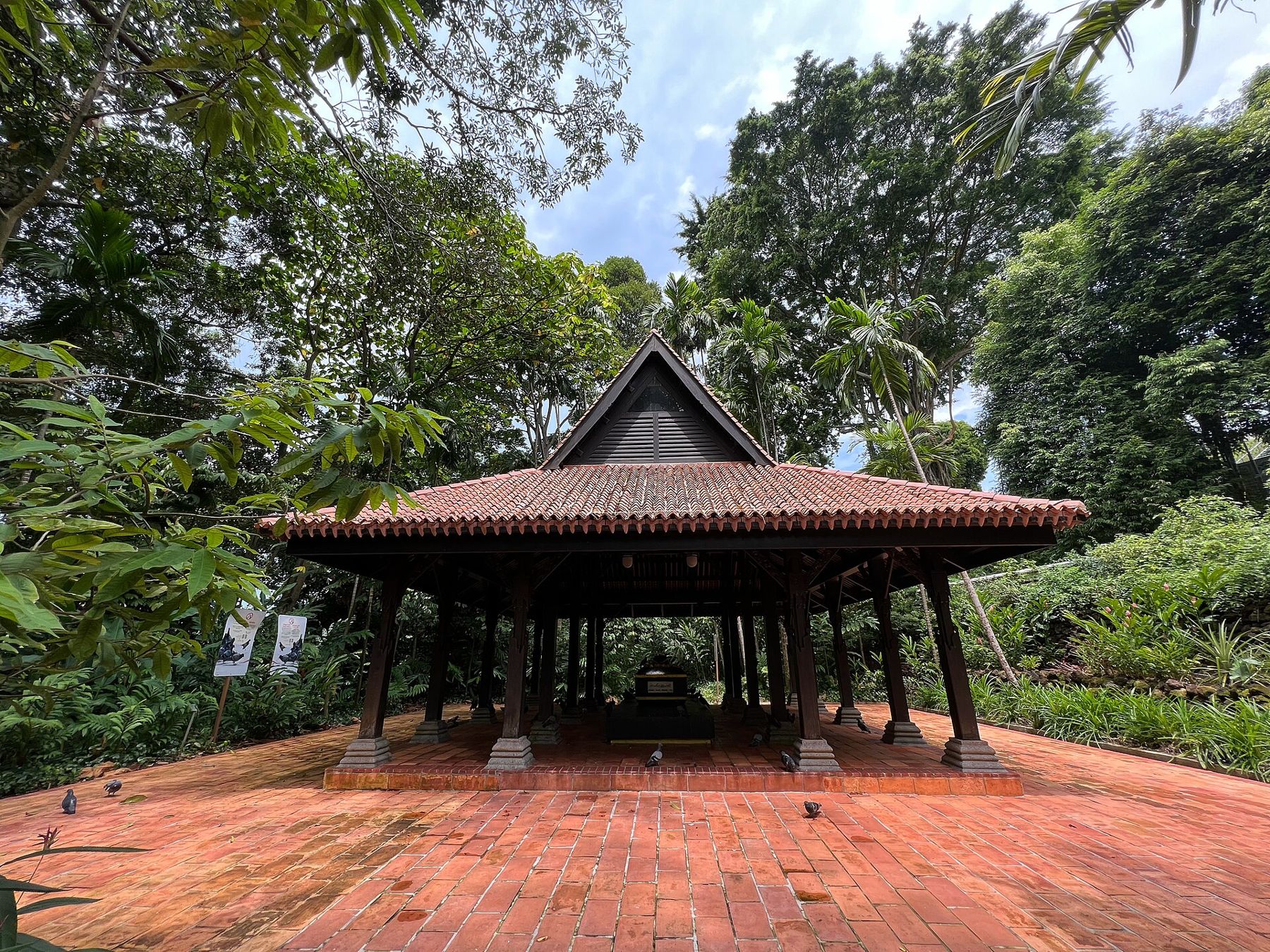
The keramat, or shrine, on the hill is traditionally said to be the grave of Iskandar Shah, the last ruler of Singapura in the old accounts. It is a place of prayer and respect, and visitors should treat it as such: speak quietly, keep to the outside of the enclosure unless invited, and remove shoes if entering.
Government Hill and the first garden
Raffles was fascinated by the hill's past and chose it for his own house, a simple timber bungalow built on the summit in 1822. For the next decades it was known as Government Hill, and successive Residents and Governors lived there. Raffles also laid out an experimental garden on the slopes, where spices such as nutmeg and cloves were planted in the hope of starting a profitable trade. The spice plantations of early Singapore did not last, but the idea of a garden on the hill did.
The hill was also the colony's first Christian burial ground. Graves were dug on its slopes from the 1820s until the cemetery was closed in the 1860s. Many of the old headstones were later set into the brick walls around the grassy space now called Fort Canning Green, where you can still read the names, ages and causes of death of merchants, sailors, soldiers, wives and small children. Two Gothic gateways mark the old entrances.
The fort
In the late 1850s, with tensions running high in British India and fears for the security of the port, the governor's house was pulled down and a fort was built on the summit. Completed in 1861, it was named after Viscount Canning, the Governor-General of India. It had gun platforms, barracks and a magazine, and its guns covered the harbour and the town.
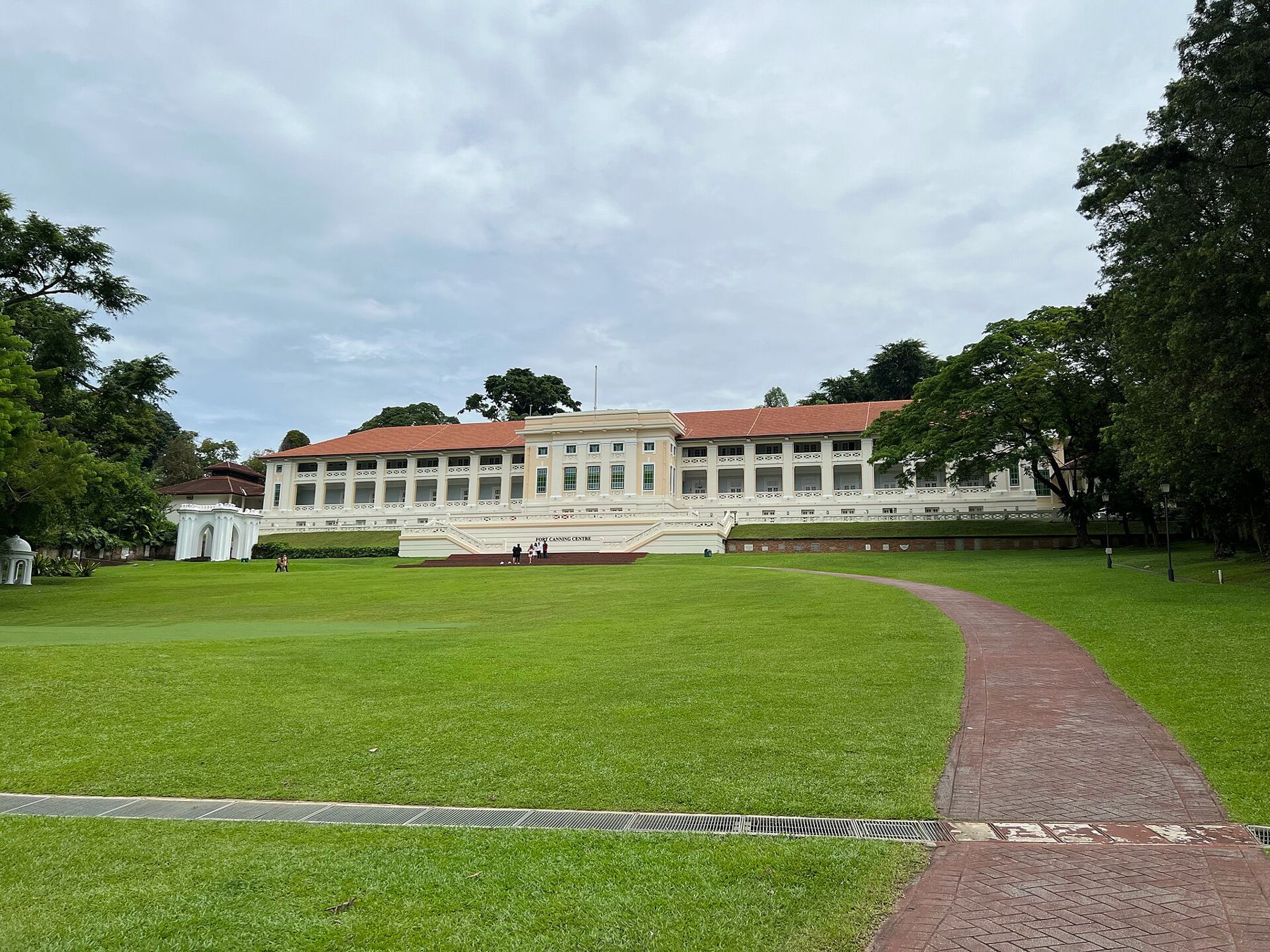
The fort was never tested, and as military thinking moved on it became obsolete. Most of it was demolished in the early twentieth century to make way for a service reservoir, which still lies beneath the summit. What survives is the Fort Gate, a heavy archway with a wooden door, and sections of wall. The hill remained military land, and in the 1920s a long barracks block was built along its crest; it is now Fort Canning Centre, used for exhibitions and events.
 Next stall overUnder the dome: the National Museum of Singapore and the story it tells
The Battlebox and February 1942
In the late 1930s, as war with Japan became likely, the British built an underground command centre into the hill below the barracks. Its walls and ceilings were thick enough to survive bombing, and it held operations rooms, signals rooms, offices and sleeping quarters for the staff of Malaya Command. Later it would be known as the Battlebox.
Japanese forces landed in northern Malaya in December 1941 and moved south down the peninsula faster than the British had believed possible. By early February 1942 they had crossed the Johor Strait to Singapore island. Water supplies were failing and the city was crowded with refugees and under bombardment. On the morning of 15 February, Lieutenant-General Arthur Percival held a conference with his commanders in the Battlebox, and they agreed that further resistance was hopeless. That evening the surrender was signed at the Ford factory at Bukit Timah, and the Japanese occupation, which lasted until 1945, began.
The room where that conference took place is small and windowless, deep inside the hill. Standing in it is a sobering experience, and the tour does not dramatise it.
The bunker was sealed after the war and largely forgotten until it was reopened in the 1990s. It has since been restored and is run as a museum, with rooms set up as they were in 1942. Visits are by guided tour, and arrangements change, so check before you go.
From military hill to city park
The army left the hill after independence, and over the following decades it was turned into a public park. Concerts and outdoor theatre took over the lawns, and the old buildings were given new uses. A spice garden on the slopes recalls Raffles's experiments, with nutmeg, clove, pepper and cinnamon among the plants.
In 2019, to mark two hundred years since 1819, the park was restored and several historic gardens were laid out. Among them are a garden named for Sang Nila Utama, inspired by the gardens of Javanese and Malay courts, and the spring of Pancur Larangan, a re-creation of the forbidden spring where, in tradition, the royal women of the old court bathed.
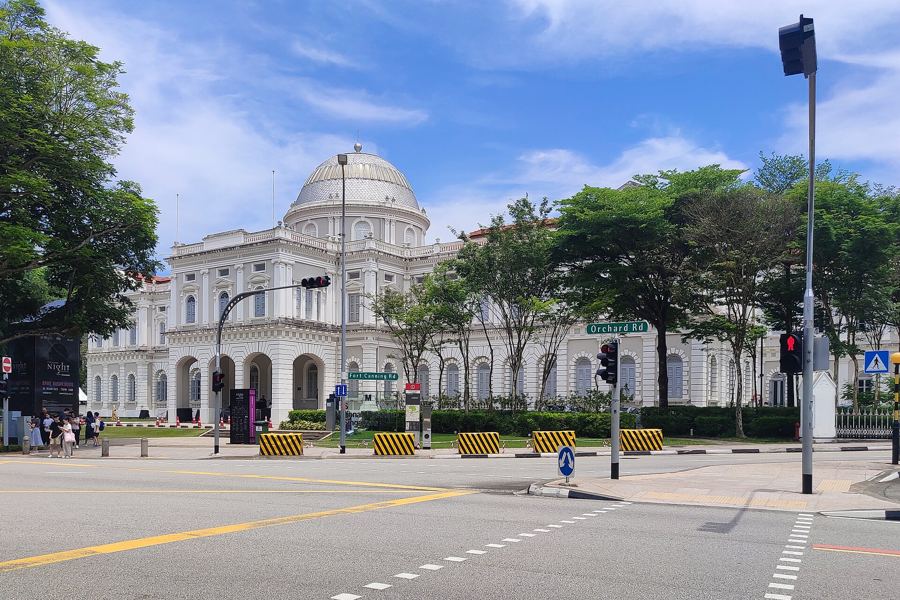
The park also shows how history in Singapore is often kept: not as ruins fenced off, but layered into a working green space where people jog, picnic and walk their dogs past a fort gate or an ancient grave. Those who want the bigger picture can walk down to the National Museum below the hill, which displays the gold ornaments found here.
What you can see today
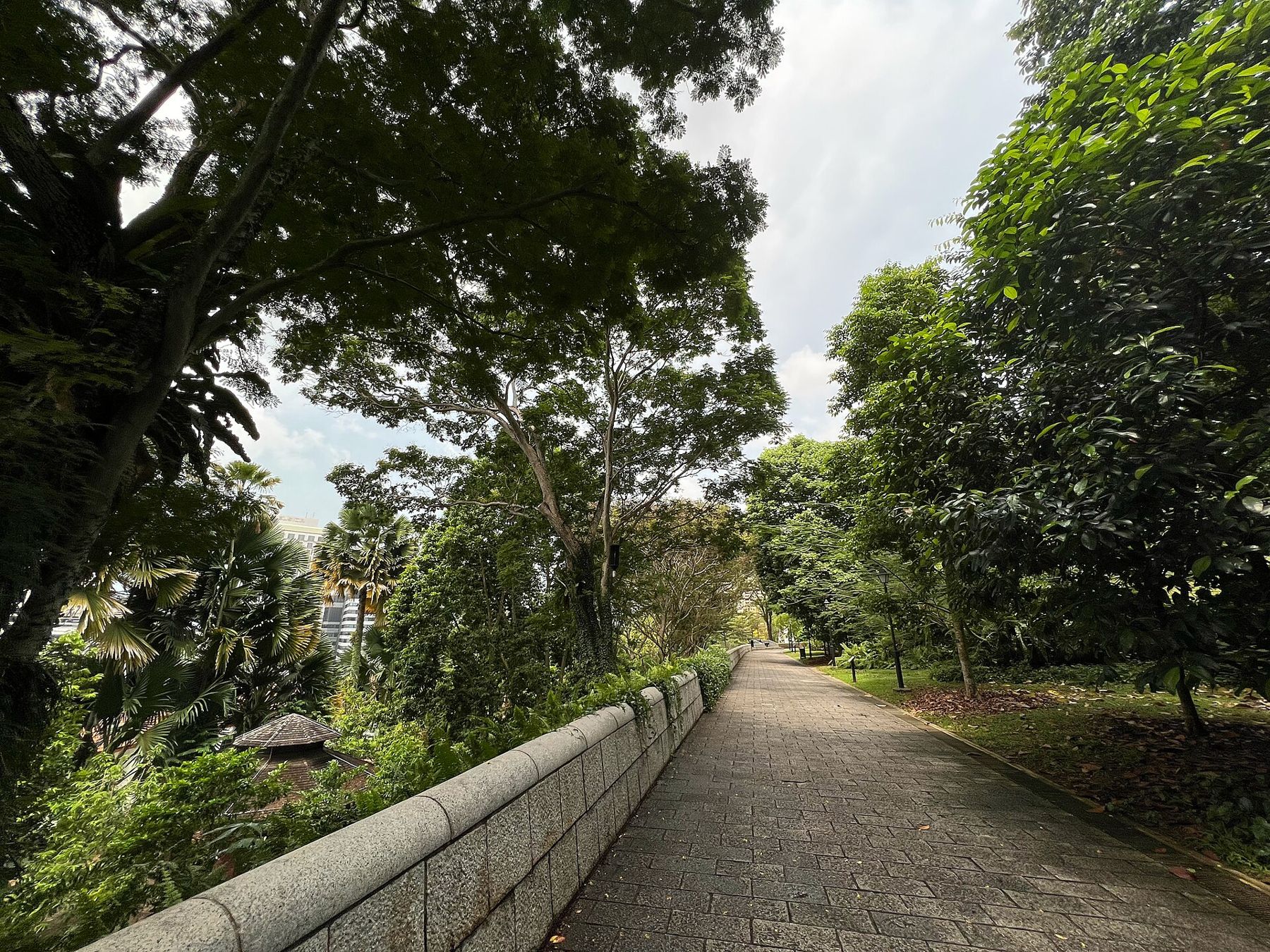
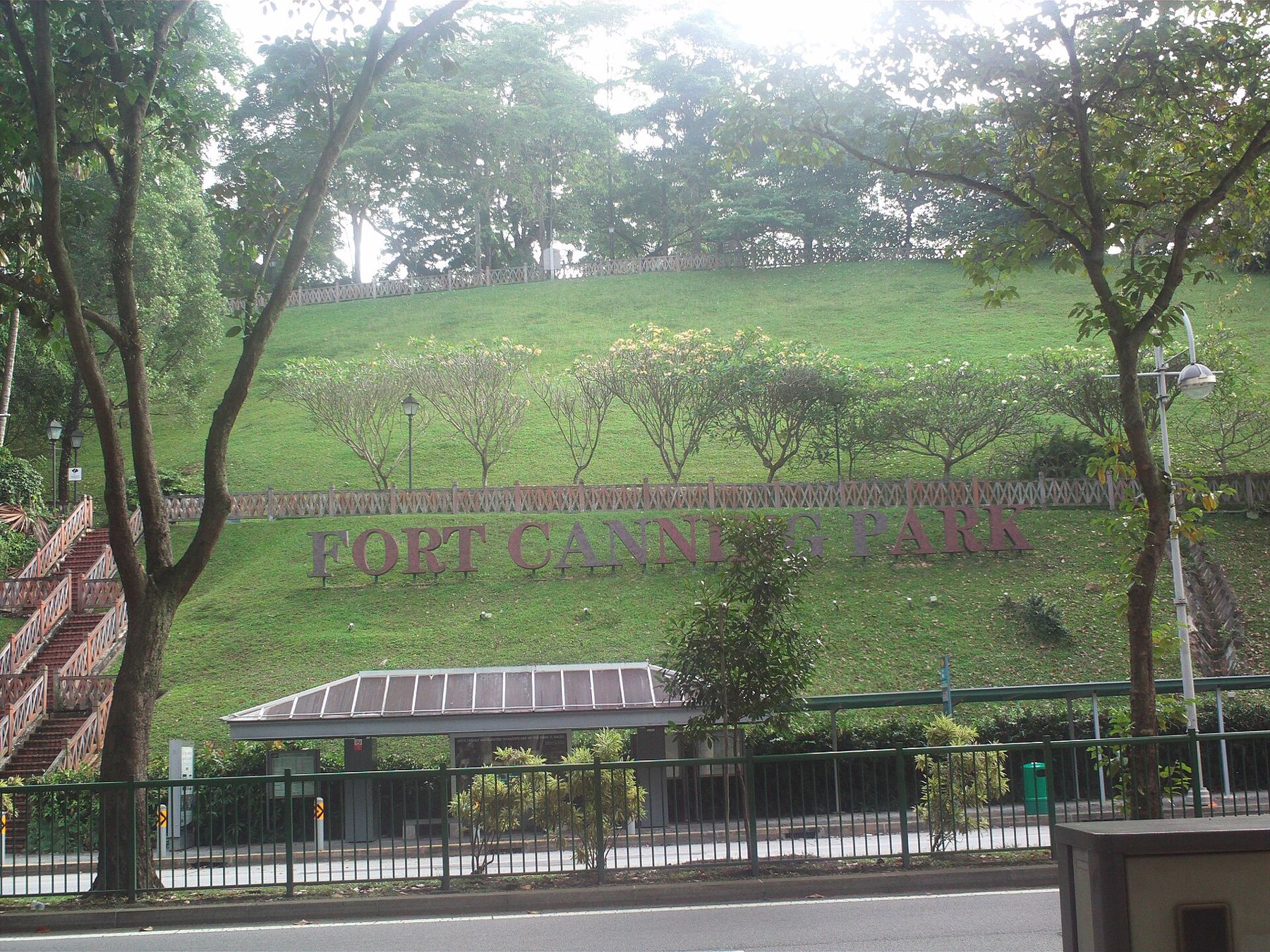
Start at the Hill Street side or by the National Museum, and walk up. On the way you can see the keramat of Iskandar Shah under its roof; the site of the archaeological digs, marked with displays; Fort Canning Green with its walls of old headstones and Gothic gates; the Fort Gate and the walls of the fort; the long barracks of Fort Canning Centre; the entrance to the Battlebox; the spice garden; and the restored royal gardens on the slopes.
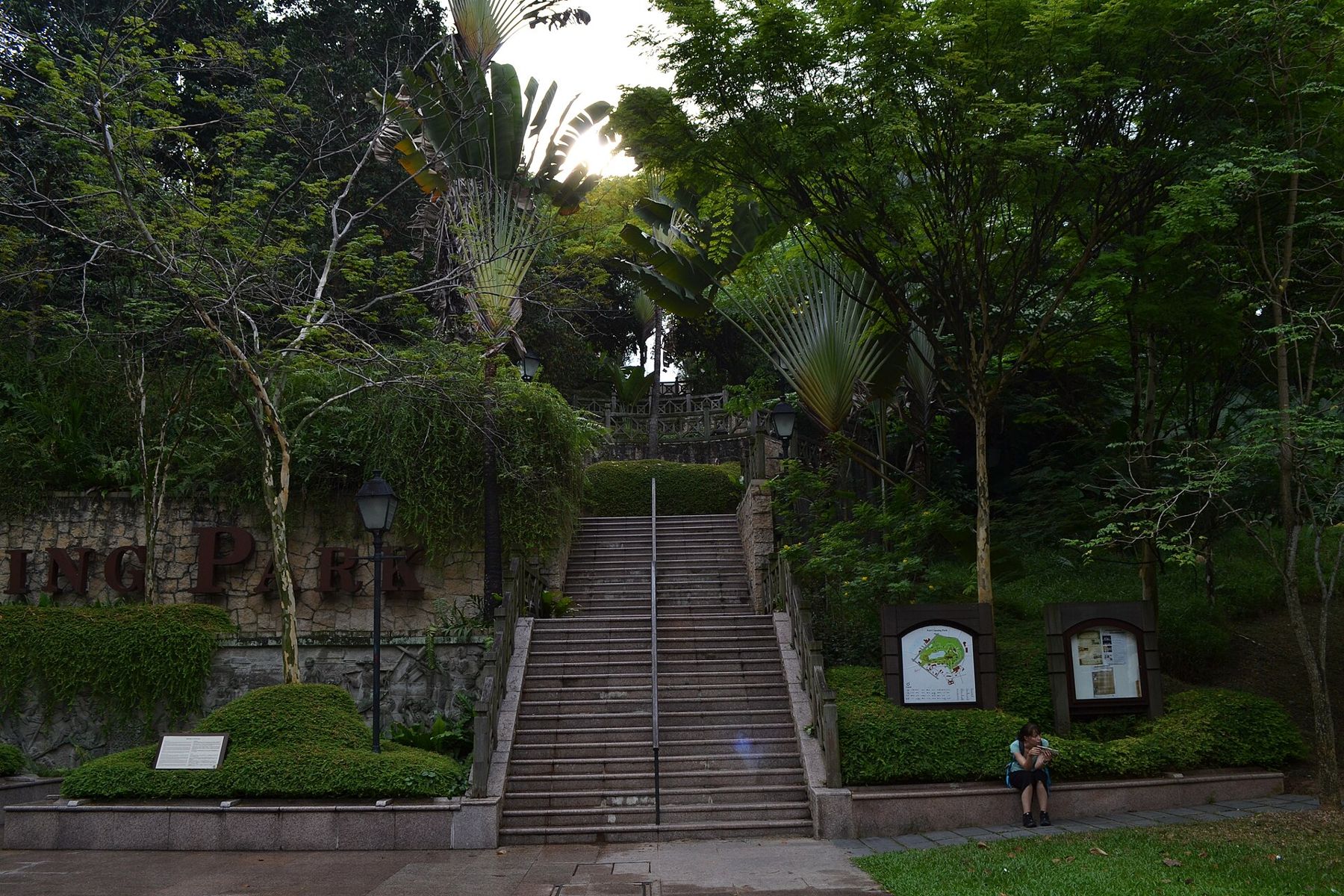
Paths are paved and well signed, though some routes involve steep steps. The park is shaded and free to enter at any time, and it makes a good link on foot between the Bras Basah museums and the restaurants of the Singapore River at Clarke Quay.
Finish at the top, by the old fort gate, in the late afternoon. The walls are warm from the sun, the city hums below, and it is easy to see why kings, governors and generals all chose this hill.