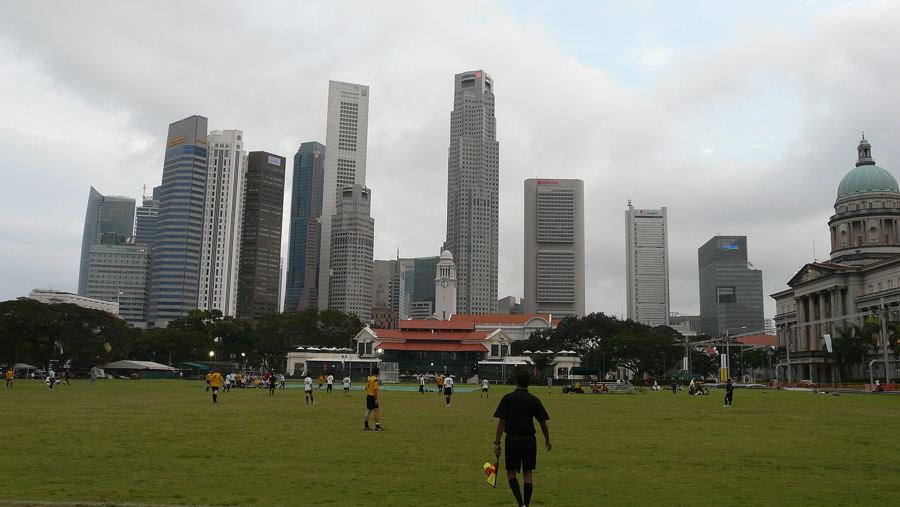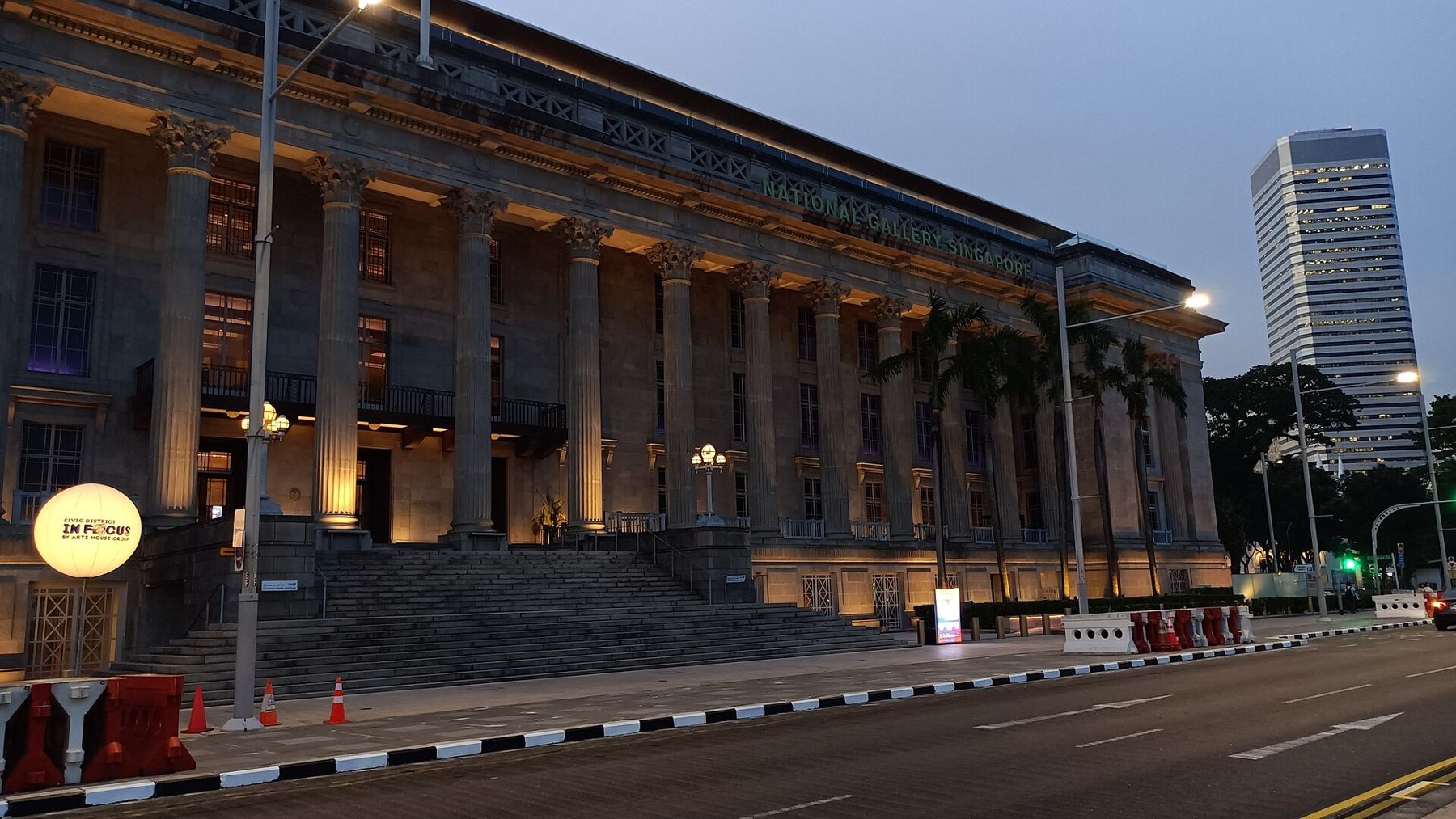
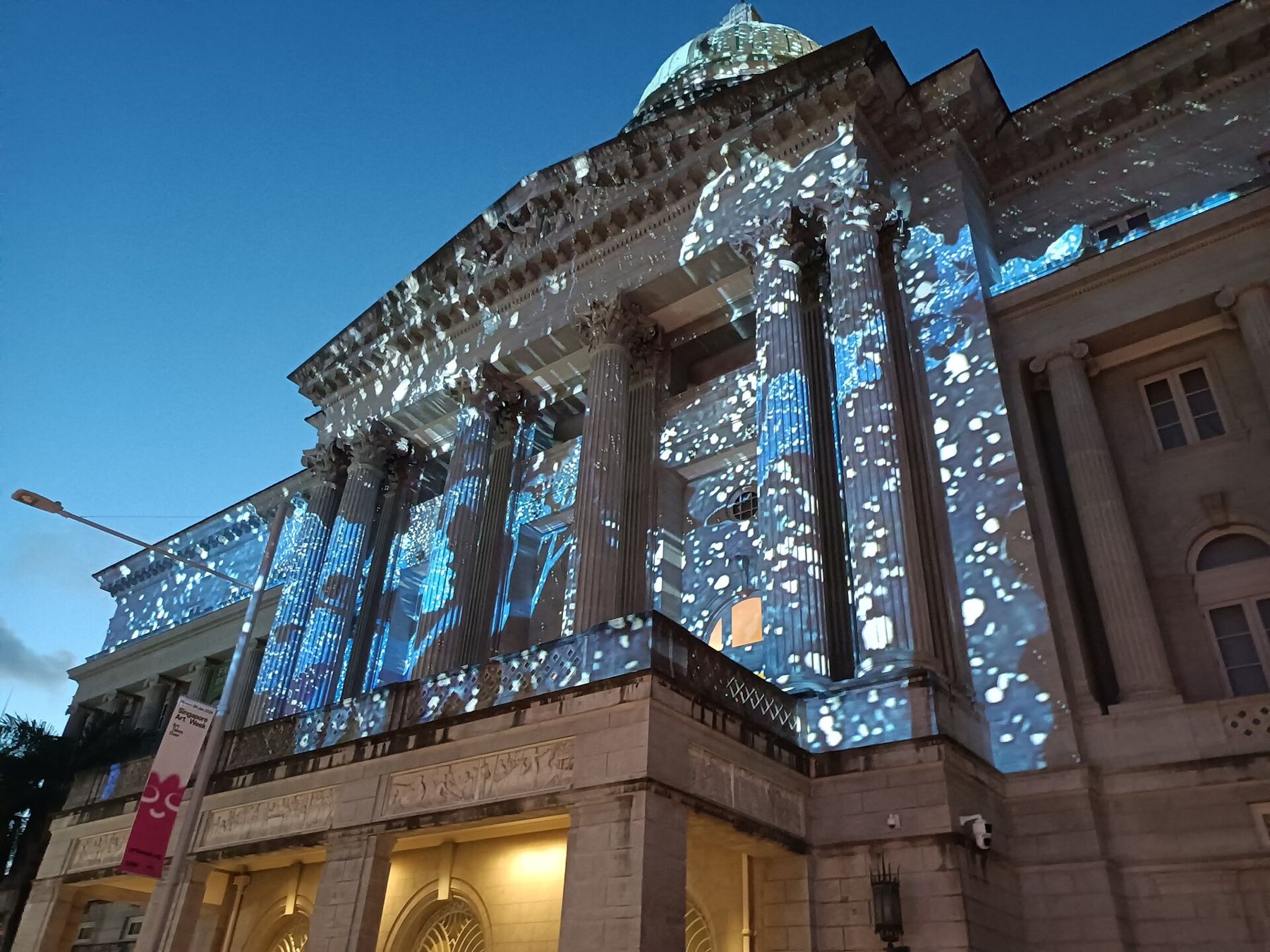
From the Padang, the two buildings look like rivals. City Hall stands broad and square behind a long row of Corinthian columns, the steps running the whole width of its front. Next to it, the old Supreme Court is grander and newer, with a green copper dome and a sculpted pediment of Justice and her attendants. For most of the twentieth century they faced the cricket field as the twin seats of civic power. Since 2015 they have been one building, joined by a roof of glass and metal. The corridors that once led to council chambers and courtrooms now lead to paintings.
A town hall on the Padang
City Hall was built between 1926 and 1929 as the Municipal Building, the offices of the colonial town council. It is a muscular, confident piece of classical architecture, the kind of building meant to look permanent, and it was renamed City Hall in 1951 when Singapore was granted city status.
The building's chamber has seen more history than most rooms in Singapore. On 12 September 1945 the Japanese surrender in Southeast Asia was signed there, in a ceremony led by Admiral Lord Louis Mountbatten, while crowds filled the Padang outside. In 1959 the first cabinet of a self-governing Singapore was sworn in at City Hall, and in the years after independence its steps served as the grandstand for the National Day Parade on the Padang. The chamber is kept inside the gallery, and it is worth finding.
The last classical court
The Supreme Court was completed in 1939 to designs by Frank Dorrington Ward, chief architect of the Public Works Department. It is often called the last great classical building of the British empire in Asia: a dome over a round library, a portico of Corinthian columns, and a pediment carved by an Italian sculptor with a figure of Justice at the centre. It stands on the site of the old Hotel de l'Europe, once the rival of Raffles Hotel down the road.
Judges sat here for more than sixty years. In 2005 the courts moved to a new Supreme Court building directly behind, with a disc-shaped roof that floats above the old dome when you look up from the Padang. The old building was left empty, and the decision was made to give both it and City Hall to a single national gallery.
One building out of two
Joining two listed monuments into one museum was not simple. The architects who won the design competition, a French practice working with a Singapore firm, kept both facades untouched and placed the new work in between and on top. A delicate canopy of glass and metal, held on columns shaped like branching trees, covers the gap between the buildings, and bridges link them at upper levels. Underneath, a sunken concourse ties the two together and brings in daylight.
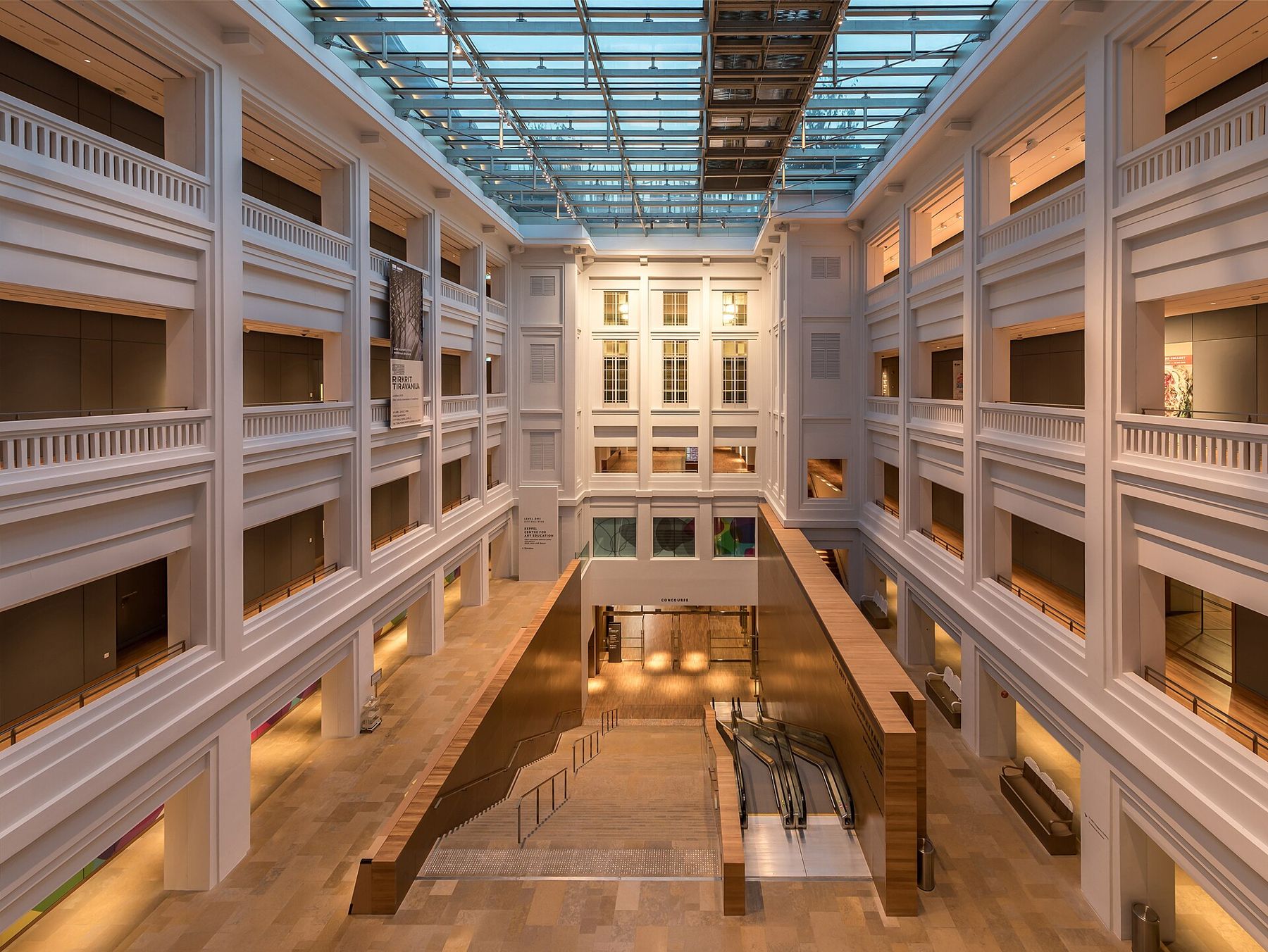
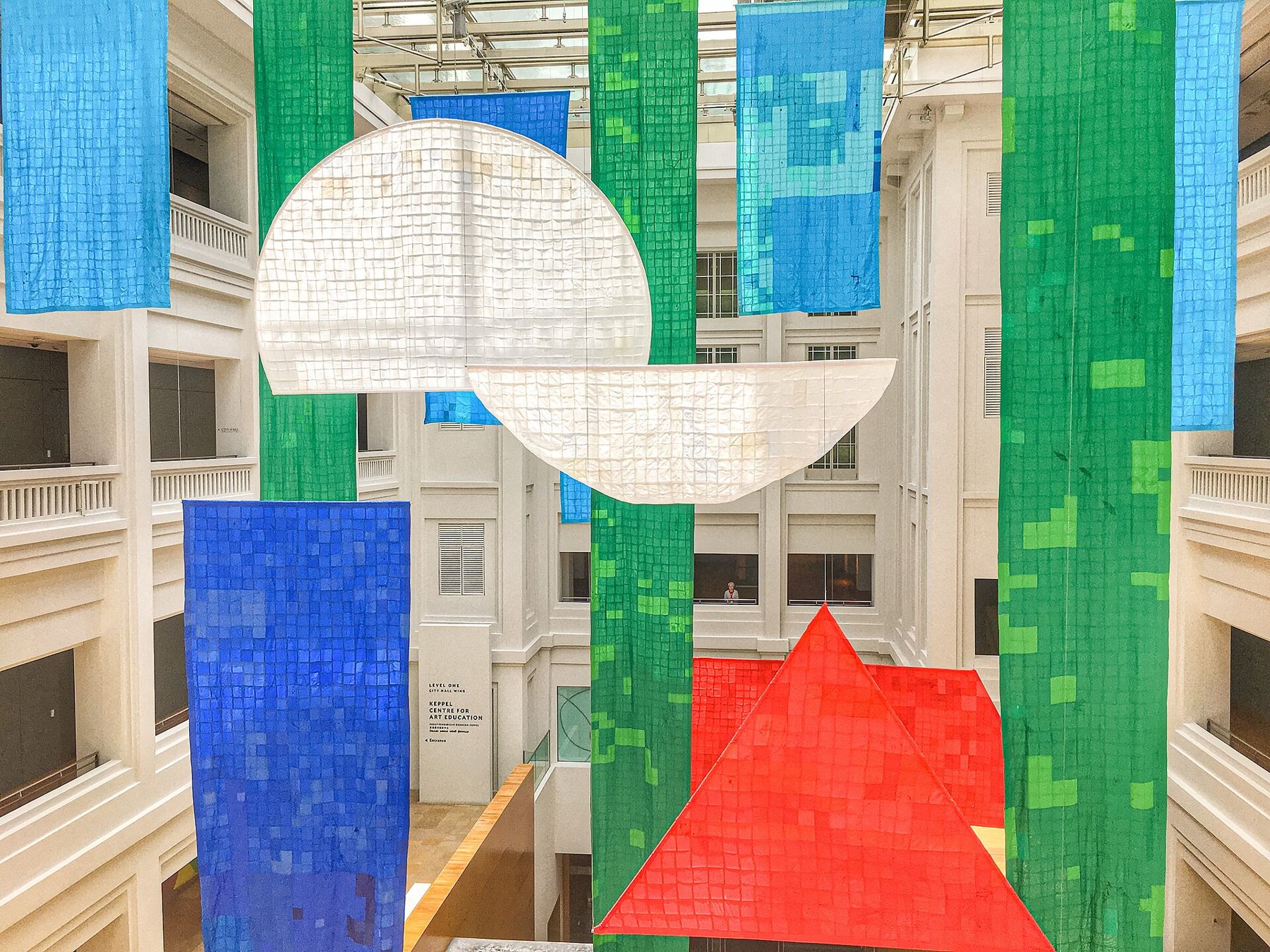
The result is a place where the old rooms are still legible. You can stand in a Supreme Court courtroom with its timber panelling and dock, or walk down to the holding cells below, or look up into the dome of the court library. In City Hall, the long corridors and tall windows give the galleries the feel of a grand office building, which is what it was. The atriums are used for large commissioned works, such as the hanging textiles that have filled the City Hall wing.
What is on the walls
The gallery holds the largest public collection of modern art from Singapore and Southeast Asia, and it tells that story in two long permanent galleries. One follows art in Singapore from the nineteenth century to the present. The other ranges across the region: Indonesia, Malaysia, the Philippines, Thailand, Vietnam, Myanmar and their neighbours.
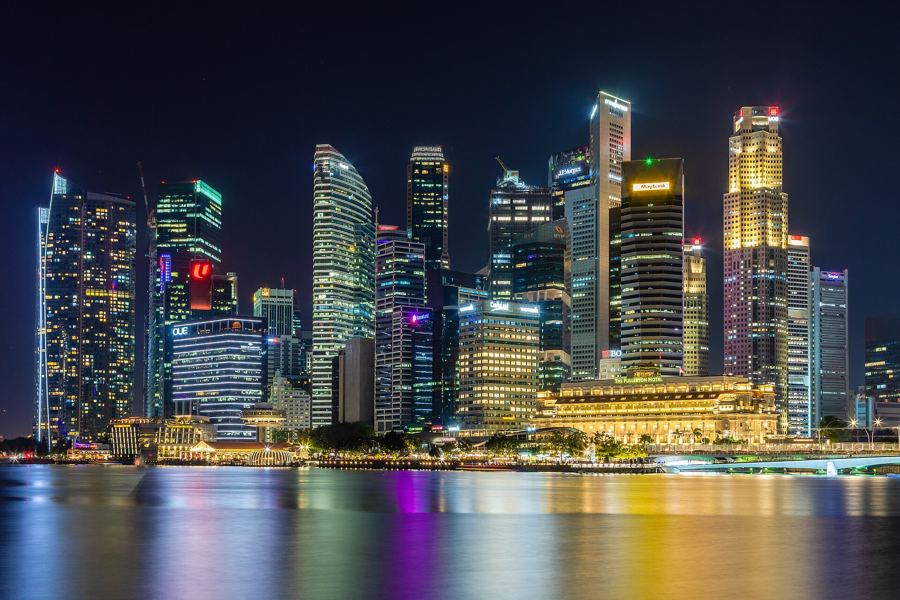 Next stall overMarina Bay, the shore that Singapore made
Some highlights recur in every rehang. Raden Saleh, the nineteenth-century Javanese painter who trained in Europe, is represented by his huge canvas Forest Fire, a scene of animals fleeing flames. The Nanyang artists of Singapore, among them Liu Kang, Chen Chong Swee, Cheong Soo Pieng and Chen Wen Hsi, appear with the work that came out of their trip to Bali in 1952, when they set out to paint a Southeast Asian subject with Chinese and European tools. Georgette Chen's still lifes, bright with local fruit, are a favourite. Chua Mia Tee's National Language Class of 1959, a group of students learning Malay in the years before merger, is one of the most familiar paintings in the country.
The labels are clear and short, and the gallery is good at placing a painting in its moment: what was happening in the street outside when it was made, who the artist was talking to, and what changed afterwards. For visitors who know little about the art of the region, that context is the best introduction there is. For those who know a little, the pleasure is in the depth of the collection, with artists shown across decades rather than by a single famous canvas.
The regional gallery is the more surprising for most visitors. It shows how artists across Southeast Asia took up modernism in the early twentieth century and turned it to their own ends, through the years of independence movements and new nations, and it does so with a confidence that few museums elsewhere can match.
A route through the building
The building is easy to get lost in, which is half the pleasure, but a loose route helps. Enter from St Andrew's Road through the City Hall side, where the main entrance and information desk are. Take the lift or the escalators up to the Singapore gallery, which begins with the colonial period and the first painters trained in the academies of Shanghai and Paris, and moves forward room by room to the experimental work of the 1970s onwards, when artists began to use the street, their bodies and found objects as material.
Cross by one of the bridges to the Supreme Court side and the regional gallery. The changes in the building are part of the walk: from the plain office rooms of City Hall to the panelled courtrooms, where the old benches and docks are kept, and on to the rotunda under the dome. Stop in the old City Hall chamber on the way, a high room of timber and glass where the councils once sat and where the 1945 surrender was signed.
Look out of the windows as you go. The gallery was designed so that visitors keep seeing the Padang through the tall windows of both buildings, and the green field, framed in old stone, is a reminder of where you are. Benches are plentiful, and there are cafés and restaurants on the ground and upper floors for a break between the two collections.
The rooftop and the Padang
Go up before you leave. The rooftop of the old Supreme Court has a terrace and a garden of plants and pools, open to gallery visitors, with a view straight across the Padang to the Esplanade, Marina Bay and the towers of the financial district. From here the shape of the colonial town plan is plain: the open green, the cathedral spire to the north, the river to the south, and the line of civic buildings facing the sea that was once just beyond the field.
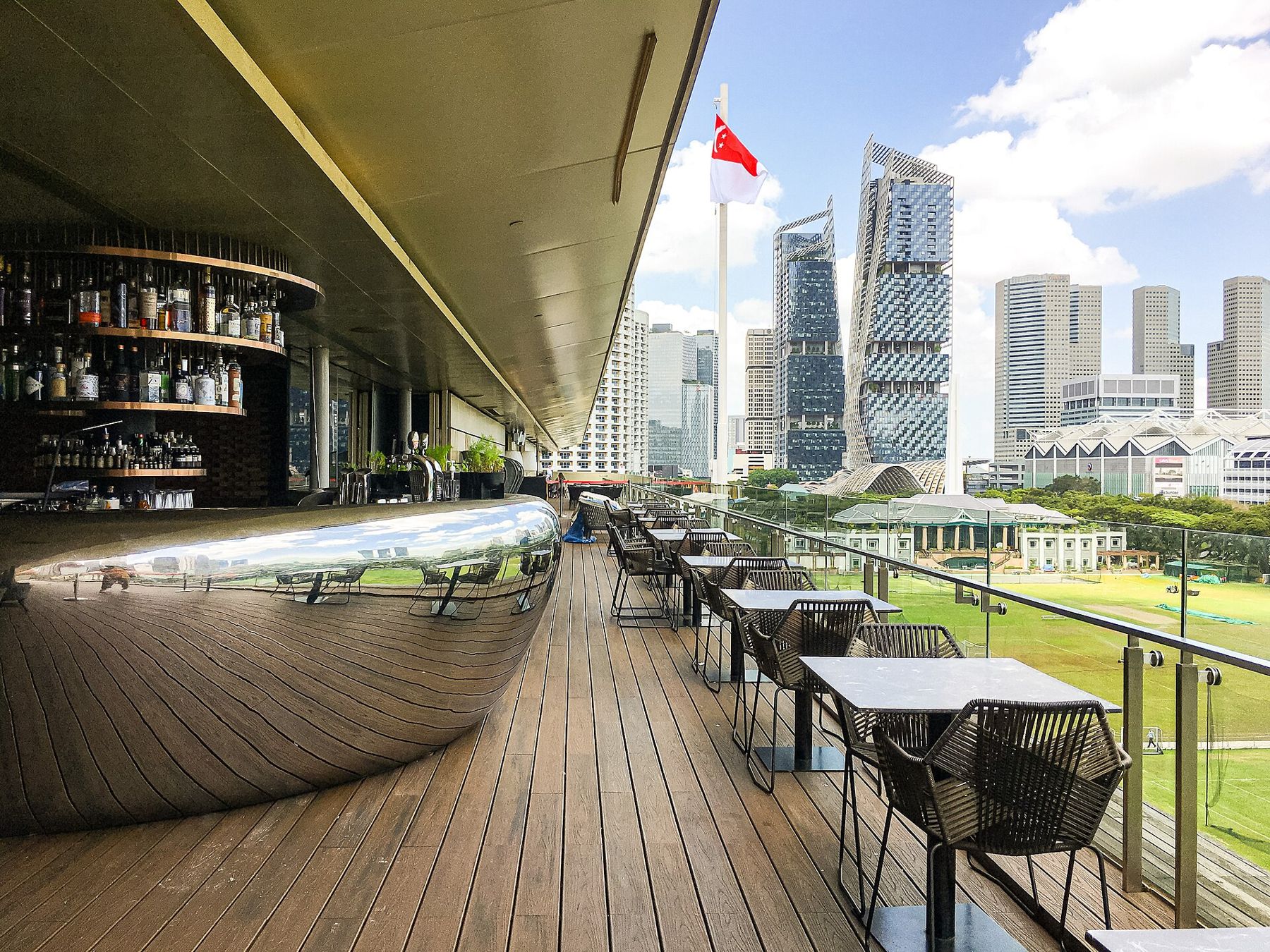
The corridors that once led to council chambers and courtrooms now lead to paintings.
Below you is the cricket field of the Singapore Cricket Club, and to the east the Victoria Theatre and the Arts House, the old parliament. The colonial core around the Padang is best walked after the gallery, while the view is still in your head.
Planning a visit
The gallery is large, and the two permanent galleries alone can fill a day. Pick one for a first visit and leave room for the building itself. Temporary exhibitions are often strong and are ticketed separately. Prices, opening hours and free-entry rules change, so check them before you go; there are free guided tours on many days, and a children's art space with activities on the ground floor of City Hall.
The nearest station is City Hall, five minutes' walk away through the underground link or past St Andrew's Cathedral. The National Museum is a fifteen-minute walk north, and the river and Marina Bay are just beyond the Padang to the south and east.
Come back to the steps of City Hall at dusk, when the columns turn gold, office workers cut across the Padang, and the cricket nets are being taken down.