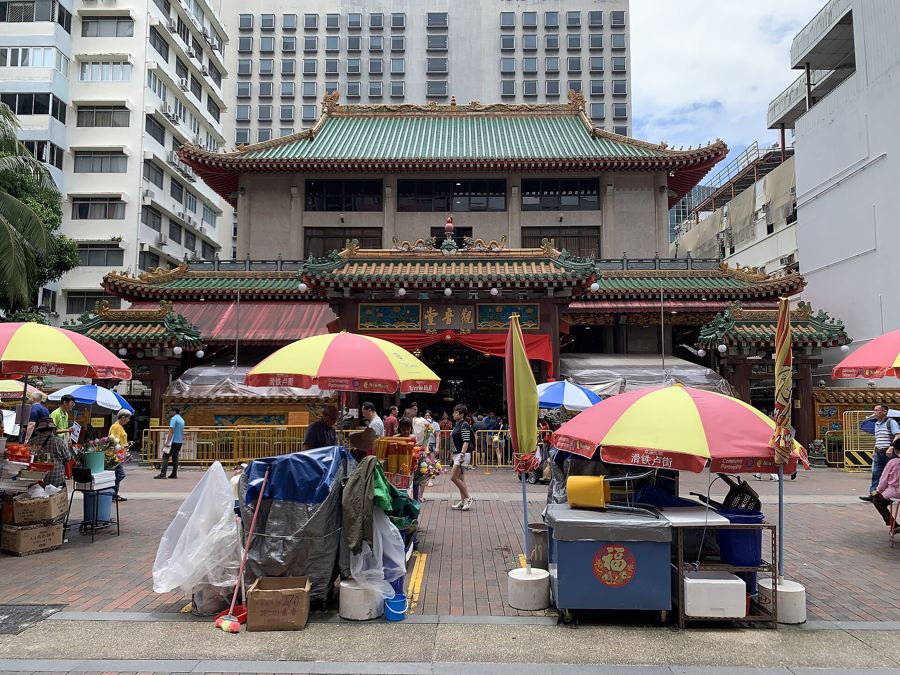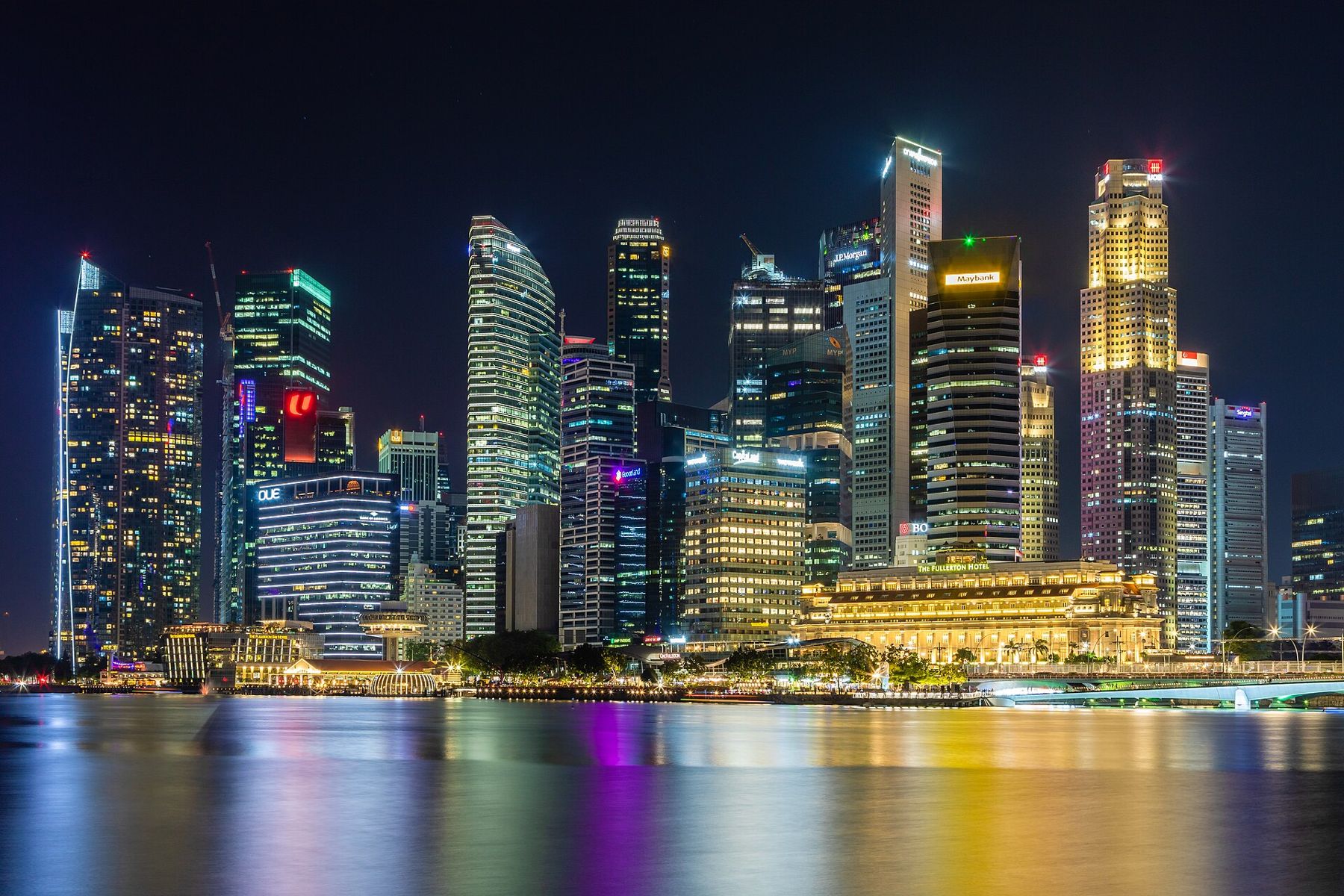
Walk down Telok Ayer Street in Chinatown, and you are walking along the old shoreline. In the early nineteenth century, the sea came right up to the street, and the temples along it faced the water so that sailors could give thanks for a safe arrival. Today, the sea is more than a kilometre away. Between the street and the water stand the towers of the financial district, the domes of the Esplanade, and an entire new shore made from sand, rock and ambition.
Marina Bay is the newest part of Singapore and, in some ways, the most characteristic. It is a place made by planning: land reclaimed from the sea, a bay shaped by engineers, a reservoir created by a dam, and a skyline designed to be seen from the water. It is also, at dusk, one of the most beautiful urban waterfronts in Asia.
Land from the sea
Singapore has been reclaiming land since the early colonial era, when hills were cut down to fill in swamps and shorelines. But the scale of the work changed after independence. From the 1970s onward, the government reclaimed large areas off the southern coast, pushing the shoreline out into the sea and creating new land for the growing city. Marina Centre, on the eastern side, and Marina South, on the southern side, were both built this way, and the water between them became Marina Bay.
For years, much of the new land stood empty, waiting for the city to grow into it. The planners had a long view. They wanted the financial district to extend onto the new land, with a waterfront for people to enjoy, and they were prepared to wait for it. The waiting took decades, and the result is the bay you see today.
You can still trace the older shorelines if you know where to look. Collyer Quay, the road that runs past the Fullerton Building, was itself built on reclaimed land in the nineteenth century, and for a hundred years it was the city's sea wall. Clifford Pier, opened in the 1930s on Collyer Quay, was where generations of passengers and migrants stepped ashore from launches; its arched roof survives, though the sea it served has moved away. The cast-iron market hall of Lau Pa Sat, now a hawker centre, also once stood close to the water. Each of these was the edge of the city in its day. Now they sit inland, stranded by the next round of reclamation, like tide marks on the side of a bath.
The barrage and the reservoir
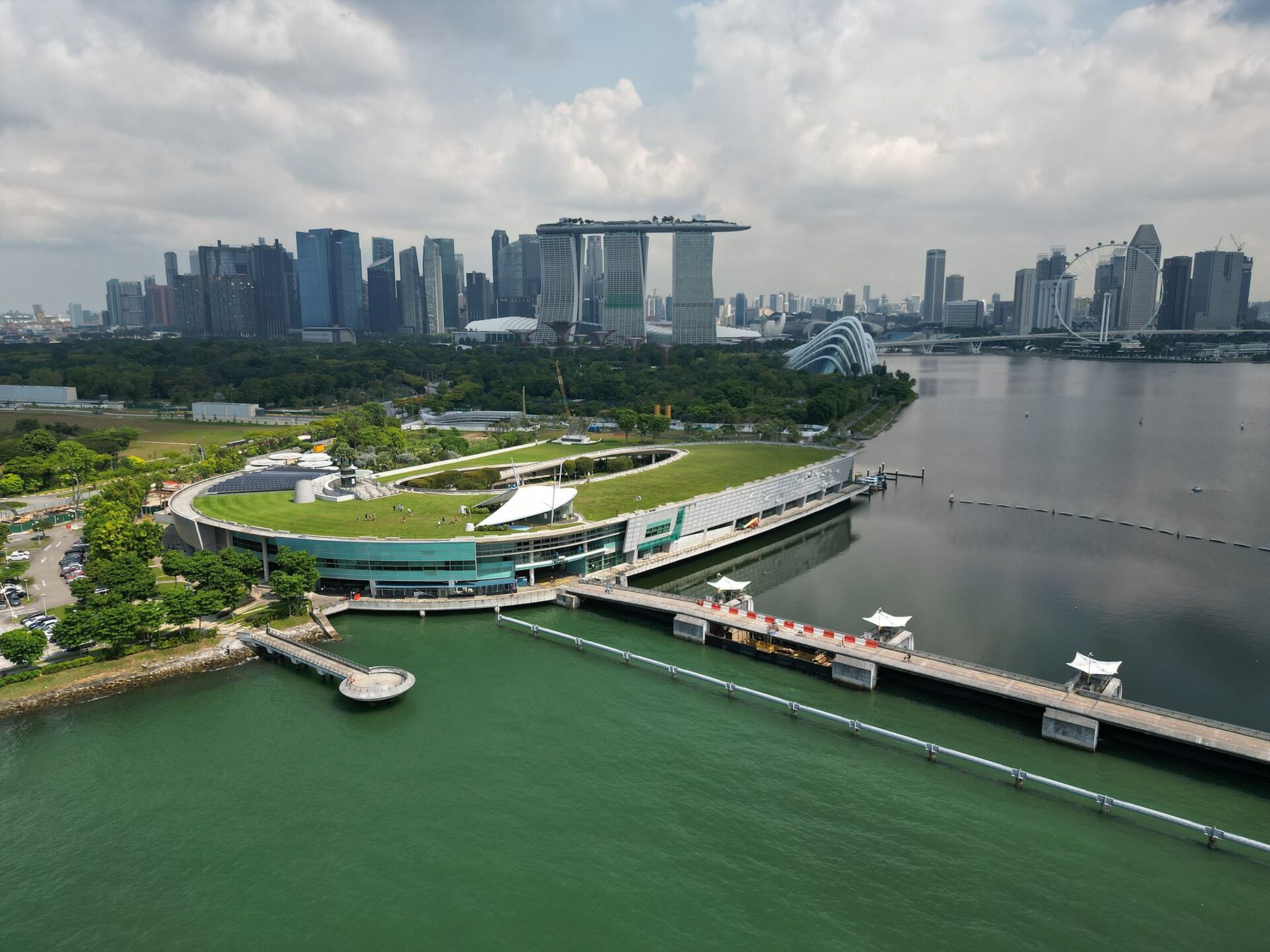
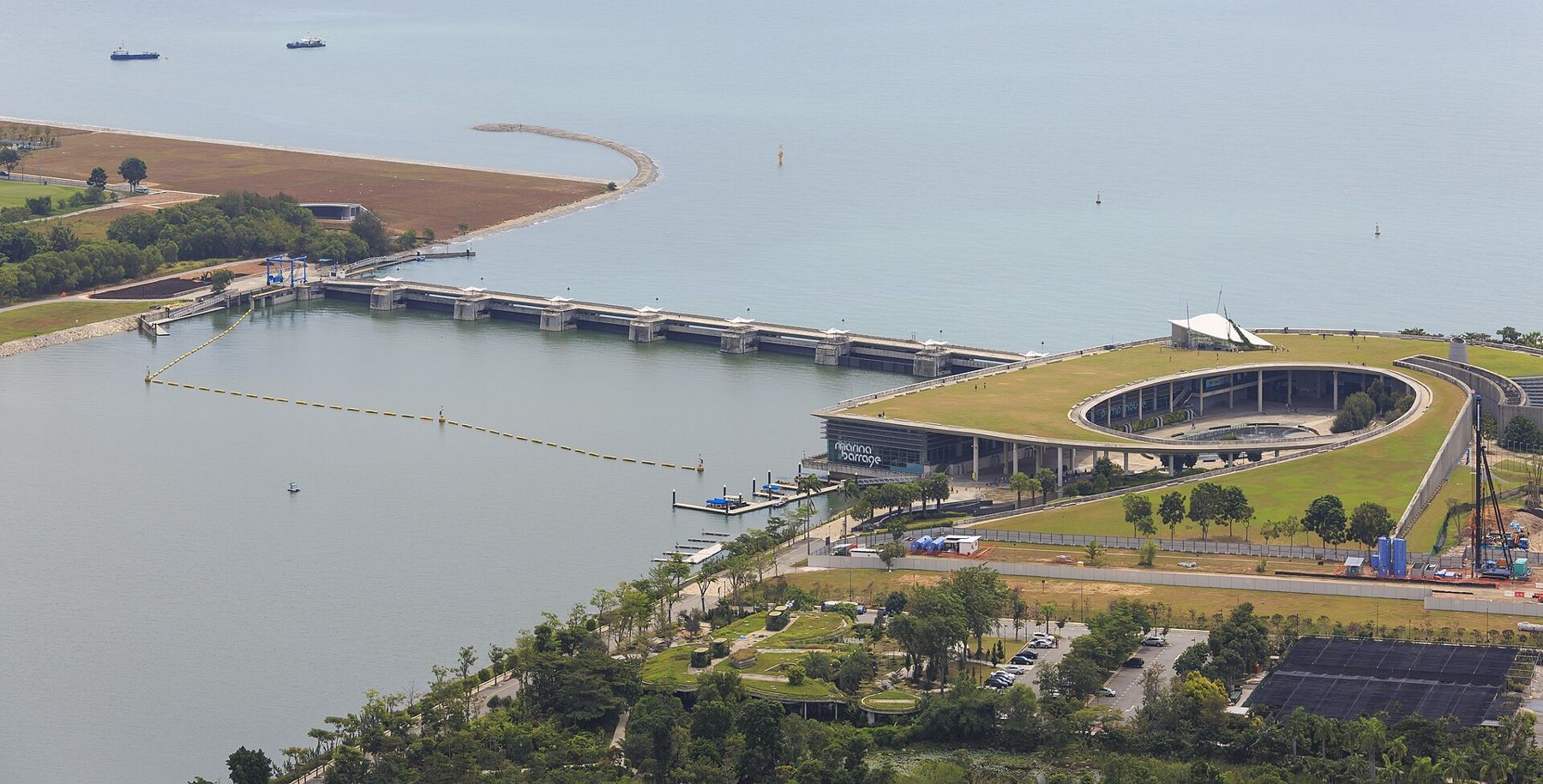
The key to the bay is the Marina Barrage, a dam built across the Marina Channel, the narrow mouth where the bay meets the sea. It opened in 2008, and it did something remarkable: it cut the bay off from the sea and turned it into a freshwater reservoir. Rain falling across a large part of the city now drains into the bay, where it is collected and treated for drinking water.
The barrage does more than hold water. It keeps the sea out during high tides, which helps to prevent flooding in the low-lying parts of the city. When heavy rain falls at high tide, giant pumps push the excess water out to sea. And because the water in the bay is now calm and fresh, it is used for kayaking, dragon boating and other water sports.
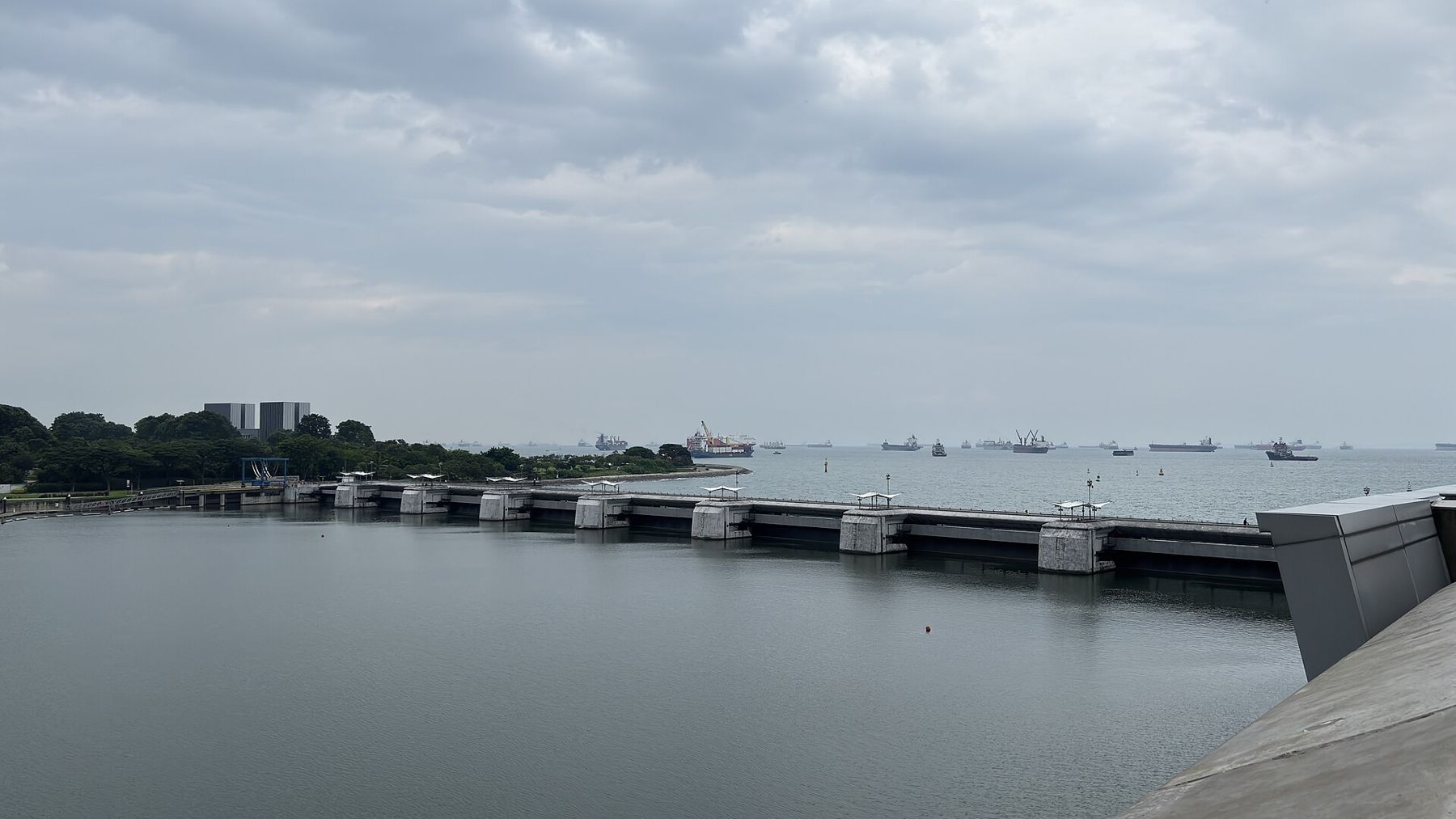
The barrage has a grassy roof that is open to the public, and on breezy evenings it fills with families flying kites and having picnics. The view from the roof, across the bay to the city and out to the shipping lanes, is one of the best in Singapore.
The Esplanade's domes
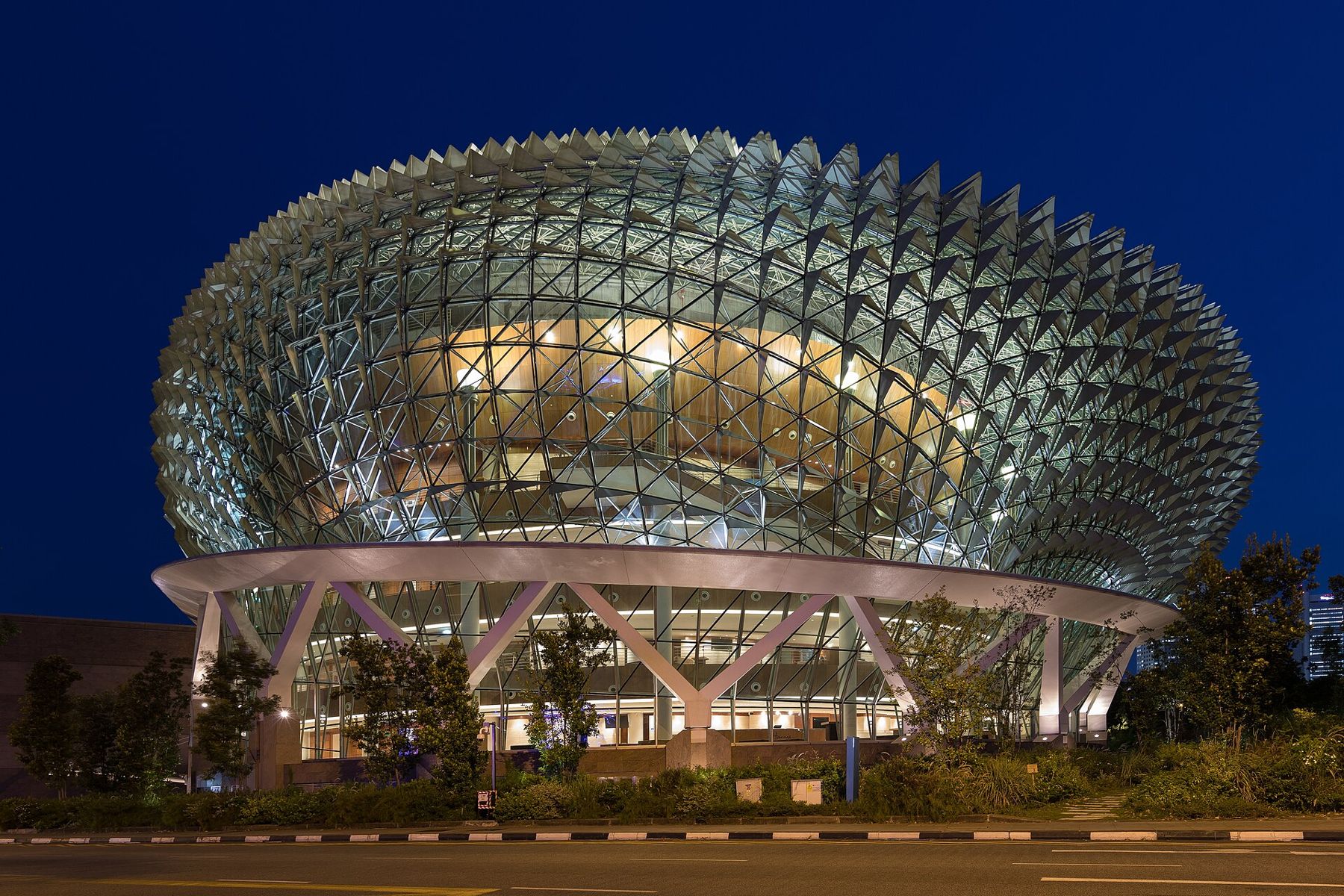
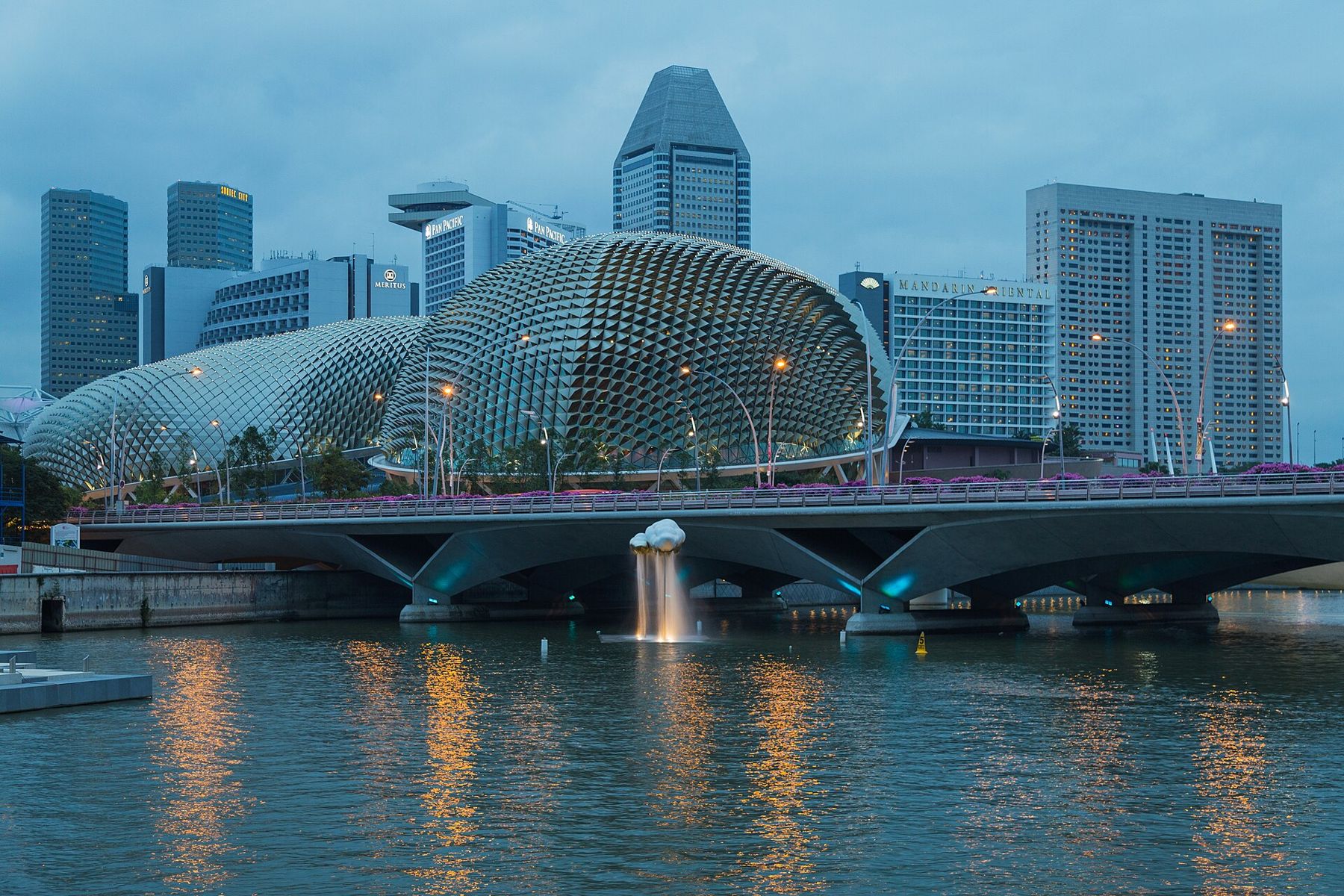
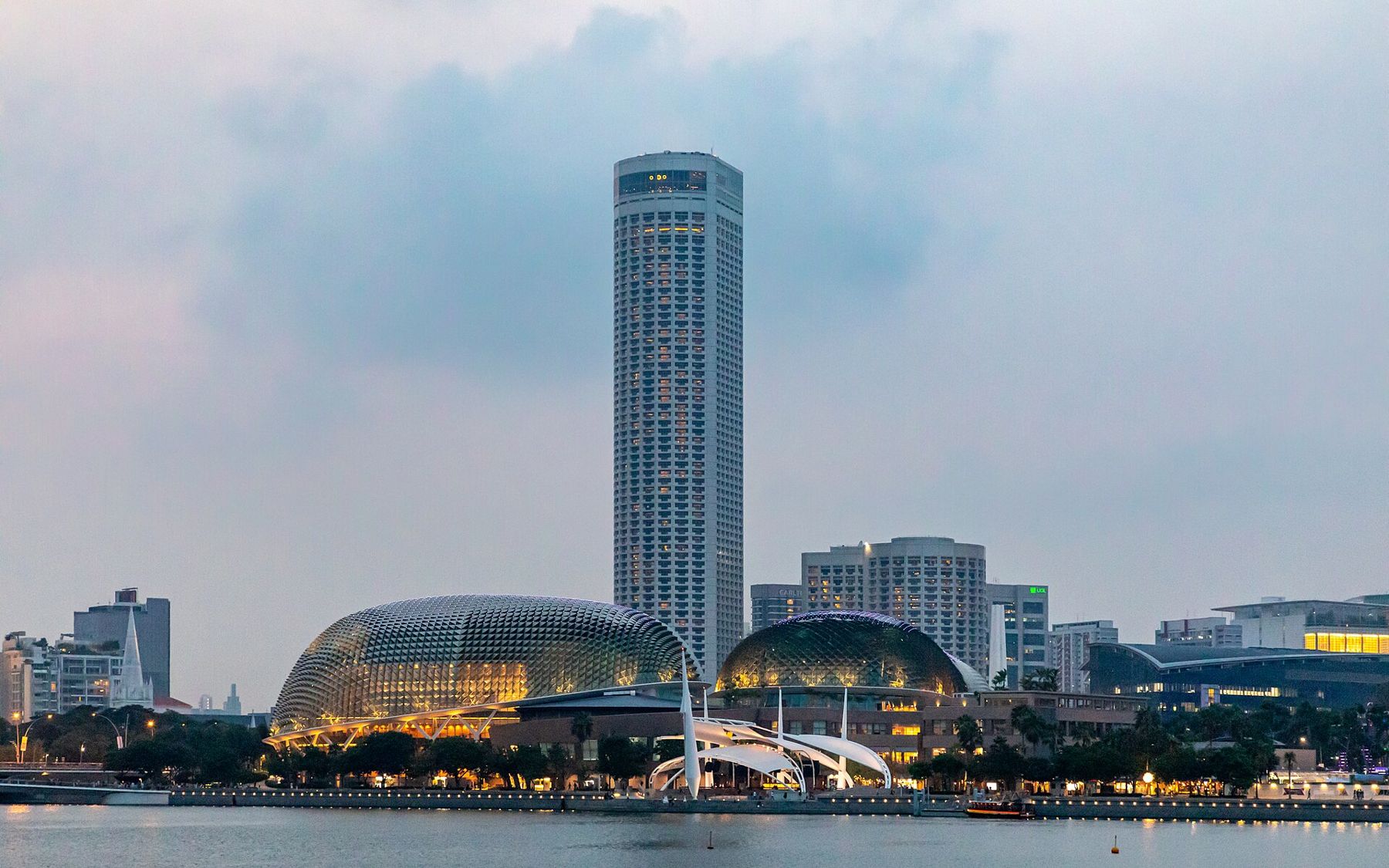
On the northern shore of the bay, near the mouth of the Singapore River, stand the two great domes of Esplanade, Theatres on the Bay. The arts centre opened in 2002, and its domes, clad in spiky sunshades, quickly earned it the nickname "the durians", after the spiky fruit that Singaporeans love and many visitors find hard to like. The sunshades are angled to let in light and keep out the heat, and they give the buildings a texture that changes with the light.
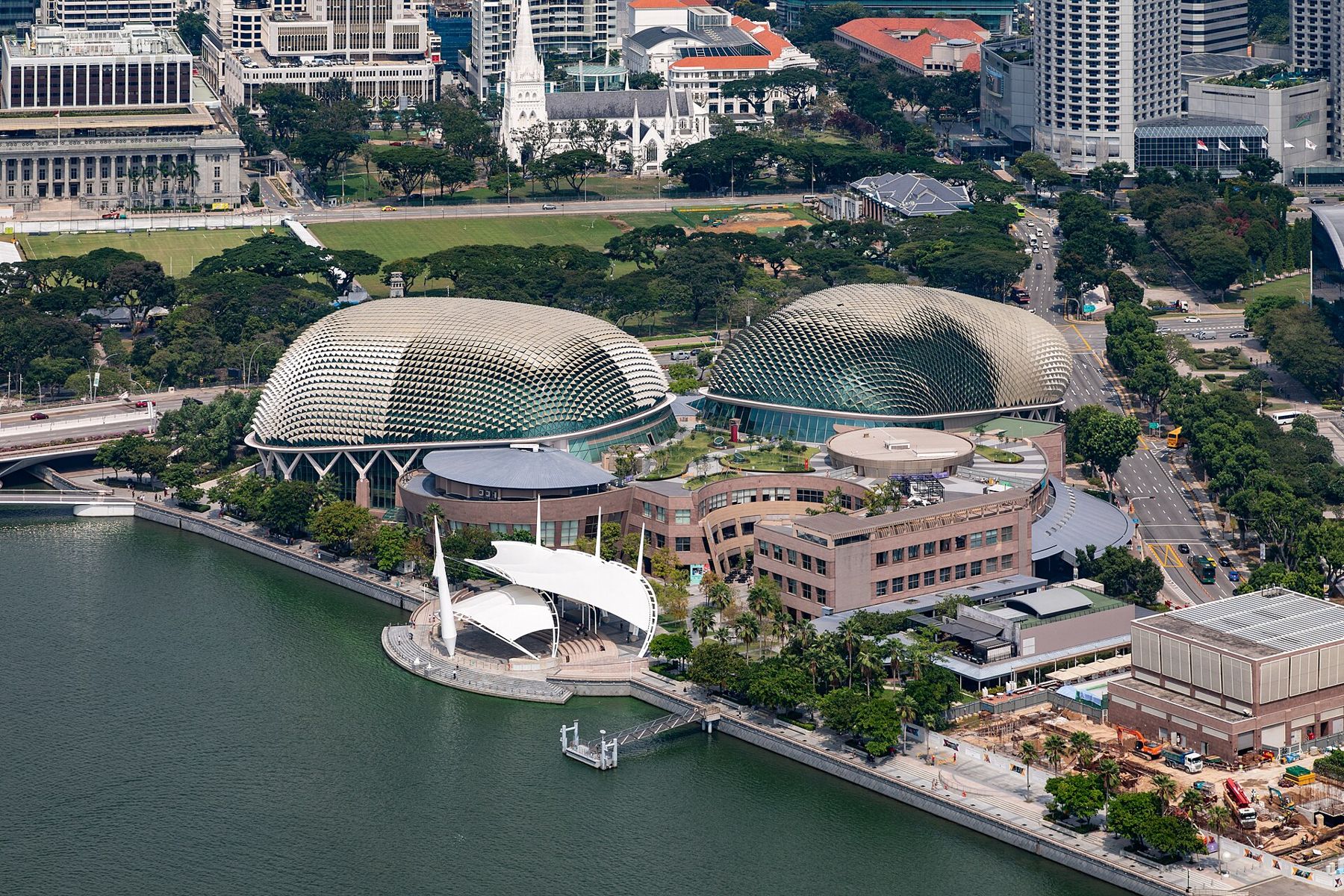
Inside are a concert hall and a theatre, with smaller studios and spaces, and a busy programme of music, dance and theatre. But you do not need a ticket to enjoy the Esplanade. There is an outdoor theatre by the water where free performances are often held, especially at weekends, and a roof terrace with views over the bay. The waterfront promenade in front of the domes is one of the best places to watch the lights come on.
 Next stall overGardens by the Bay, from morning heat to the evening lights
The Helix Bridge and the far shore
From the Esplanade, the promenade runs around the bay to the Helix Bridge, a footbridge that opened in 2010. Its structure is two curving steel tubes wound around each other like a strand of DNA, with a glass and steel canopy that shades walkers from the sun. At night, the bridge is lit, and the coils glow against the dark water. It is a short crossing, but it is worth slowing down to look at the structure, and at the views from its viewing platforms.
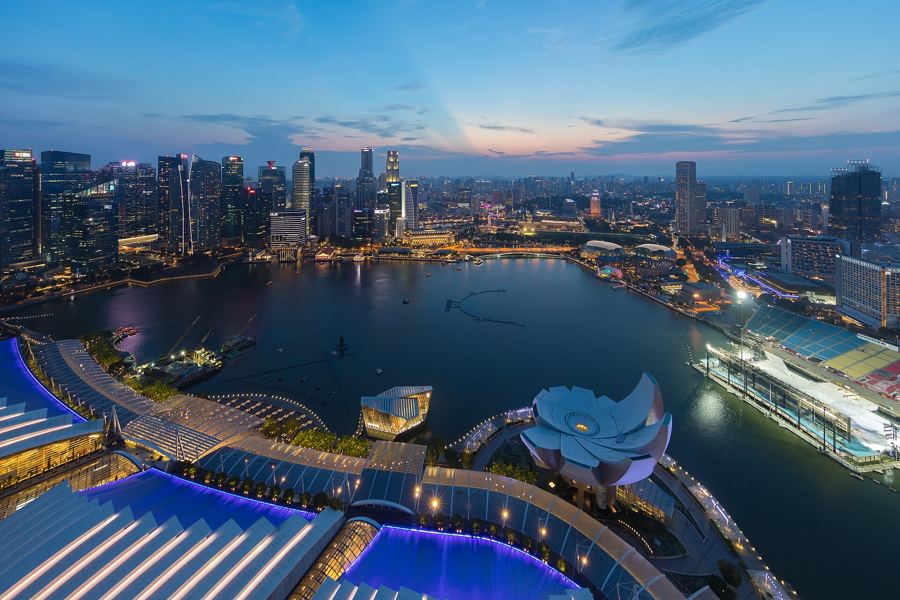
On the far side of the bridge is Marina Bay Sands, the hotel and casino complex that opened in 2010, with its three towers joined at the top by a long, boat-shaped platform. Beside it is the ArtScience Museum, a building shaped like a lotus flower, and beyond it lies the Gardens by the Bay. Most evenings, a free light and water show is projected over the water in front of Marina Bay Sands; show times change, so check before you go. For more on the towers around the bay, see our guide to the skyline.
Walking the bay
The best way to see Marina Bay is to walk around it. A waterfront promenade circles the bay, linking the Merlion, the Esplanade, the Helix Bridge, Marina Bay Sands and the financial district. The full loop takes an hour or so at an easy pace, longer if you stop to look, and it is flat and paved all the way.
Start at the Merlion, at the mouth of the Singapore River, and walk clockwise past the Esplanade, over the Helix Bridge, around Marina Bay Sands and back along the southern shore to the financial district. Go at dusk, when the heat eases, the towers light up and the water turns from blue to gold to black.
Once a year, in the second half of the year, the streets around the bay become a racetrack, when the Formula One night race is held on a circuit that runs past the Esplanade and the Padang. Roads close and grandstands go up, and the bay is busier and louder than usual. Check the dates if you want to avoid it, or join it.
The bay at night
Marina Bay is at its best at night. The towers of the financial district glow, Marina Bay Sands lights up, the Helix Bridge shines, and the lights are reflected in the calm, fresh water of the bay. People gather along the promenade to watch the light show, to eat, to sit on the steps by the water and to take photographs.
The bay has its own night sounds too: the slap of water against the promenade, the hum of the river boats coming in with their lights strung along the canopy, buskers by the Esplanade, and the occasional cheer from a group of friends when the light show begins. Late at night, after the crowds thin, the promenade belongs to joggers and couples, and the towers stay lit long after the offices inside them have emptied.
It is easy to forget, standing on the promenade, that almost everything you can see was built in the last fifty years, on land that did not exist before. The bay is a monument to a particular kind of ambition: the idea that a small island with few natural resources could make its own land, its own water and its own waterfront.
The bay is a monument to a particular kind of ambition: the idea that a small island with few natural resources could make its own land, its own water and its own waterfront.
Stand on the Esplanade steps after dark, with the towers reflected in the water and a breeze coming off the bay. On Telok Ayer Street, a kilometre inland, the old temples still face the sea they can no longer see.