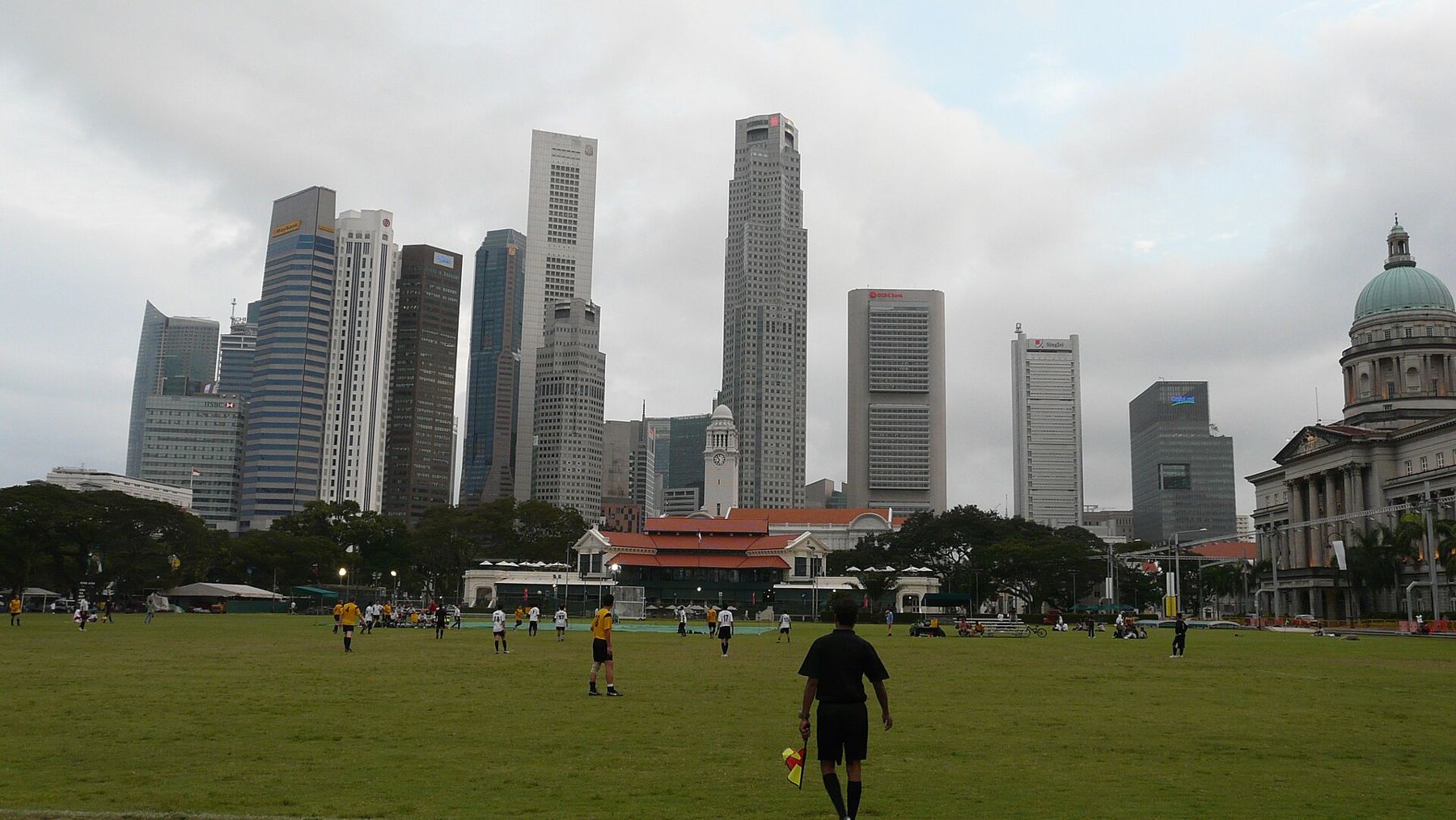
The cricket ball makes a clean sound on the Padang, and it carries. On a Saturday afternoon you can hear it from the steps of the old City Hall, from the lawn of St Andrew's Cathedral and from the Esplanade by the water. The field has been open ground since the first years of the settlement, and almost every building around it was placed with that open green in mind.
This is the colonial core of Singapore, the civic district on the north bank of the river. It is compact, about a kilometre from end to end, and it can be read like a book: each building records a moment in the growth of the town, and together they show how a plan drawn up in 1822 still shapes the city.
The plan of 1822
Stamford Raffles landed at the mouth of the Singapore River in 1819 and secured a treaty with the local rulers to set up a British trading post. When he returned in 1822 he found the settlement growing fast and without order, so he appointed a town committee and set out his instructions. The plan that resulted, drawn by Lieutenant Philip Jackson and usually called the Jackson Plan, laid out the town in districts.
Government land was reserved on the north bank of the river, with an open space in front called the Plain, now the Padang. Merchants' offices and warehouses went to the south bank around Commercial Square, now Raffles Place. The plan gave separate areas to different communities: the Chinese to the south-west of the river, the Malay sultan and the Arab and Bugis traders at Kampong Glam, the Chulia traders from south India upriver, and the Europeans along the shore to the east of the Plain.
The plan also set out the width of streets and the covered walkway in front of every shophouse, the origin of the five-foot way. Much of the Singapore you walk through today, including the grid of the old quarters, comes from it. The civic district is where its intentions are clearest.
The Padang and the river front
The Padang has been a cricket ground, a parade ground and a gathering place for the whole city. The Singapore Cricket Club, founded in 1852, has its pavilion at the southern end; at the northern end is the Singapore Recreation Club, founded by the Eurasian community in 1883. In between is the field where the Japanese surrender was celebrated in 1945 and where many National Day Parades have been held since independence.
Walk towards the river and you reach the oldest building in the district. The house built in 1827 for the Scottish merchant John Argyle Maxwell, to a design by George Drumgoole Coleman, the colony's first architect, was soon leased to the government as a courthouse. It was much altered and extended, and after independence it became Parliament House. Parliament moved to a new building next door in 1999, and the old house is now the Arts House, with a small bronze elephant in front of it, a gift from King Chulalongkorn of Siam after his visit to Singapore in 1871.
St Andrew's Cathedral
North of the Padang, set in a wide lawn, stands St Andrew's Cathedral, the Anglican cathedral and the whitest building in the city. The first church on the site, designed by Coleman, was finished in the 1830s, but it was struck by lightning twice in the 1840s and was declared unsafe. The present building, in the English Gothic style, was designed by Colonel Ronald MacPherson and built between 1856 and 1861 by Indian convict labourers. It was consecrated in 1862.
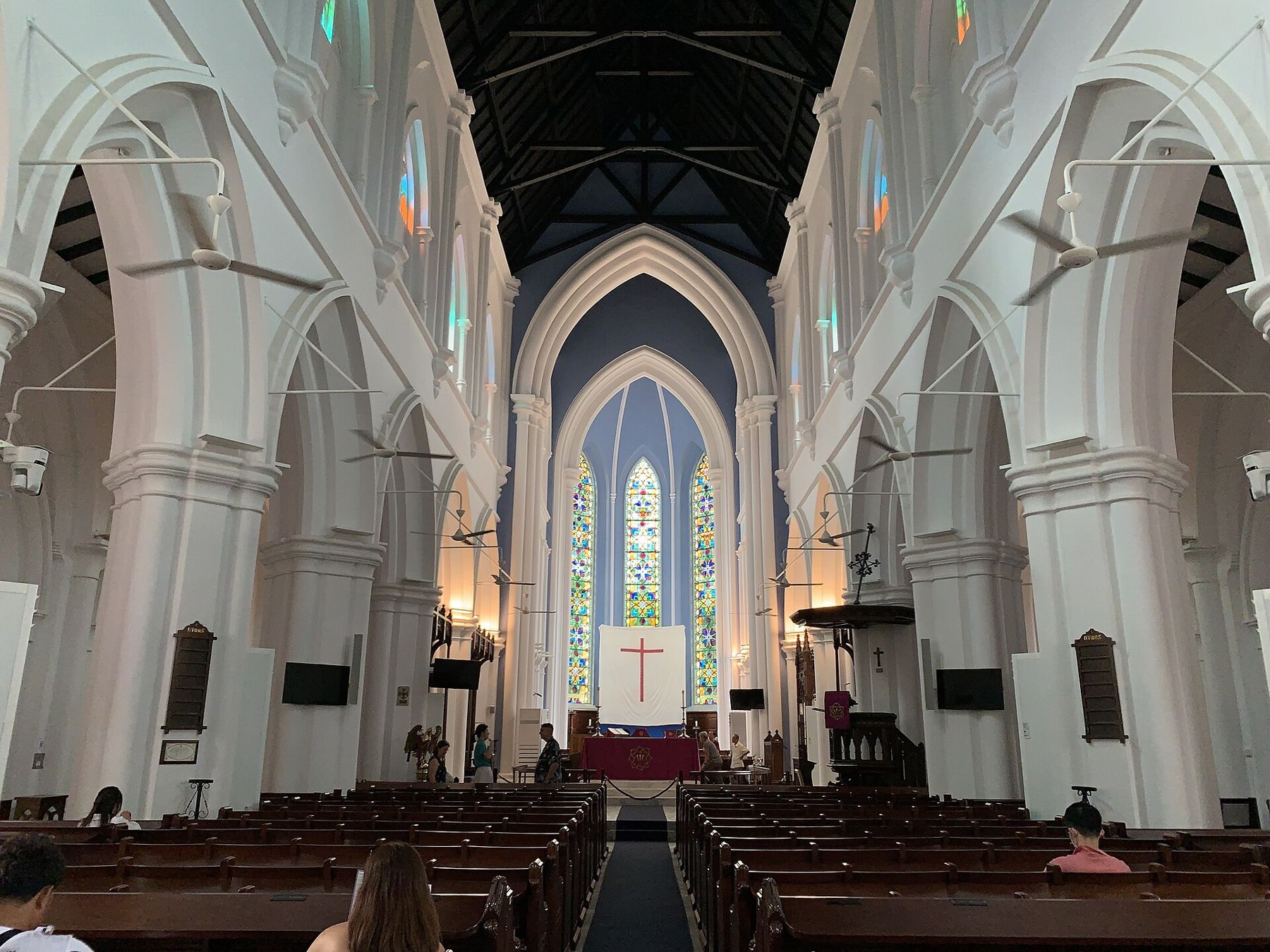
Its walls are finished in Madras chunam, a plaster brought from India that is made with shell lime, egg white, coarse sugar and water steeped with coconut husk, polished to a hard sheen. Inside, the nave is cool and bright, with tall lancet windows and the memorials of the colonial congregation on the walls. The cathedral is a working church with daily services; visitors are welcome at other times, and quiet clothes and voices are expected.
Victoria Theatre and the Memorial Hall
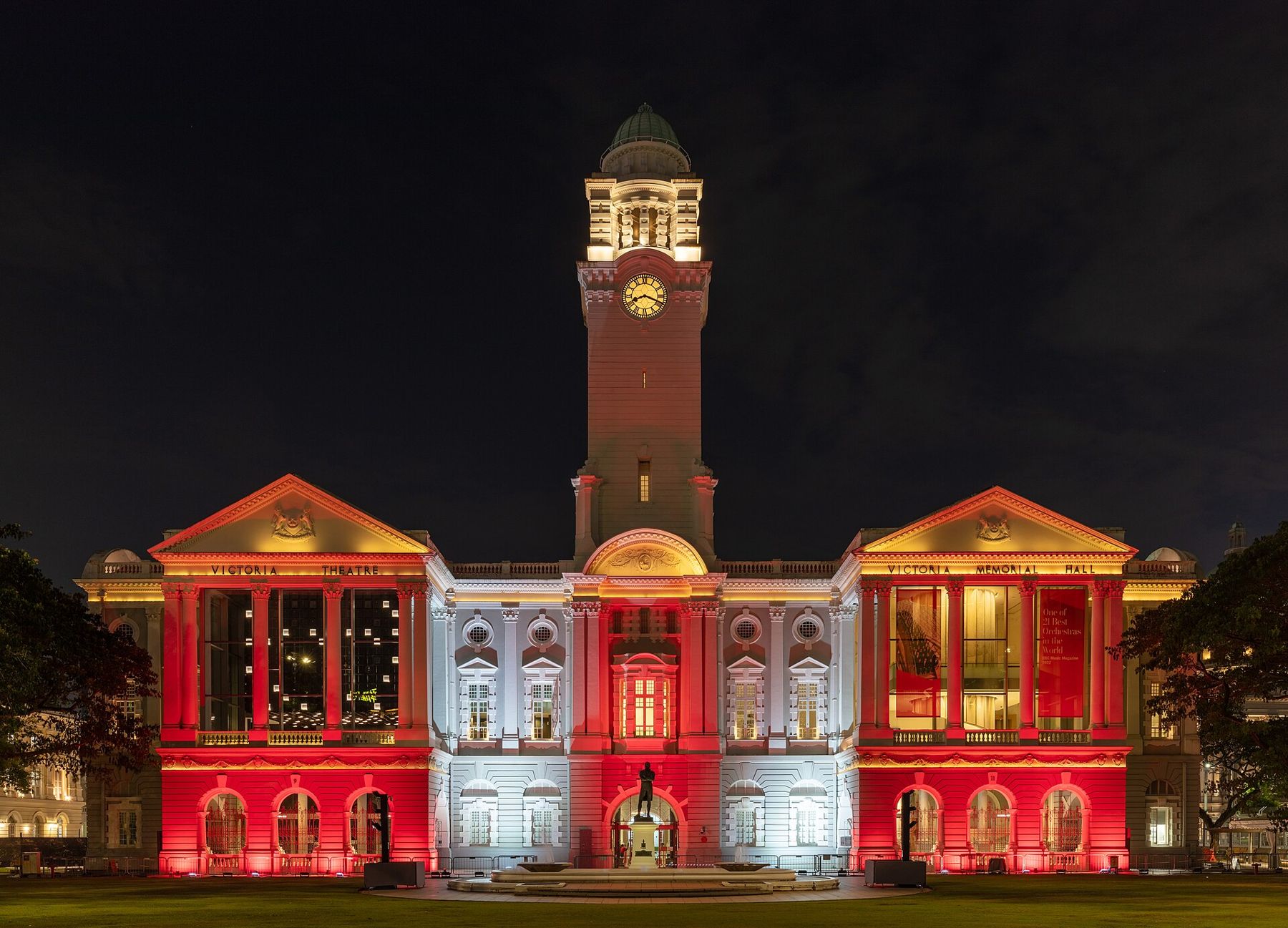
Between the Padang and the river, two matching buildings are joined by a clock tower. One was the Town Hall, completed in 1862 and later turned into a theatre. The other, the Victoria Memorial Hall, was built in 1905 in memory of Queen Victoria, and the clock tower between them followed a year later. Together they are now the Victoria Theatre and Concert Hall, home of the Singapore Symphony Orchestra, and they reopened in 2014 after a long renovation.
 Next stall overTwo courts and a gallery: inside the old City Hall and Supreme Court
In front of the concert hall stands the bronze statue of Raffles, unveiled in 1887 on the Padang and moved here in 1919 for the centenary of the settlement. A white copy stands on the riverbank at the spot where he is believed to have landed.
Raffles Hotel
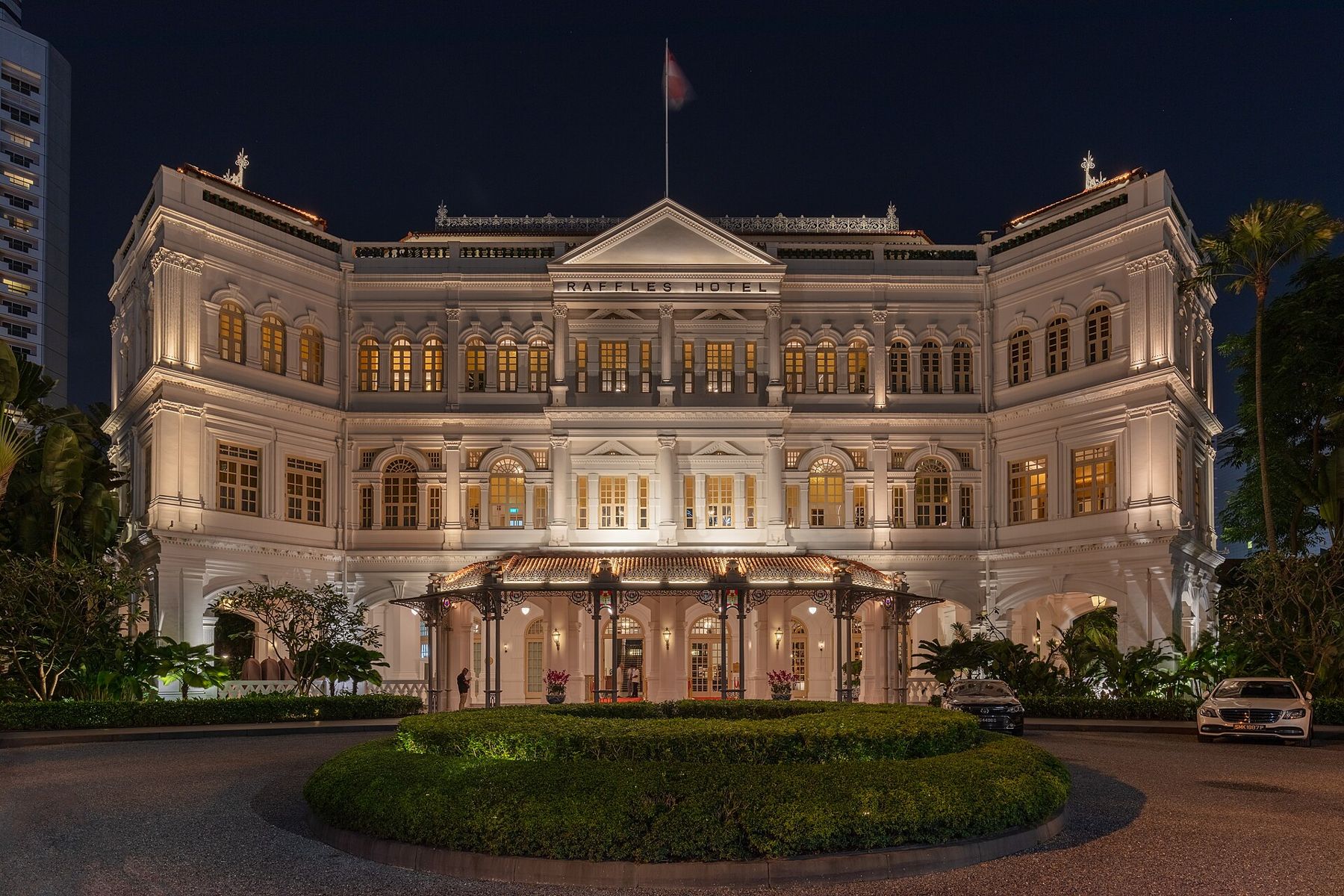
A short walk north up Beach Road, Raffles Hotel faces what was once the sea. It was opened in 1887 by the Sarkies brothers, Armenian hoteliers who already ran hotels in Penang, in a ten-room bungalow by the shore. The main building, with its verandahs, white columns and red roof, opened in 1899 to a design by Regent Alfred John Bidwell of the firm Swan and Maclaren. It was among the first buildings in Singapore to have electric lights and fans.
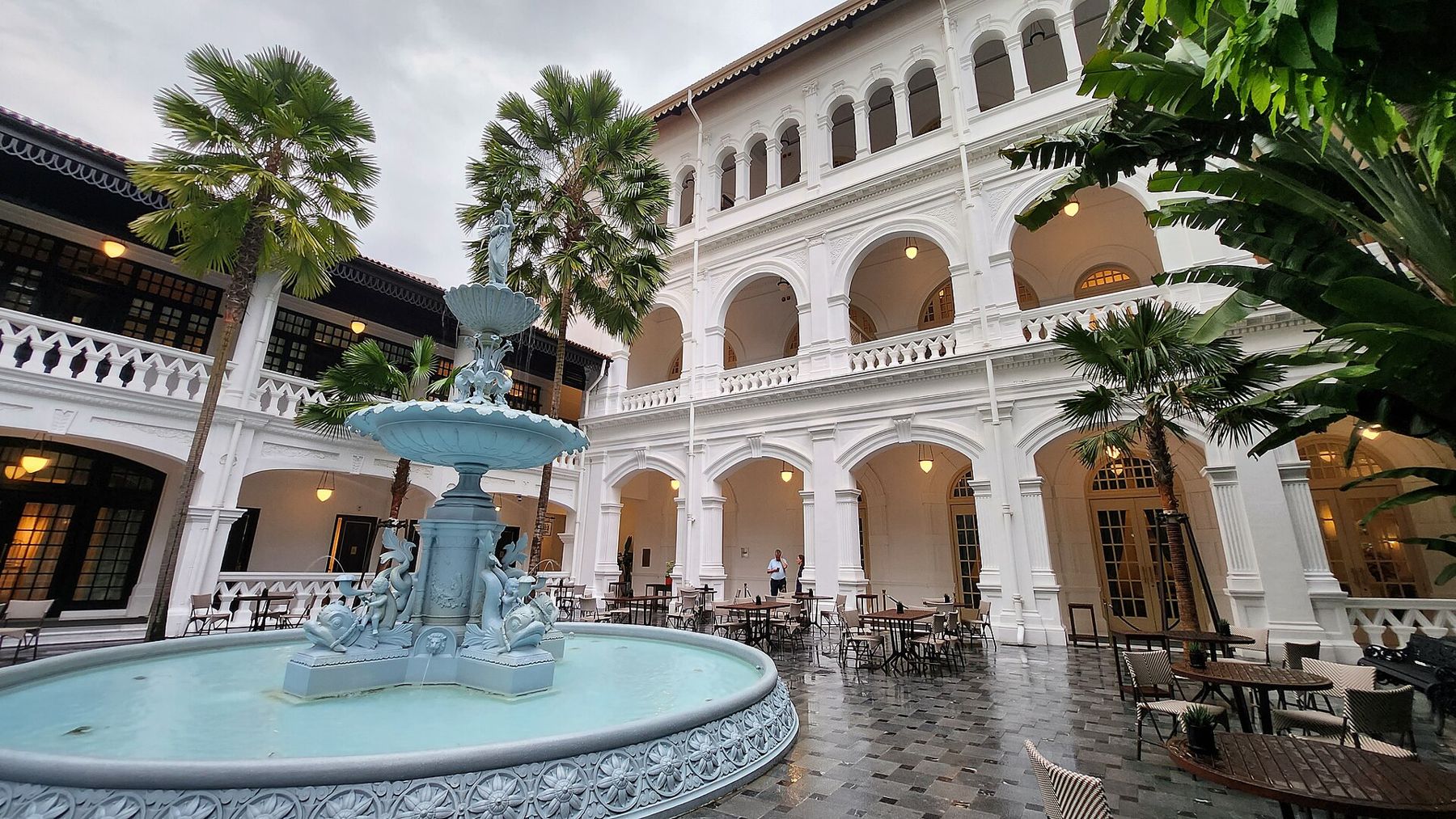
The hotel became a symbol of colonial travel. Writers including Rudyard Kipling and Somerset Maugham are associated with it, and the Singapore Sling is credited to a barman of its Long Bar in the early twentieth century. Over the years the sea retreated behind land reclamation and the hotel's fortunes rose and fell. It was gazetted as a national monument in 1987 and has since been restored twice, most recently in a renovation that ended in 2019.
Non-residents can walk through parts of the grounds and the arcade, and the front drive and verandahs are the best view of the building.
The Cenotaph and the Esplanade
At the south-eastern corner of the Padang, on the old waterfront promenade of the Esplanade, stands the Cenotaph, a tall, plain monument unveiled in 1922 for the men of Singapore who died in the First World War. The names of those who died in the Second World War were added after 1945. Remembrance services are still held there.
Nearby are two other memorials: the Tan Kim Seng Fountain, a cast-iron fountain put up in 1882 to honour a merchant who gave money for the town's first proper water supply, and the Lim Bo Seng Memorial, a pagoda-like monument to a resistance fighter who died in Japanese custody during the occupation.
What you can see today
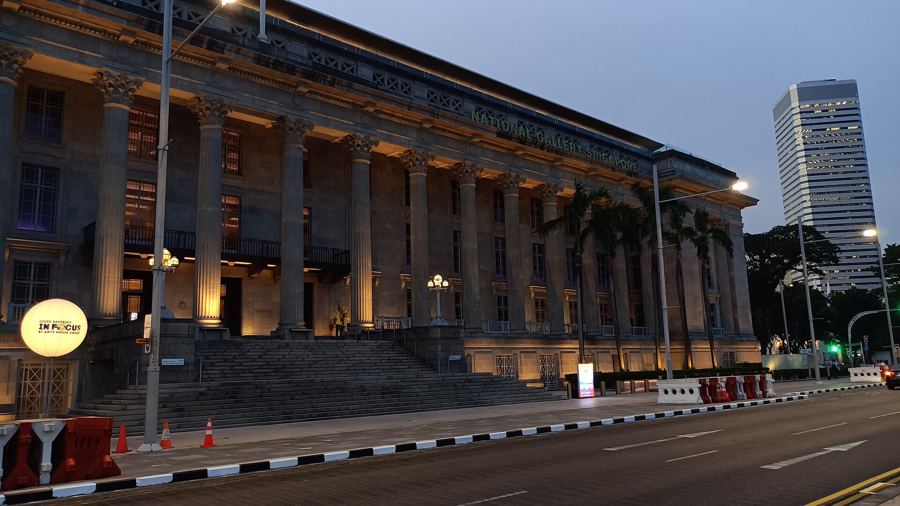
The whole district can be seen in a morning. Start at Raffles Hotel on Beach Road, walk south to St Andrew's Cathedral and then across the Padang. Look at City Hall and the old Supreme Court, now the National Gallery, continue to the Victoria Theatre, the Arts House and the river, then finish at the Cenotaph and Esplanade Park, by the water. Allow longer if you go inside the gallery or the cathedral.
The colonial core continues beyond the Padang: up the hill to Fort Canning, north into the old schools of Bras Basah, and across the river to the quays and the old warehouses. Beyond the Esplanade, the modern towers of Marina Bay stand on land that was sea when most of these buildings were new.
Come back to the Padang in the evening, when the cricket ends and the office crowds cross the grass, and the white buildings stand around the field just as the plan of 1822 intended.