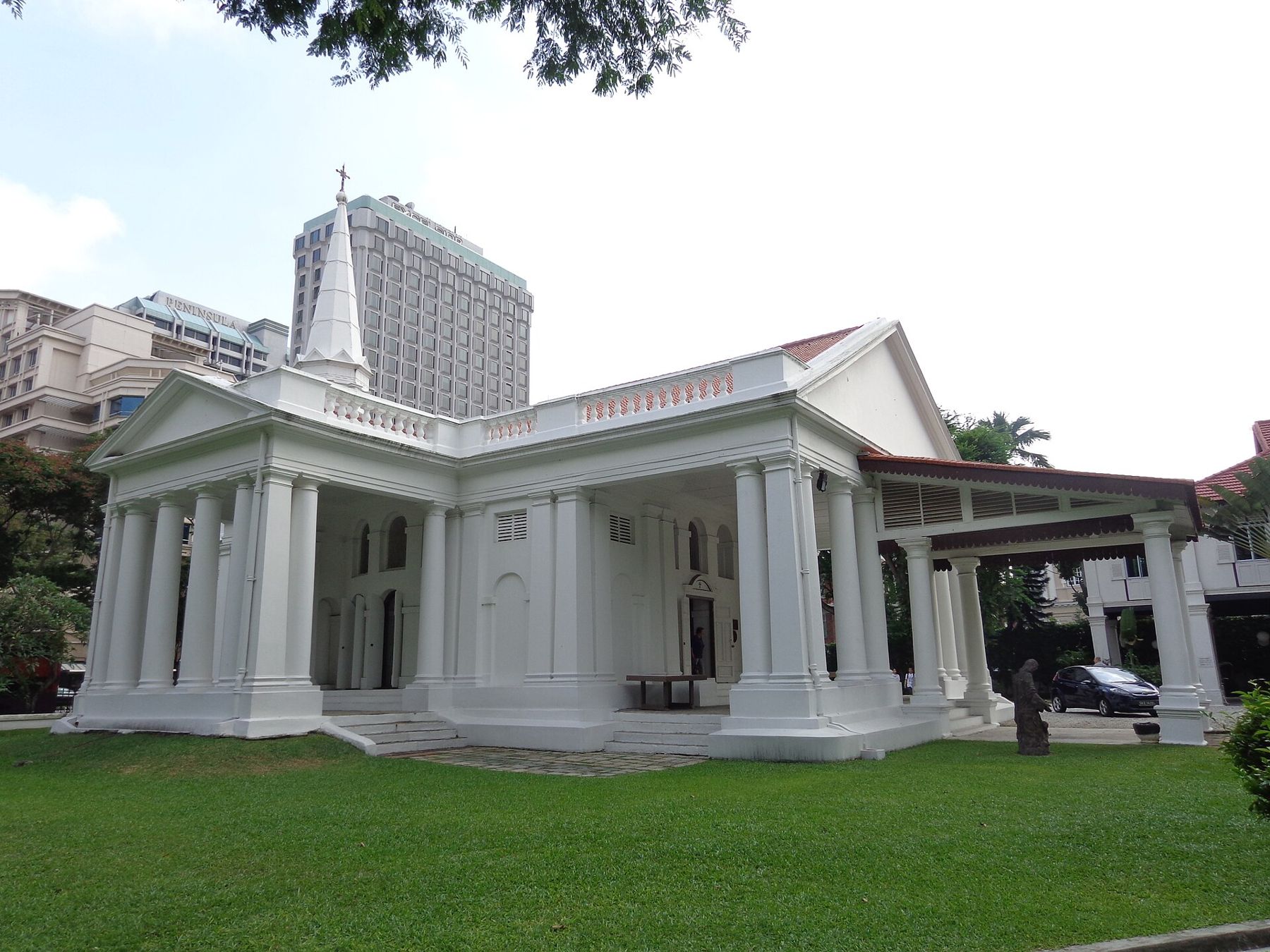
The Armenian Church is easy to miss. It sits behind a low wall on Hill Street, a small white building with a portico of Doric columns on each side and a slim steeple, surrounded by frangipani and a lawn of graves. Traffic runs past all day on Hill Street. Inside the gate, the loudest thing is the birdsong.
Walk round the church and up the slope, and you are on Armenian Street, a short road that runs along the foot of Fort Canning. It is named after the church, and it holds, in a few hundred metres, one of Singapore's best small museums, a handful of shophouses and a long view of the mixed history of the town: Armenian merchants, Hokkien schoolteachers and the Peranakan families whose world the museum sets out to show.
The Armenian Church
The Church of St Gregory the Illuminator was completed in 1835 and is the oldest surviving church in Singapore. It was built for the small Armenian community of merchants who traded in the port in its first decades, and paid for largely by their subscriptions. The design is by George Drumgoole Coleman, the architect of much of early colonial Singapore, who gave it a neoclassical form suited to the climate: thick walls, deep porticoes, tall shuttered windows and a central plan under a small dome. The steeple was added later in the century.
The Armenian community of Singapore was never large, and it gave the island more than its numbers would suggest. The Sarkies brothers, who founded Raffles Hotel, were Armenian; so was the family that started the Straits Times. In the garden beside the church are headstones moved here from an old Christian cemetery, among them that of Agnes Joaquim, who bred the hybrid orchid named after her, Vanda Miss Joaquim, which became Singapore's national flower in 1981.
The church was gazetted as a national monument in 1973. It is still consecrated and holds occasional services of the Armenian Apostolic Church. Visitors may usually walk in the grounds and look inside during the day; dress and behave as you would in any place of worship.
The old Tao Nan School
At the top of the street is a large building in an eclectic classical style, painted cream and white, with a central portico, verandahs on both floors and a pediment over the entrance. This is the former Tao Nan School, built in 1912 for a school that the Hokkien community had founded a few years earlier. It was one of the first modern Chinese schools in Singapore, and it taught generations of children here until it moved to Marine Parade in the early 1980s.
In 1997 the building reopened as a wing of the Asian Civilisations Museum, and from 2008 it became the Peranakan Museum, given over entirely to Peranakan culture. It closed in 2019 for a full renewal of its galleries and reopened in 2023. The building, gazetted as a national monument, has kept its high ceilings, timber floors and central light court, and the galleries are arranged around it.
Who the Peranakans are
Peranakan is a Malay word meaning, roughly, locally born. In Singapore it most often refers to the descendants of Chinese traders who settled in the ports of the Malay world, especially Melaka, Penang and Singapore, from the fifteenth century onwards, and who married local women. Over generations their families developed a culture of their own. Men were known as baba and women as nyonya; they spoke a creole of Malay with many Hokkien words, dressed in a style drawn from Malay, Chinese and European fashion, and cooked a cuisine that mixes Chinese techniques with Malay spices. Under British rule many were known as Straits Chinese, and they were prominent in business, the professions and public life.
The museum is careful to show that Chinese Peranakans are not the only Peranakans. There are the Chitty Melaka, descended from Indian traders and local women, and the Jawi Peranakan, of Indian Muslim and Malay descent, among others. Their stories sit alongside the more familiar ones, which gives a fuller sense of how mixed the port cities of the region always were.
The museum is careful to show that Chinese Peranakans are not the only Peranakans.
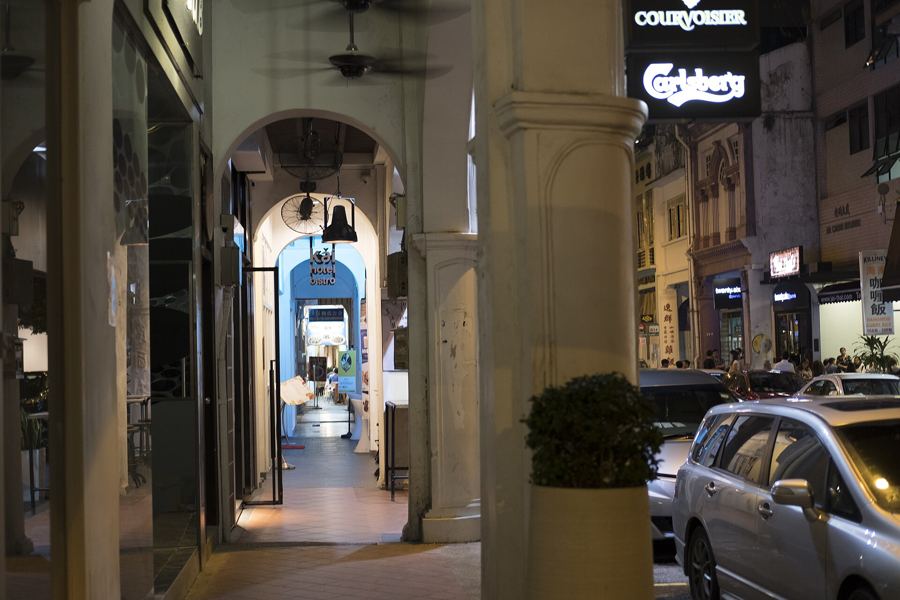 Next stall overShophouses, explained: the five-foot way, the styles and why they survived
What the galleries hold
The collection is one of colour and craft. Kebaya, the fitted blouses worn by nyonya women, are embroidered with flowers, birds and butterflies so fine that the stitches are hard to see. Beaded slippers, called kasut manek, are worked in tiny glass beads, many of them once imported from Europe, in patterns of roses and phoenixes. There are silver belts and boxes, jewellery set with diamonds and gold, and woodwork carved and gilded for the home.
The porcelain alone is worth the visit. Nyonya ware was made in China for the Straits market, in bright pinks, greens and yellows, with phoenixes and peonies, and in shapes made for Peranakan households: covered jars called kamcheng, stacked food carriers, and sets for weddings and feasts. Cabinets of it fill a room, and the effect is close to overwhelming.
The galleries are arranged around the stages of life, the home and the community. There is a wedding chamber with a carved bridal bed, the elaborate ritual of the twelve-day wedding that used to be the high point of a Peranakan family's year, and the customs that surrounded birth and death. The displays also look at faith: Peranakan families include Buddhists, Taoists, Christians and Muslims, and the museum shows their practices side by side, plainly and with respect. The last rooms bring the story to the present, to how the culture survives in families, food and fashion today.
The rest of the street
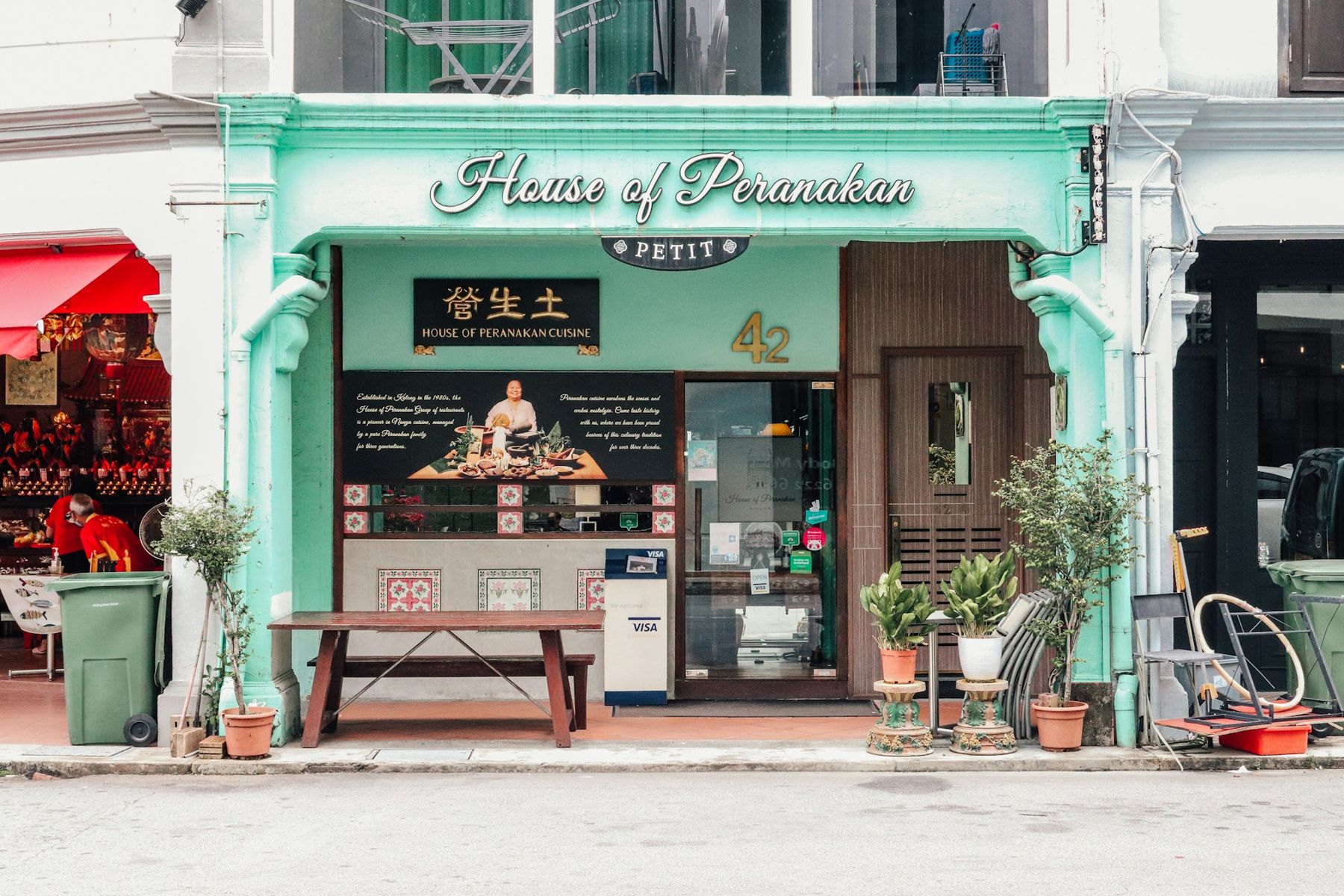
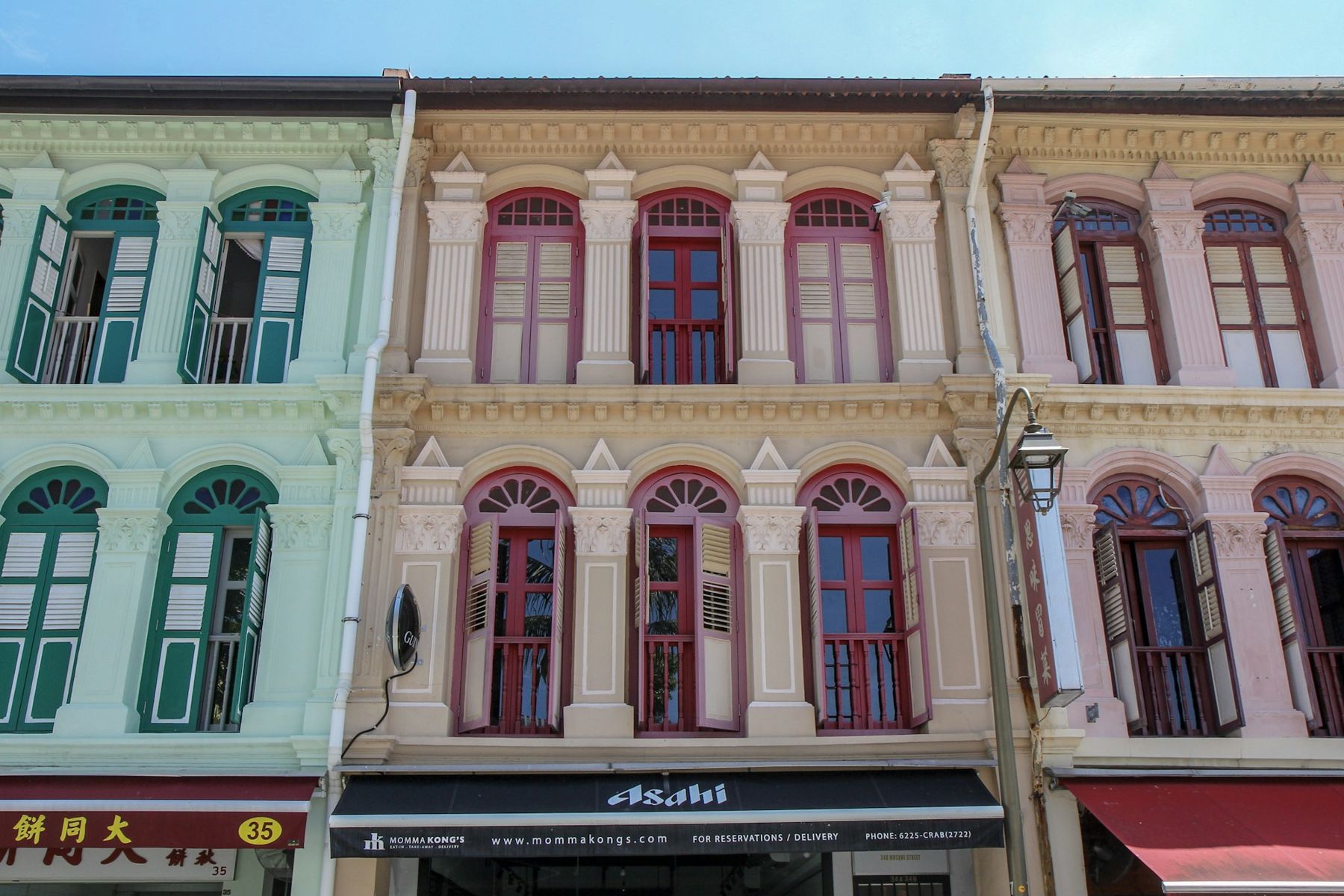
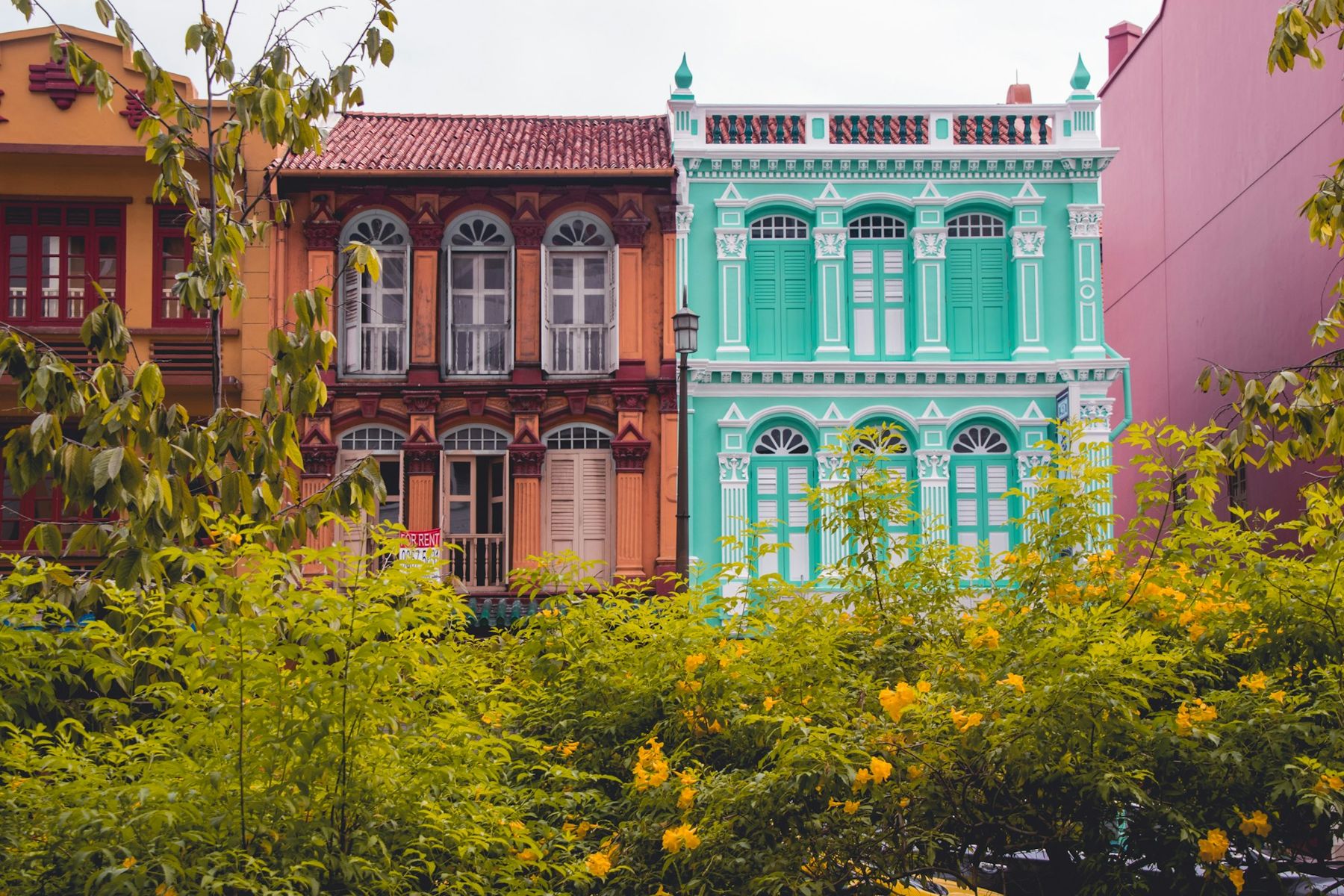
Armenian Street is short but full. A few shophouses opposite the museum hold restaurants serving nyonya food and small shops selling beadwork, kebaya, tiles and ceramics, along with a couple of cafés. Next door to the museum is a former power substation that was for three decades an independent arts centre, one of the places where Singapore's contemporary theatre and art scene grew up.
The food deserves a word. Nyonya cooking is built on rempah, a paste of shallots, chillies, galangal, lemongrass and candlenut pounded and fried slowly until it smells sweet, and on long, patient work in the kitchen. Dishes to look for include ayam buah keluak, chicken cooked with the black nuts of a mangrove tree, whose flesh is dug out, mixed with spices and stuffed back into the shell; babi pongteh, pork braised with fermented soybean; and the many kueh, small cakes of rice flour, coconut and palm sugar, coloured with pandan and blue butterfly-pea flowers. Prices and menus change, and the best introduction is often a set of kueh with a cup of coffee.
On weekends and during festivals, the street is sometimes closed to traffic for markets and performances, and the museum runs talks and workshops. Even on an ordinary day the walk is pleasant: the shade of Fort Canning on one side, the old buildings on the other, and little traffic once you are past Hill Street.
Around the corner
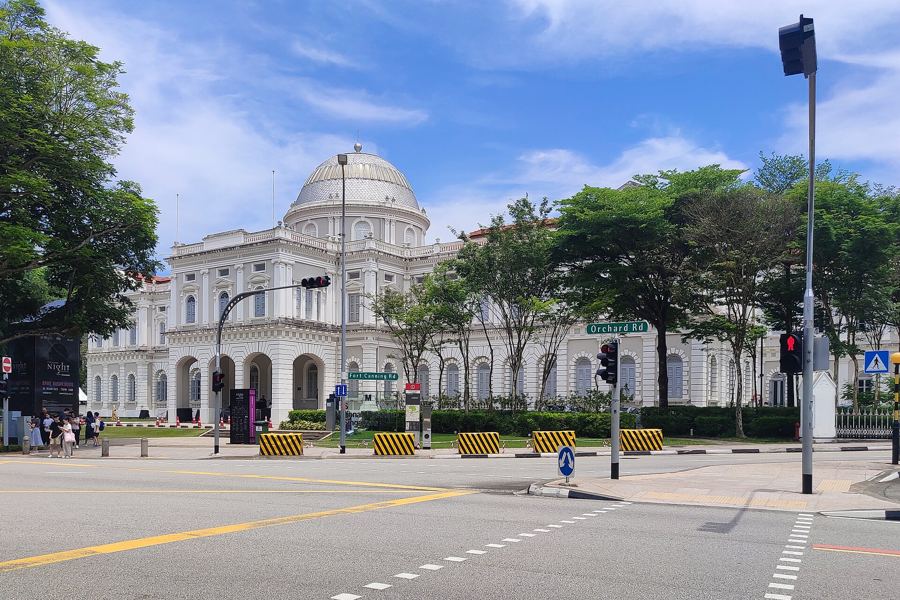
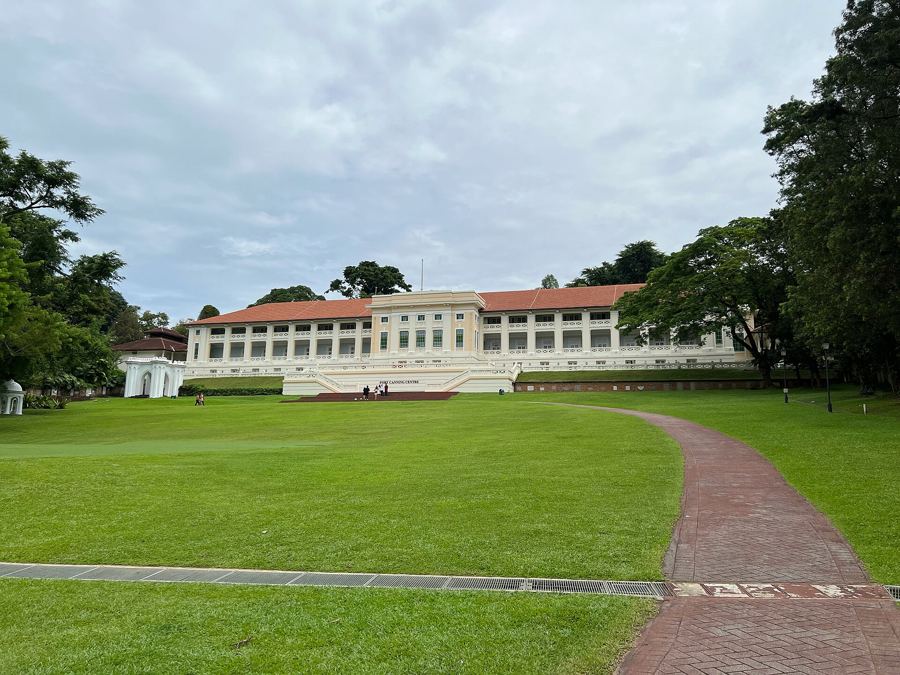
Armenian Street sits in the middle of the museum quarter. At the top, cross Stamford Road and you are at the National Museum. Climb the steps behind it and you are on Fort Canning Hill, with its old royal gardens. At the bottom, Hill Street leads down to the river and the Padang. And for the Peranakan world beyond museum glass, the shophouses of Joo Chiat and Katong in the east still have families and kitchens that carry the culture on.
A good order for a half day is the church first, while the morning is cool and the garden is quiet, then the museum through the middle of the day, then a late lunch of nyonya food on the street. If you have children with you, the museum's displays of costume, beadwork and wedding finery tend to hold their attention longer than most, and there are often hands-on activities during school holidays.
Hours and ticket prices change, so check them before you go. Allow at least two hours, and longer if you like to read.
Finish where you began, in the garden of the Armenian Church, by the headstone of the woman who bred the orchid, where frangipani flowers lie on the grass.