At seven in the morning the lawns at the Tanglin end of the Botanic Gardens are already busy. Tai chi groups turn slowly under the rain trees, runners loop past in pairs, and a man in a bucket hat reads a newspaper on a bench as if the day has nowhere to be. It is the most ordinary scene in Singapore and one of the oldest: people have been walking these paths since the middle of the nineteenth century.
The Gardens run for more than two kilometres, from Tanglin Road in the south almost to Bukit Timah Road in the north, and cover more than eighty hectares. In 2015 they became the first place in Singapore inscribed as a UNESCO World Heritage Site, and the first tropical botanic garden on the list. That listing was not for the flowers alone. It was for the way a colonial garden became a scientific institution, and for what that institution did to the economy of a whole region.
A garden laid out for strolling
The present Gardens date from 1859, when an agricultural and horticultural society laid out a pleasure garden on this land at the edge of town. An earlier experimental garden, started under Raffles, had stood on the slopes of Fort Canning and had not lasted. The new one was designed in the English landscape manner: winding paths, a lake, open lawns and clumps of trees placed for effect.
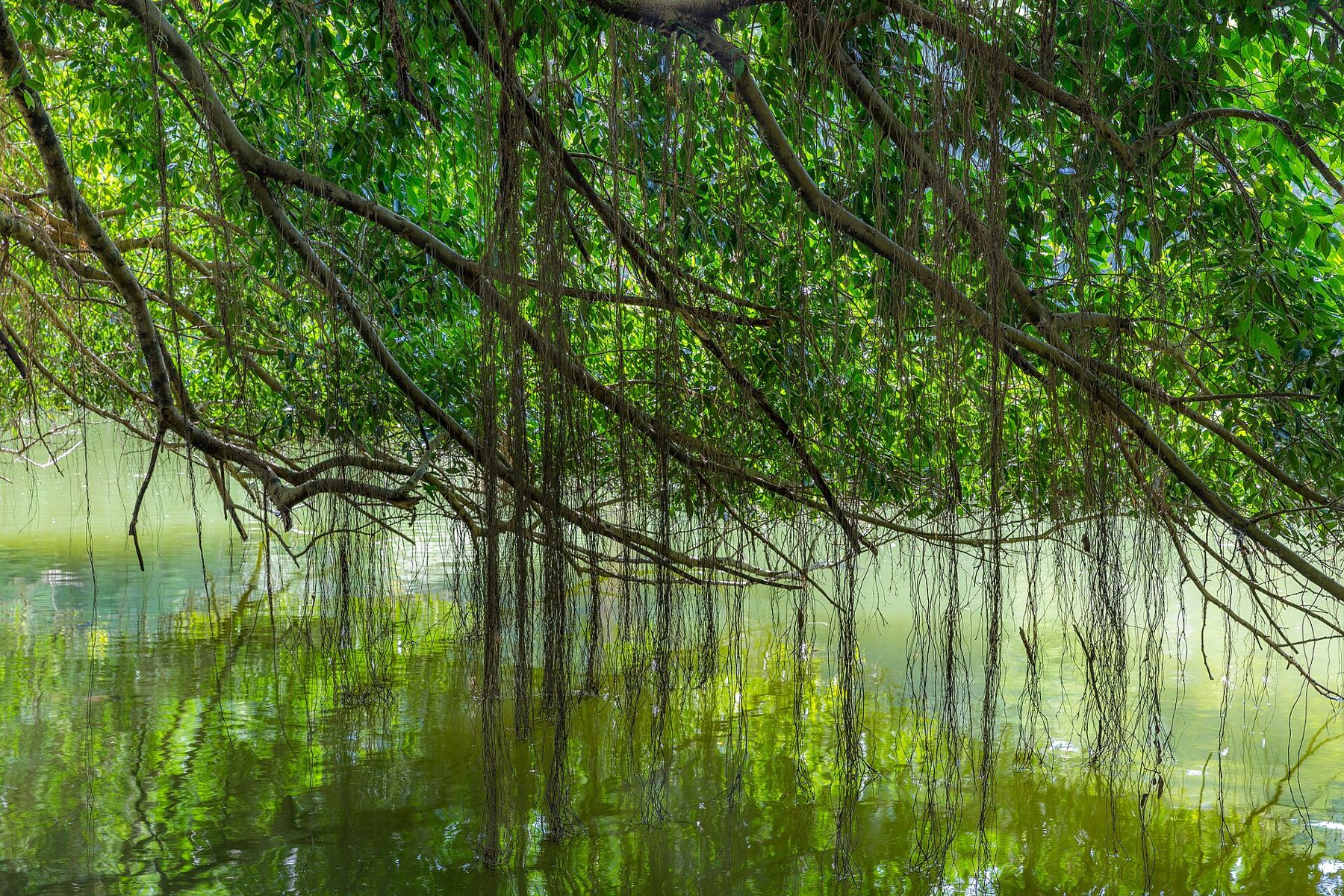
You can still read that plan on the ground. Swan Lake, dug in the 1860s and the oldest water feature here, sits near the Tanglin Gate with an island of palms in the middle and a fountain of swans at one end. Its edges are thick with water plants, and terrapins sun themselves on the logs. On the bank, an old Burmese banyan leans its branches far over the water, and on a still morning the curves of its limbs double in the reflection.
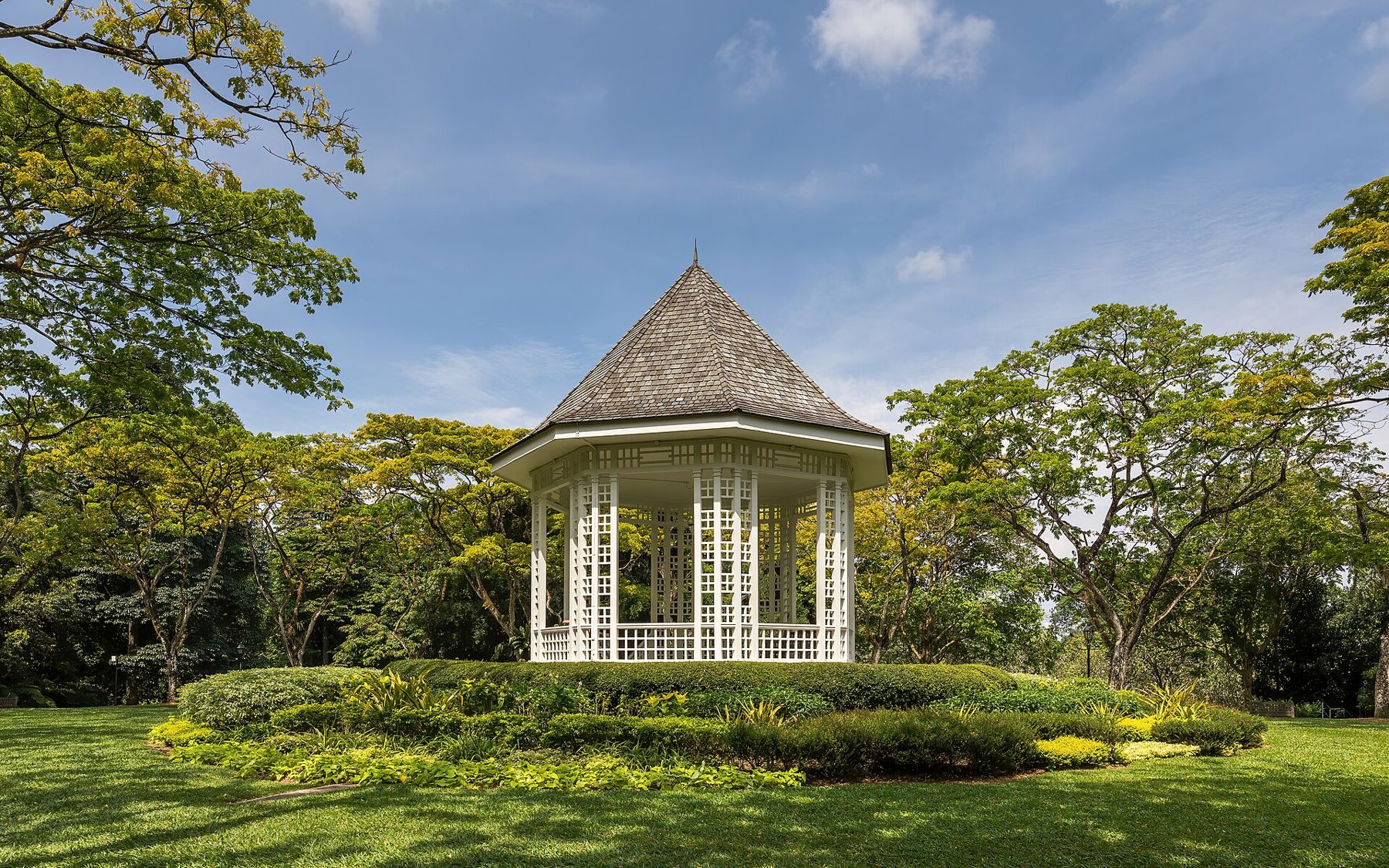
Farther in, on a rise, stands an octagonal bandstand from the 1930s, painted white and ringed with yellow rain trees. Concerts were held here when the Gardens were a social outing as much as a scientific one, and it is still the place people choose for wedding photographs.
The rubber laboratory
The more consequential history is less visible. In 1877 a batch of rubber seedlings arrived here from Kew, descended from seeds collected in Brazil. Nobody in the colony quite knew what to do with them. The man who did was Henry Ridley, director of the Gardens from 1888, who spent years working out how to grow the trees in plantations and how to tap them.
His great practical contribution was a method of cutting the bark in a way that let latex flow repeatedly without killing the tree. Ridley pressed seeds and advice on planters with such persistence that he was nicknamed "Mad Ridley". Within a few decades, when the motor car created an appetite for tyres, Malaya had become the world's leading producer of natural rubber, and the plantations that covered the peninsula traced their roots, quite literally, to this garden.
That is the story UNESCO had in mind. A garden that began as a place for a Sunday stroll turned into a research station that reshaped the land and the labour of the Malay Peninsula. There are still rubber trees in the Gardens, with a heritage marker near the old core, and their scarred trunks are the quietest monument in the city.
The orchid factory
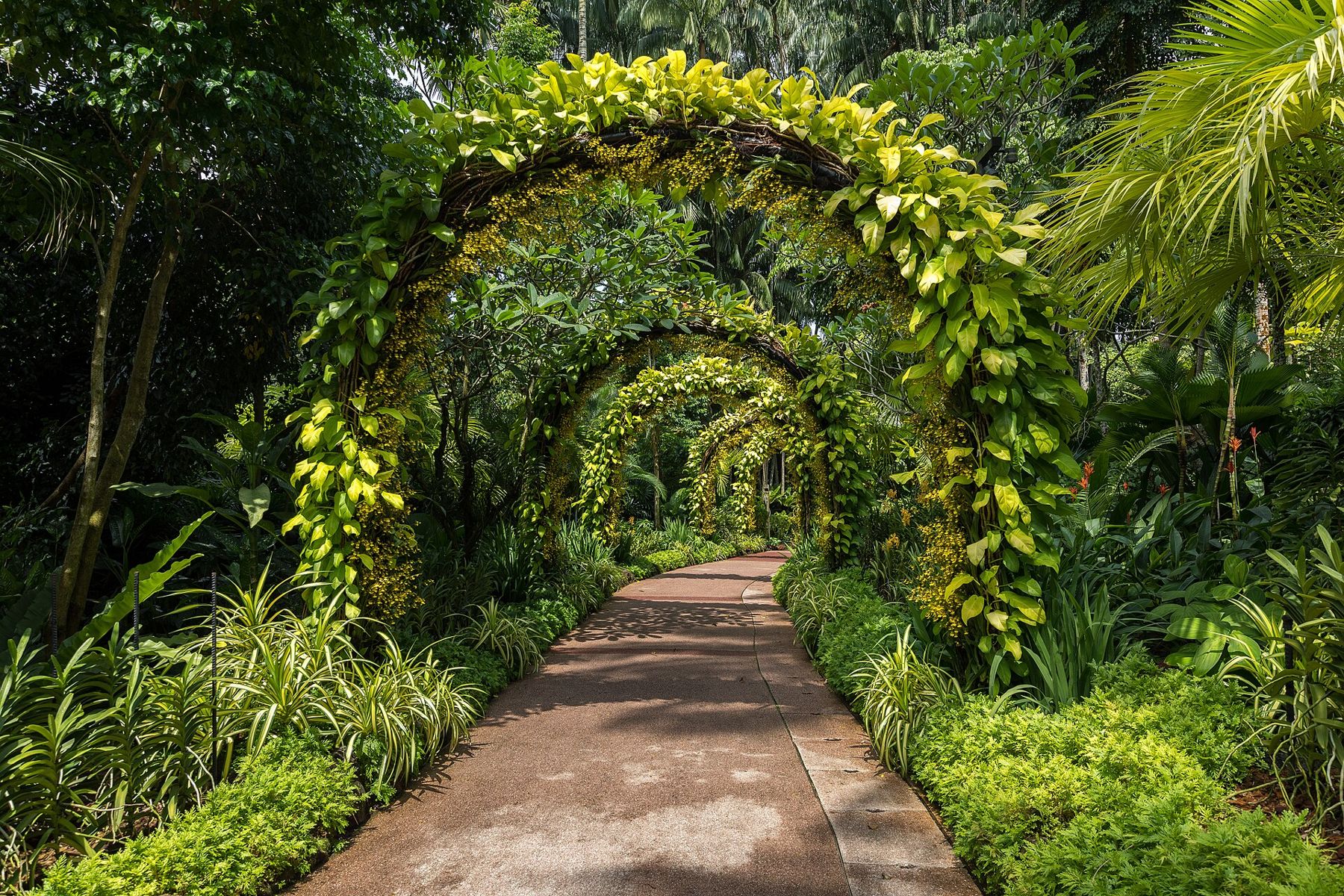
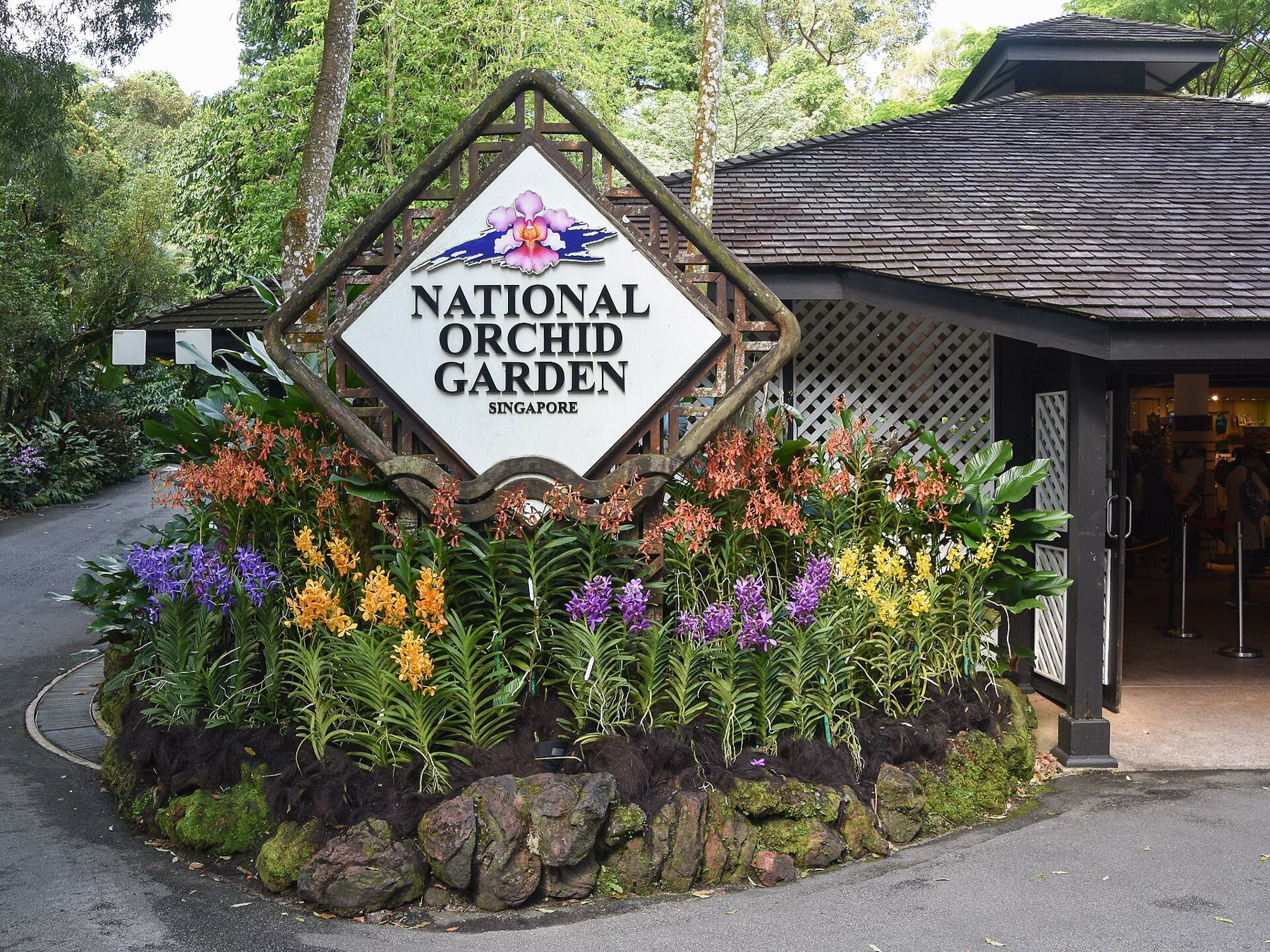
If rubber was the Gardens' economic legacy, orchids are its public face. Breeding work began here in 1928, when the Gardens started crossing orchids to create new hybrids, and the habit never stopped. The National Orchid Garden, set on a slope in the middle of the grounds, displays the results: arches of blooms, beds of spidery Vandas and Dendrobiums, a cool house with highland species kept chilled behind glass.
Singapore's national flower, Vanda Miss Joaquim, is itself a hybrid, a purple orchid associated with Agnes Joaquim, who grew it in her garden in the 1890s. It was chosen as the national flower in 1981 partly because it flowers freely all year; it is often said, too, that a hybrid suits a country made of many.
The Gardens also have a diplomatic sideline. Visiting heads of state and other guests have new hybrids named after them, and a section of the Orchid Garden displays these VIP orchids with their namesakes on little labels. It is a strange and charming form of statecraft: a flower bred in a nursery here, carrying a foreign president's name, blooming for anyone who pays the entry fee.
The Orchid Garden is the one part of the main grounds that charges admission. Prices and hours change, so check before you go. Go early, because the slope gets hot by late morning and the misting sprays in the cool house are the only relief.
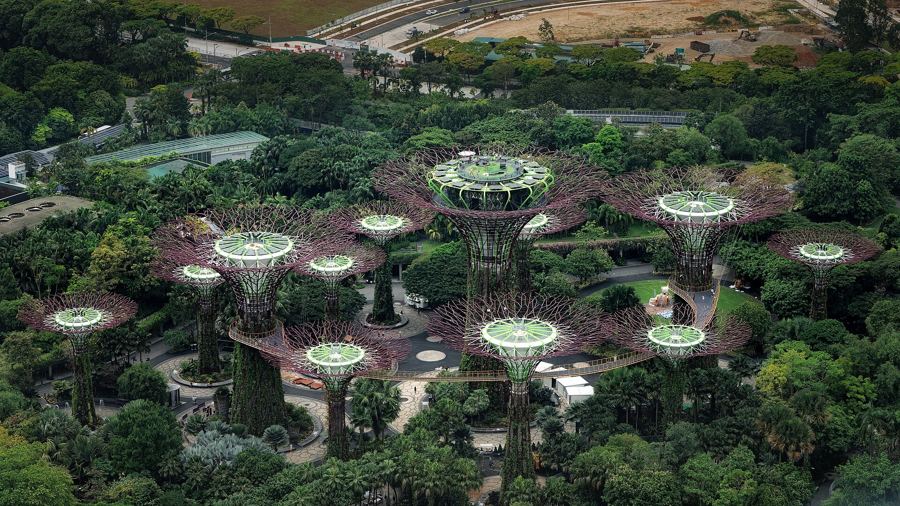 Next stall overGardens by the Bay, from morning heat to the evening lights
A scrap of the old forest
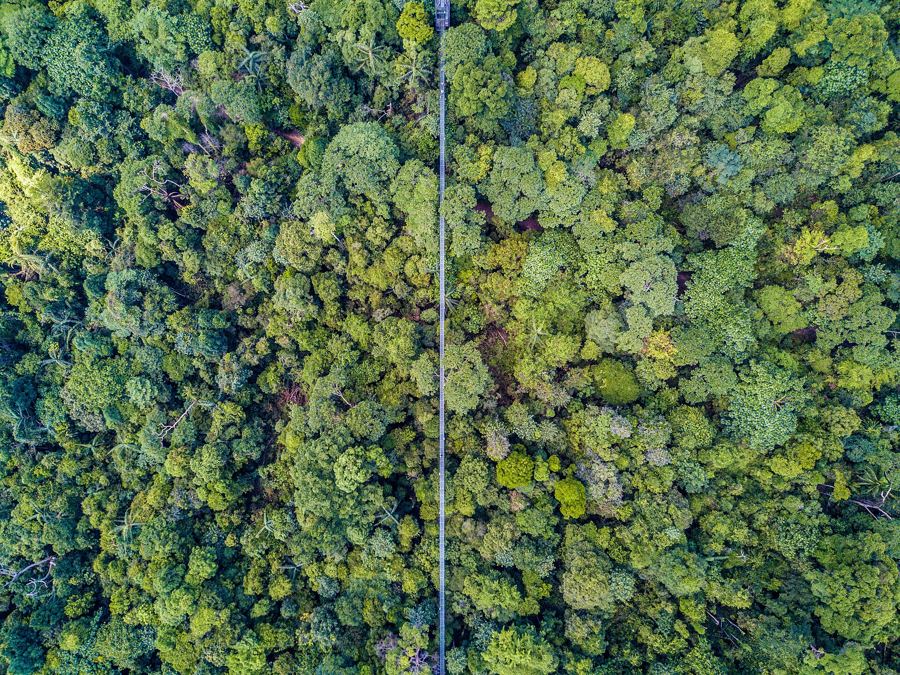
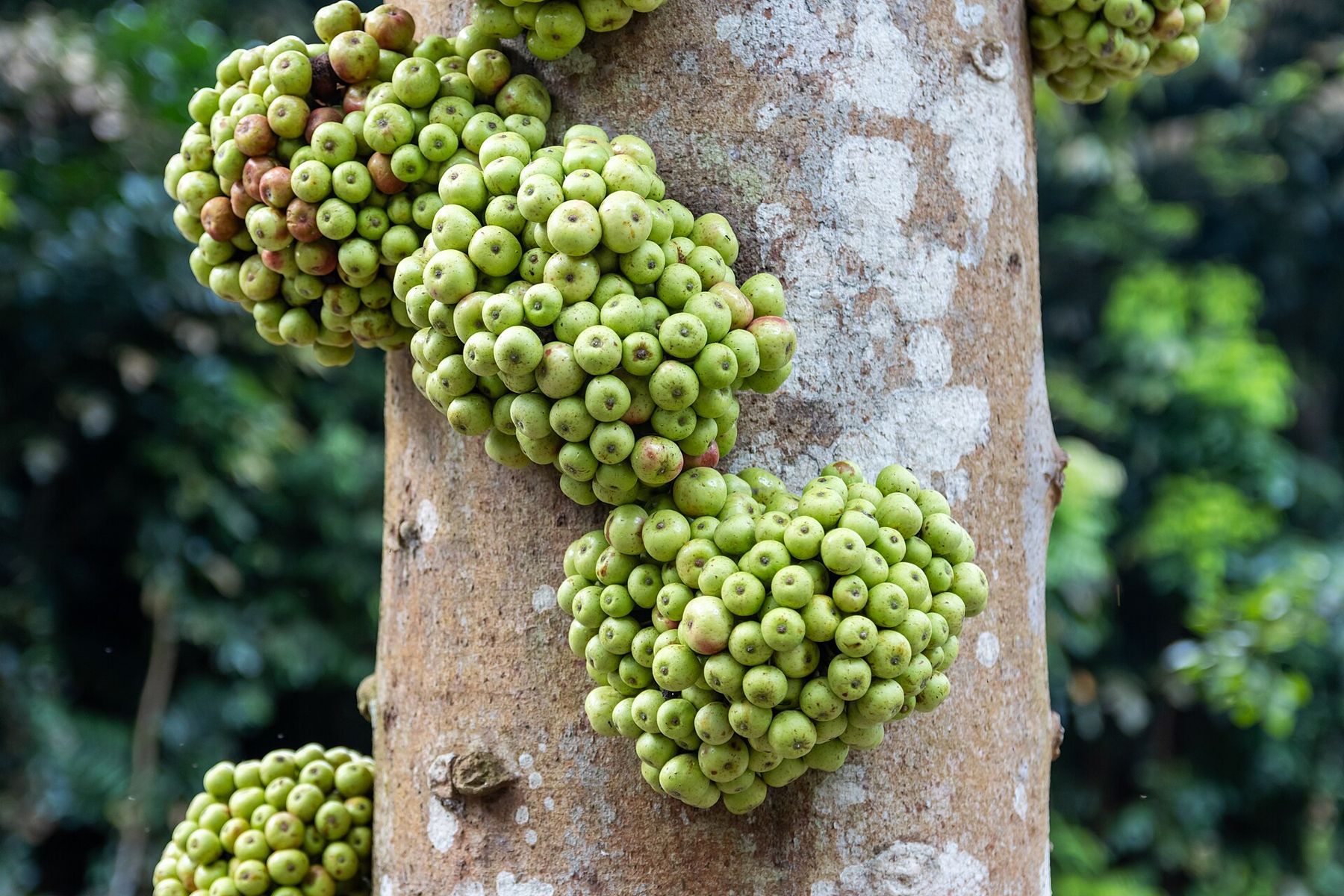
Between the Orchid Garden and the Tanglin end lies something that predates the Gardens entirely: a patch of rainforest, about six hectares, that has never been cleared. It is a fragment of the forest that once covered most of the island, and walking into it on the boardwalk is like stepping through a door. The temperature drops a degree or two. The light goes green. Strangling figs wrap around older trunks, rattans hook at the edges of the path, and the air smells of wet soil and rot.
It is small, and you can hear traffic from the far side, but it matters. Very little old forest survives on the island, most of it in the reserves around Bukit Timah and the central catchment, and this patch sits in the middle of a city of six million. A garden that once helped clear the peninsula for plantations now keeps a piece of the forest it replaced.
Look out, too, for the Gardens' heritage trees, each marked with a small plaque. The best known is an old tembusu near the lawns, with a long low branch that reaches out almost horizontally. It is the tree pictured on the back of Singapore's five-dollar note, and children climb onto that branch for photographs while parents pretend not to watch.
How the Gardens are used now
For all its history, this is a working park. Families picnic on the lawns on Sunday afternoons, and free concerts are held on the lakeside stage on some weekend evenings. There is a children's garden at the northern end with water play and treehouses, and a learning forest with boardwalks over a freshwater swamp. Cafes and a restaurant or two sit inside the grounds; they come and go, so we will not name them.
The Gardens open early in the morning and close late in the evening; the hours for each section differ and change from time to time. Entry to the main gardens is free, which is part of their character. Few places in Singapore draw such a mix of people at once: domestic workers on their day off, retirees doing their exercises, students on field trips, couples posing in wedding clothes, visitors with cameras.
The best way to see it is on foot, from one end to the other. Arrive by MRT at the Botanic Gardens station on the Circle and Downtown lines, walk south through the children's garden and the learning forest, cut across to the Orchid Garden, pass through the rainforest boardwalk, and finish at Swan Lake and the Tanglin Gate. From there it is a short walk or bus ride to Orchard Road, and the shopping malls feel a long way off.
What to bring, and when to come
Come in the morning or the late afternoon. Singapore is hot and humid all year, and by midday the lawns are glaring. Afternoon thunderstorms are common, particularly in the monsoon months, and lightning is a real hazard on open lawns: if thunder starts, head for a shelter or a building and wait it out. Bring water, a hat and something for the rain.
Wear shoes you can walk in. The Gardens are bigger than they look on the map, and the paths rise and fall more than you expect. Insect repellent helps near the water and in the forest patch.
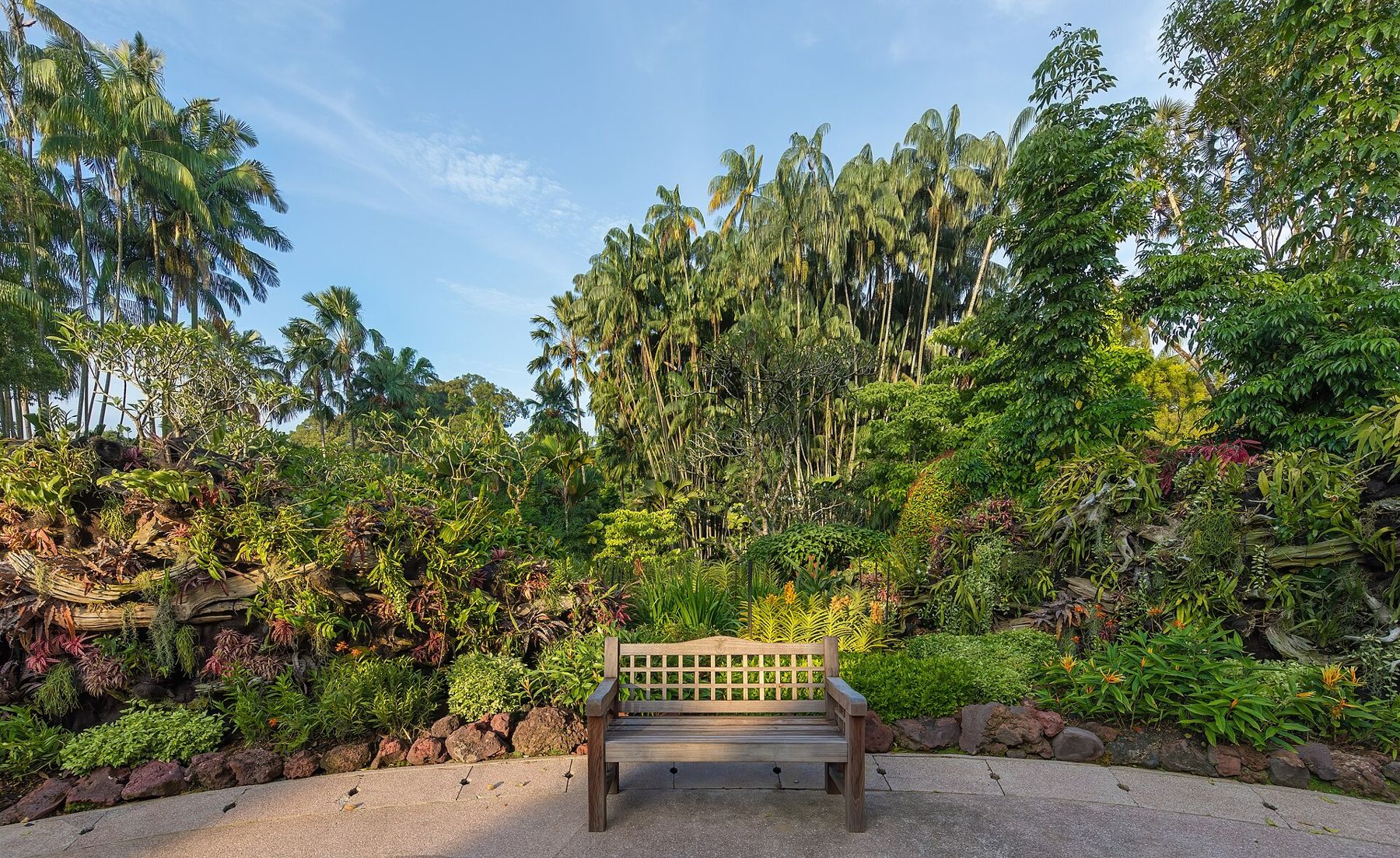
And leave time to sit. A garden that has been here since 1859 rewards slow attention more than a checklist of sights. Find a bench by Swan Lake in the late afternoon, when the light goes low and gold over the water.
A garden that once helped clear the peninsula for plantations now keeps a piece of the forest it replaced.
The terrapins slide off the logs one by one, a heron stands motionless at the far edge, and the evening runners start their laps. It is the same scene the Victorian planners designed for, only with better shoes.