At about three in the afternoon the light changes. The sky over the west goes the colour of slate, a breeze arrives that smells of wet earth, and within ten minutes the rain is coming down so hard that the five-foot ways fill with people waiting under the eaves. Half an hour later the roads are steaming in the sun. That is the most typical weather in Singapore, and it can happen on almost any day of the year.
The island sits about one degree north of the equator, so there is no winter and no summer in the usual sense. There are seasons, though, and they are about wind and rain.
How hot does it get?
Hot, and steadily so. Daytime highs sit around 31 to 33 degrees Celsius for most of the year, and the night rarely cools below 24 or 25. April and May tend to feel the hottest, December and January a touch milder, but the difference is small. What visitors notice more than the number is the humidity, which is high all year and makes the air feel heavier than the thermometer suggests.
Indoors is the other extreme. Malls, trains, cinemas and offices are air-conditioned to a chill, and a light layer for the inside is as useful as a hat for the outside.
What are the two monsoons?
The year is shaped by two monsoon winds and the calmer spells between them. The northeast monsoon runs from about December to early March. Its first half is the wettest part of the year, with long spells of steady rain that can last a day or more; its second half, usually February, is often the driest and breeziest stretch of the calendar.
The southwest monsoon runs from about June to September. It is drier overall, but it brings the Sumatra squalls: lines of storms that form over the Strait of Malacca and sweep across the island before dawn or in the early morning, with gusty winds and heavy rain for an hour or so.
Between them come the inter-monsoon periods, roughly April to May and October to November. The winds are light and variable, and these are the months of the classic afternoon thunderstorm.
When does it rain, and for how long?
Rain falls in every month, but it usually comes in bursts rather than whole grey days. An inter-monsoon storm might bring a heavy hour in the afternoon and leave a clear evening. The exception is the early northeast monsoon, when a weather system can settle over the region and rain for most of a day or two.
Thunder and lightning are frequent, and Singapore has one of the higher rates of lightning in the world. Outdoor pools close when it is overhead, and golf courses, parks and the open decks of attractions may pause activities. Shelter is never far: covered walkways, the arcades of the old quarters and the passages between malls and stations were built with exactly this in mind.
What is the haze?
In some years, usually between about June and October, land and forest fires in parts of Sumatra and Kalimantan send smoke across the region. When the wind carries it to Singapore, the sky turns pale and milky, the air smells of burning, and distant towers fade.
 Next stall overGetting around Singapore: the MRT, the buses and your own two feet
Haze episodes vary a great deal from year to year: some years have none worth noting, while a few have been severe for weeks. The National Environment Agency publishes air-quality readings through the day, and local news reports them prominently when levels rise. People with asthma or heart conditions should watch them closely and plan indoor days if the readings climb. Many residents keep masks at home for these spells.
Is there a best time to visit?
There is no bad time, only trade-offs. February to April is often the most comfortable stretch, after the heaviest rain and before the warmest weeks. June to August can be pleasant, with drier days, though haze is possible later in the season. November to January is the wettest period, but also the season of Christmas lights on Orchard Road and, often, Chinese New Year preparations.
The calendar of festivals may matter more than the weather. Chinese New Year, Hari Raya Puasa, Deepavali and Thaipusam follow lunar or religious calendars and move from year to year, while National Day is fixed on 9 August. Our guide to the festival year sets out what happens in each.
What should you wear and carry?
Loose, light clothes in cotton or linen, and shoes that can survive a wet pavement. Sandals are fine for most of the city, though temples and some restaurants have their own expectations. A small umbrella does double duty against sun and rain, and a refillable water bottle earns its place: tap water is safe to drink, and there are fountains and refill points around parks and many public buildings.
Sunscreen and a hat matter more than people expect, because the sun is high all year. A light shirt or scarf for the air-conditioning completes the kit.
How do you plan a day around the weather?
Do outdoor walks early. The hour after sunrise, roughly seven to eight, is cool by local standards, and nature reserves such as MacRitchie and Bukit Timah are at their best before the heat builds. Keep the middle of the day for museums, food centres with fans, and the train. Go back outside in the late afternoon, when the light softens and the storms, if any, have usually passed.
Gardens by the Bay's two conservatories are cooled, and on a hot afternoon the Cloud Forest is the most comfortable place on the island. At Gardens by the Bay, an evening on the open lawns follows naturally.
Does the heat affect what you can do?
For most visitors, only the pace. Walk more slowly than at home, drink more than you think you need, and rest in the shade. Long hikes, cycling on Pulau Ubin or the Southern Ridges are all perfectly possible, but they are morning activities.
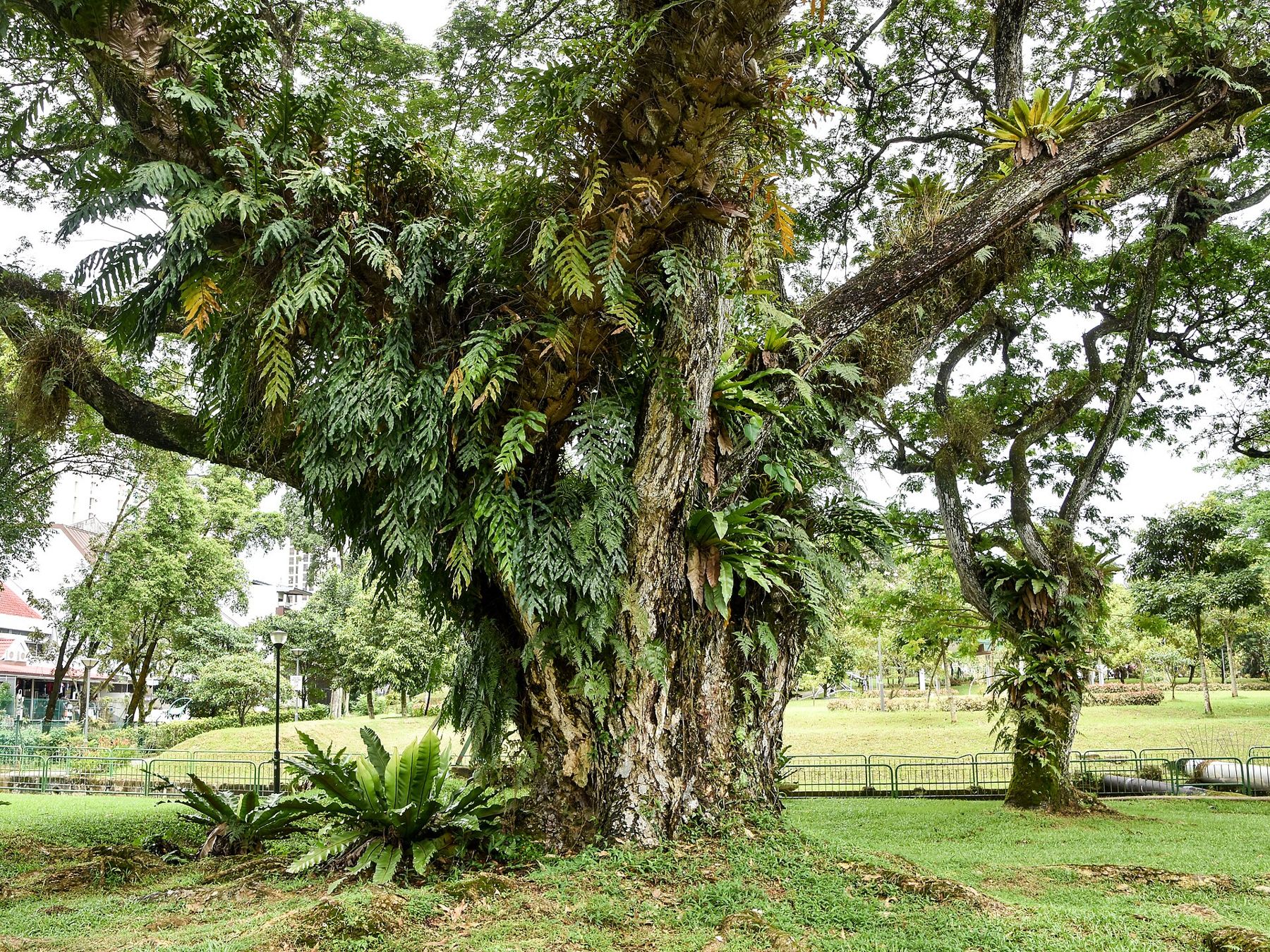
The plants, at least, are thriving. On the old rain trees along the roads, ferns and orchids grow straight out of the branches, fed by the same wet, warm air that sends visitors indoors at noon. Look up after a storm and the trees are dripping, green and very much at home.