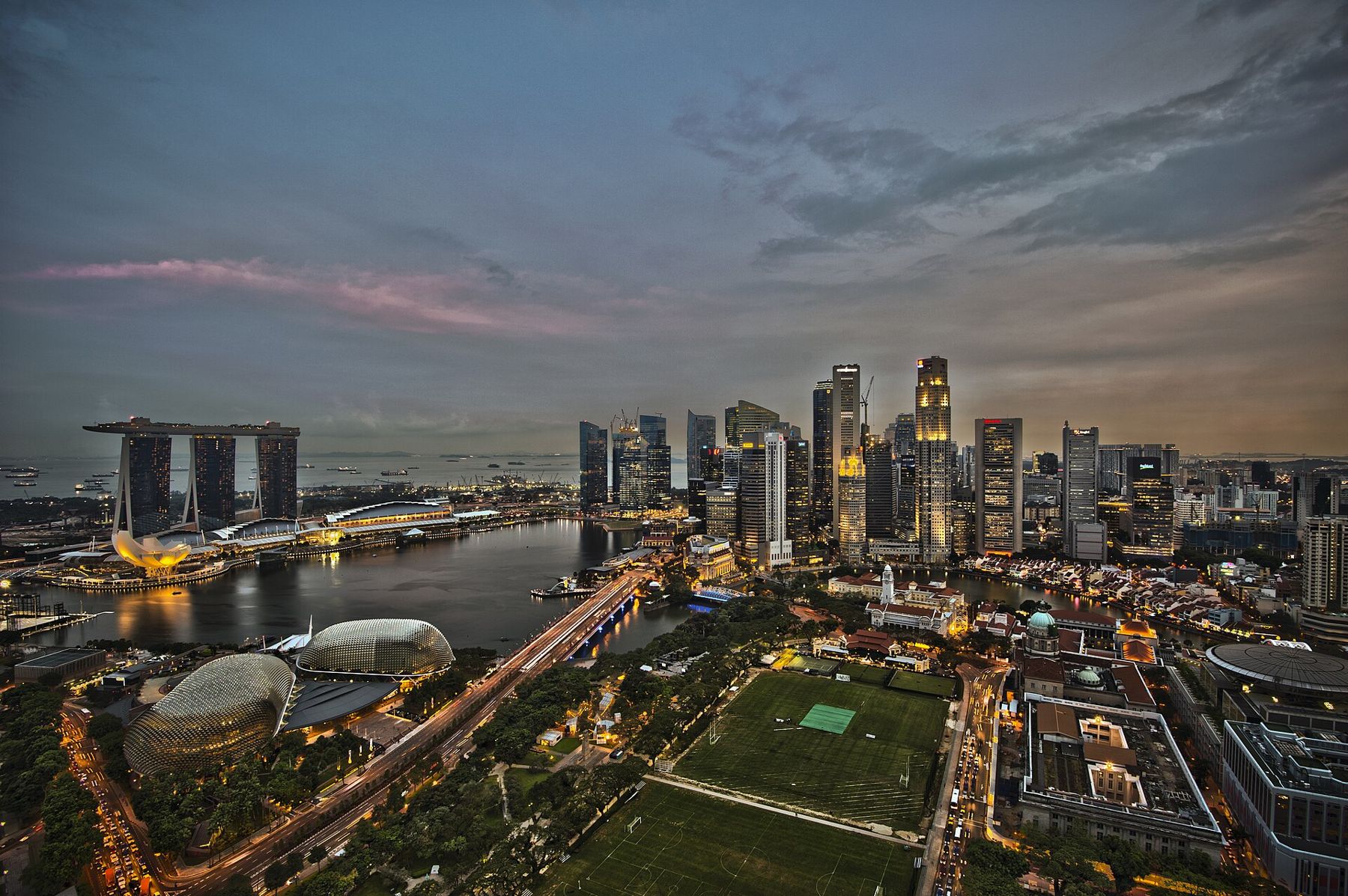
Three days is enough to see how Singapore fits together: the colonial town Raffles laid out around the river after 1819, the quarters that grew around it, and the reclaimed shore and gardens of the last few decades. It is not enough to see everything, and this plan does not try. It moves slowly, keeps the hottest hours indoors or in the shade, and leaves room for long meals.
Each day follows the same rhythm. Start early outside, retreat at midday, come out again as the light goes. All of it can be done by MRT and on foot.
Day one: the Civic District and the river
Begin on Fort Canning Hill at about eight, while the air is still soft. The old Malay royal hill became a British fort and is now a park, with spice gardens, old gateways and big trees, and the walk across it takes you down to the National Museum of Singapore on Stamford Road. Give the museum the rest of the morning; its history galleries are the best single introduction to the island, from the fourteenth century to the present.
After lunch, walk down past the Padang, the cricket field where much of the island's public history has been played out. Facing it are the old Supreme Court and City Hall, now joined as the National Gallery Singapore, whose collection of Southeast Asian art could take an afternoon on its own. The rooftop looks out over the Padang to the bay.
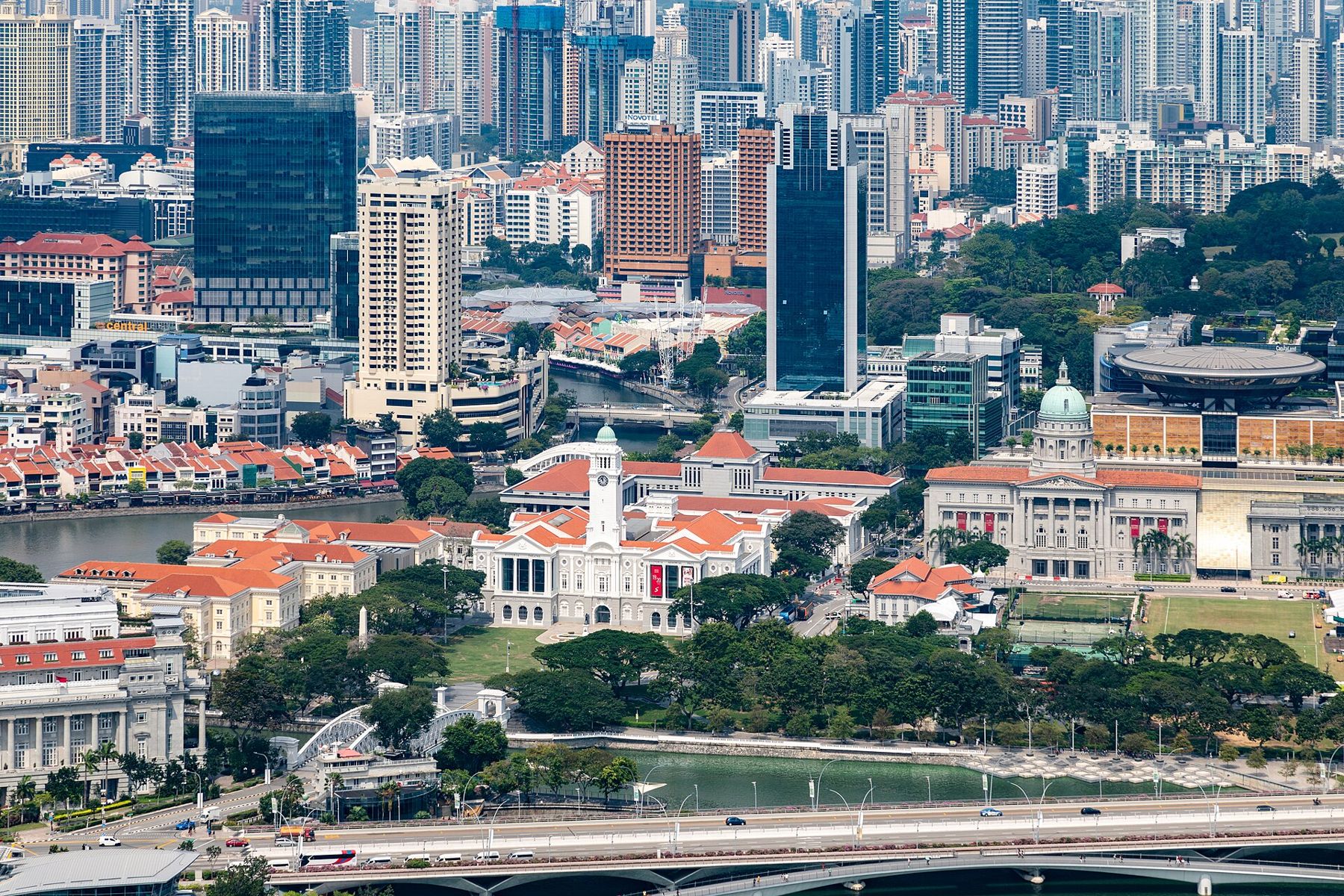
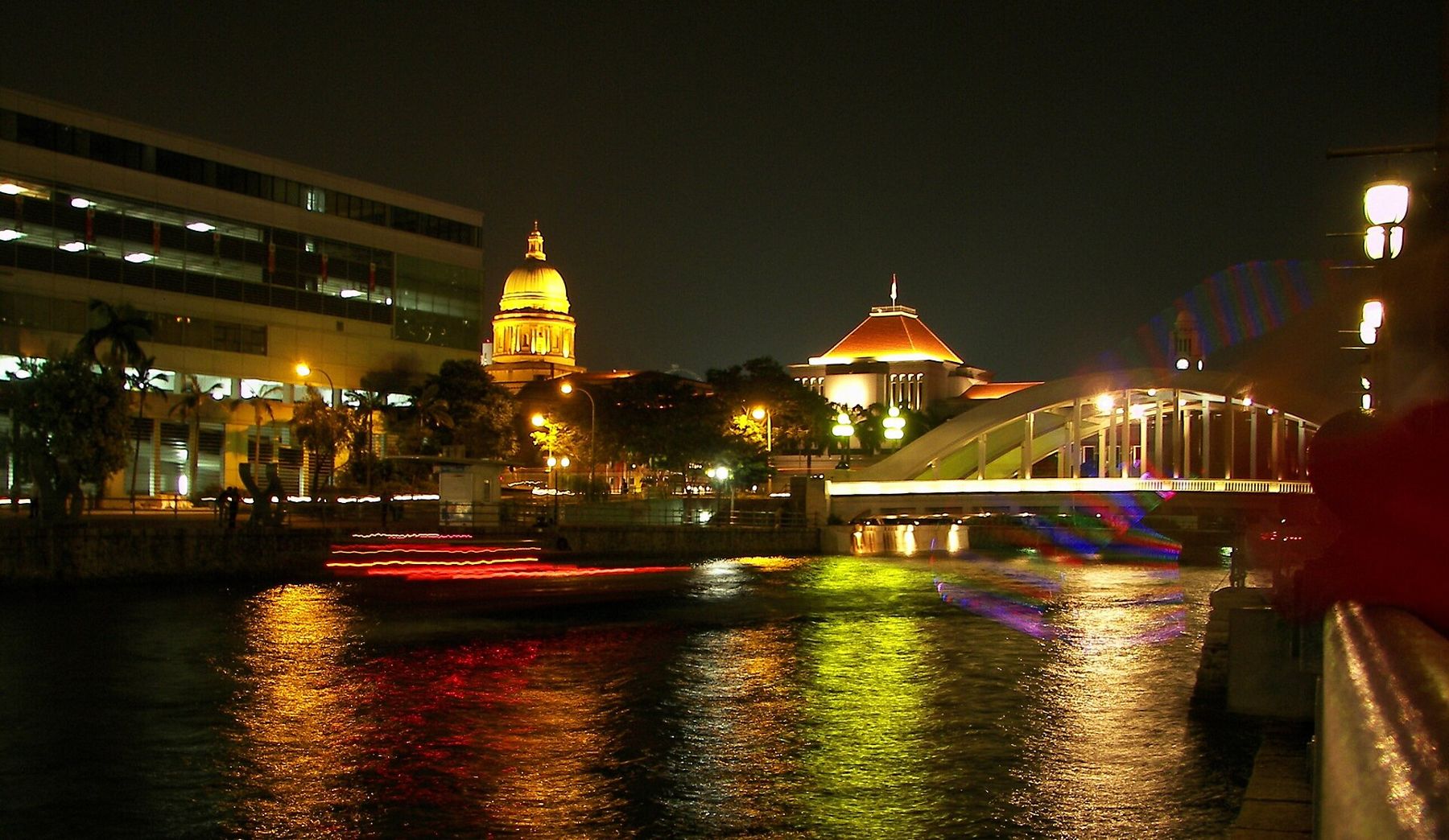
From there, follow the colonial core down to the river: the Victoria Theatre and Concert Hall, the Asian Civilisations Museum on the bank, and Cavenagh Bridge, the old iron footbridge. Cross it and you are at the river mouth, with the Merlion and the Fullerton Building nearby.
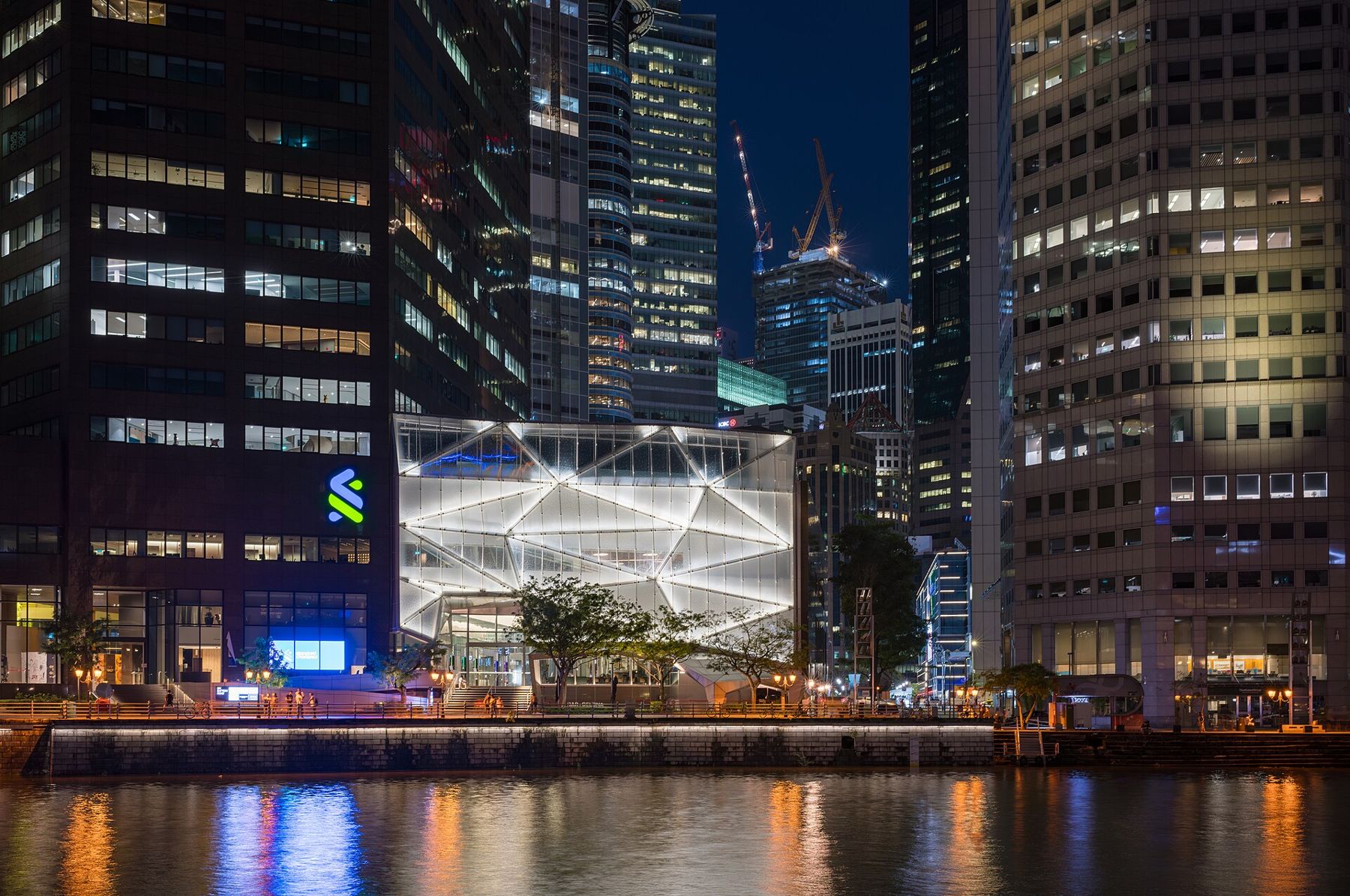
In the evening, walk upstream. Boat Quay's restored shophouses face the towers of the business district across the water, and as the light fades the reflections fill the river. Keep going to Clarke Quay, where a river taxi or a bumboat ride gives you the same view from the water. Dinner can be anywhere along the way, but for a first night a hawker centre such as Lau Pa Sat, a short walk south of the river, sets the tone.
Day two: the old quarters and the hawker centres
Start in Tiong Bahru, the 1930s estate of curved, white Art Deco flats, where the market's upper floor is a busy food centre at breakfast time. Have kopi and something hot, then walk among the blocks before the sun gets high. The estate is one MRT stop from Outram Park.
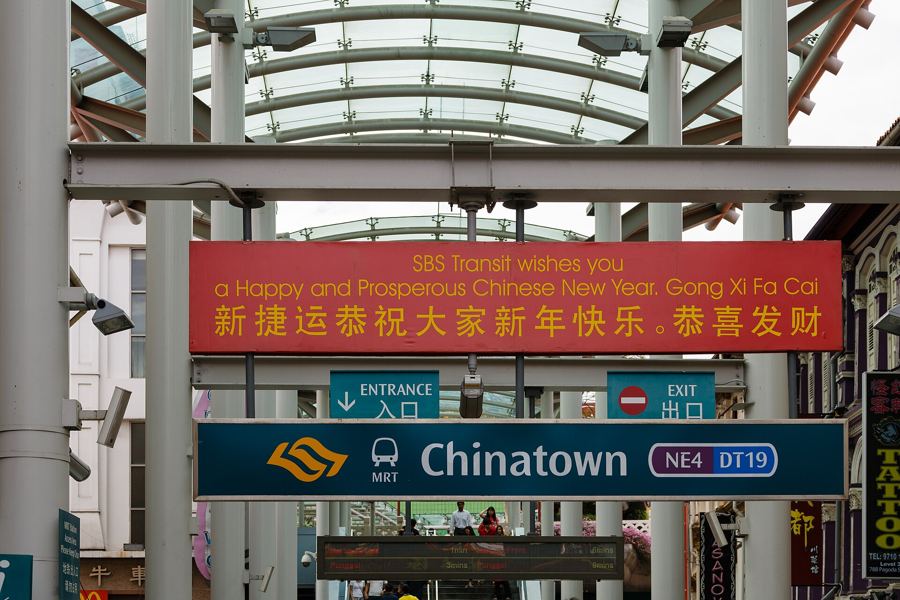
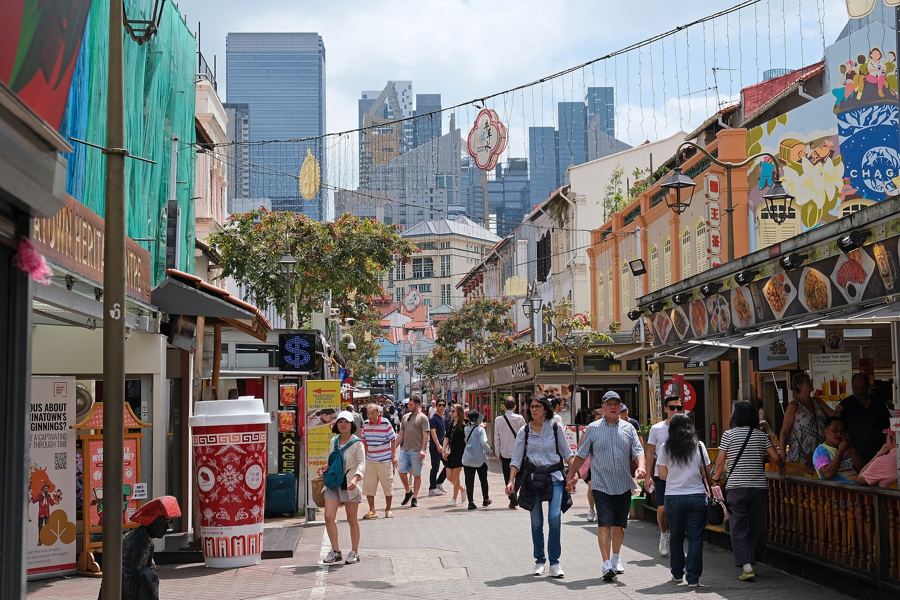
Take the train to Chinatown. Walk to Telok Ayer Street for Thian Hock Keng, the Hokkien temple of the 1840s that once faced the sea, then to the Sri Mariamman Temple on South Bridge Road, the oldest Hindu temple on the island, with its tower of painted figures. The Buddha Tooth Relic Temple is a few minutes away. Lunch at Maxwell Food Centre or Chinatown Complex, both close by.
 Next stall overThe old quarters, compared: what each one is best for
In the heat of the afternoon, ride a few stops north to Bugis and walk into Kampong Glam. The golden dome of the Sultan Mosque closes the end of Bussorah Street; Arab Street sells textiles and rattan; Haji Lane is narrow, painted and busy. Beside the mosque, the old istana of the sultans, now the Malay Heritage Centre, recalls the quarter's royal past.
As evening comes, walk on to Little India, about fifteen minutes away. Serangoon Road is at its most alive after dark, with garland sellers, jewellers and the bells of Sri Veeramakaliamman Temple. Eat at Tekka Centre, where the food centre sits beside the wet market, and try a biryani or a plate of roti prata. If you need help choosing, our list of twelve dishes to know is a start.
Day three: the gardens and the bay
Go early to the Singapore Botanic Gardens, which open very early and are full of runners, tai chi groups and dog walkers by seven. The gardens are a UNESCO World Heritage Site, and the oldest part, around Swan Lake and the bandstand, keeps its Victorian layout. The National Orchid Garden, ticketed, is the one part to pay for; the rainforest patch nearby is a remnant of the forest that once covered the island.
At midday, cool off. Orchard Road is a few stops away for lunch and air-conditioning, or ride straight to Bayfront for Gardens by the Bay. Its two cooled conservatories, the Flower Dome and the Cloud Forest with its indoor waterfall, are the place to spend the hottest hours. The outdoor gardens and the Supertree Grove are free to wander.
As the sun goes down, walk across the Helix Bridge and around the bay. The promenade passes the Esplanade's spiky domes and the Merlion, and the towers light up one by one across the water. Return to the Supertree Grove for the evening light show, a short performance of music and colour among the steel trees, before a last supper by the water at Marina Bay.
Making the plan work
The order matters more than the details. Each morning is the outdoor part, because the first hours after sunrise are the coolest of the day. Each midday is spent in a museum, a conservatory or a food centre with fans. Each evening returns to the streets as the heat eases. If it rains, as it often does in the afternoon, swap a walk for a museum and carry on later.
Opening hours, ticket prices and the times of the light shows change, so check them on the day. Book the National Gallery and the conservatories ahead only if you are visiting at a weekend or in school holidays, when they are busiest. Leave the evenings unplanned beyond a direction to walk.
If you have a spare morning, add one of the green escapes: the TreeTop Walk at MacRitchie Reservoir, the Southern Ridges from Mount Faber to Kent Ridge, or a bumboat from Changi Point to Pulau Ubin, where the island still has kampong houses and quiet roads for cycling. Any of them shows a Singapore that the city centre hides, and each fits into a morning if you start early and are back in town for lunch.
Above all, eat in the hawker centres. They are the part of Singapore most visitors remember, and three days gives you nine meals to try them. By the third evening, looking back across the bay at the lit towers, the river you walked on the first night is just behind them.